

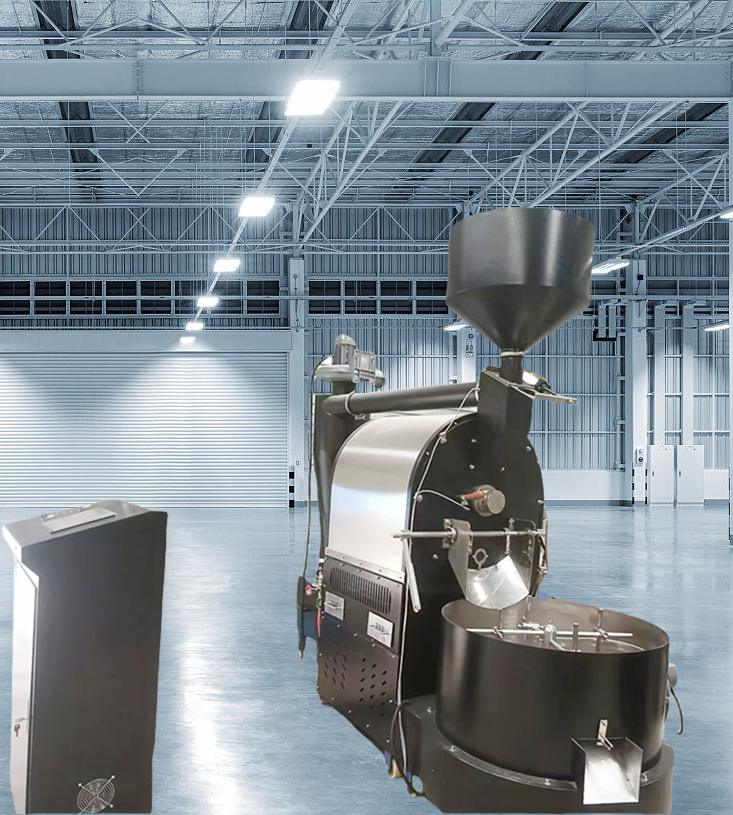
The Degree of Integration in Coffee Roasters: A Path to Efficient Roasting
Comprehensive Control System Integration
A highly integrated coffee roaster often features a unified control system that brings together various functions for seamless operation. This integration is crucial for achieving consistent and high – quality roasts.
Centralized Parameter Adjustment
In a well – integrated roaster, all the key roasting parameters such as temperature, time, and airflow can be adjusted from a single control panel. This centralized approach simplifies the roasting process, especially for operators who may not be highly experienced. For example, instead of having to manually adjust the temperature on one part of the machine and the airflow on another, the operator can simply input the desired values on the central control panel. This reduces the chances of human error and ensures that all parameters are set accurately according to the specific roast profile being followed.
Real – Time Data Monitoring and Feedback
An integrated control system also provides real – time data monitoring. Sensors placed throughout the roaster continuously collect information about the bean temperature, internal air temperature, and airflow rate. This data is then displayed on the control panel, allowing the operator to monitor the roasting process closely. Additionally, the system can offer feedback based on the collected data. If the bean temperature is rising too quickly, the system can alert the operator and suggest adjusting the heat source or airflow to slow down the roast. This real – time feedback loop helps in making timely decisions to achieve the desired roast quality.
Chaff and By – Product Management Integration
Chaff and other by – products generated during the roasting process need to be managed effectively to ensure a clean and efficient roasting environment. A high degree of integration in this area can significantly improve the overall performance of the coffee roaster.
Automated Chaff Collection and Separation
An integrated roaster is equipped with an automated chaff collection and separation system. As the beans are roasted, chaff is released and is carried away by the airflow. The integrated system uses filters and separators to capture the chaff and separate it from the air stream. This not only keeps the roasting chamber clean but also prevents the chaff from clogging the air vents or other parts of the machine. For instance, some systems use cyclonic separators that create a swirling motion in the air, causing the heavier chaff particles to fall into a collection bin while the clean air continues to circulate.
Efficient Exhaust Gas Treatment
In addition to chaff, the roasting process also produces exhaust gases that may contain volatile organic compounds (VOCs) and other pollutants. An integrated roaster includes an exhaust gas treatment system to reduce the environmental impact. This system can use filters, catalytic converters, or other technologies to remove harmful substances from the exhaust gases before they are released into the atmosphere. By integrating this function into the roaster, it becomes easier to manage and maintain, ensuring that the roaster operates in compliance with environmental regulations.
Pre – and Post – Roasting Process Integration
A truly integrated coffee roaster also takes into account the pre – and post – roasting processes, creating a continuous and efficient workflow from start to finish.
Pre – Roasting Bean Preparation Integration
Before the beans enter the roasting chamber, they need to be prepared properly. An integrated roaster can be connected to pre – roasting equipment such as bean cleaners and sorters. The bean cleaner removes dirt, dust, and small stones from the beans, while the sorter separates out defective or undersized beans. By integrating these pre – roasting steps into the overall system, the beans can be transferred directly from the cleaning and sorting equipment to the roaster without the need for manual handling. This reduces the risk of contamination and ensures that only high – quality beans enter the roasting process.
Post – Roasting Cooling and Packaging Integration
After roasting, the beans need to be cooled quickly to stop the roasting process and then packaged for storage or sale. An integrated roaster can be linked to a cooling system and a packaging machine. The cooling system can use forced air or water to cool the beans rapidly, and then the beans can be automatically transferred to the packaging machine. The packaging machine can be programmed to fill bags or containers with the desired amount of beans and seal them properly. This integration of post – roasting processes streamlines the production line, reducing the time and labor required for these steps and improving overall efficiency.