

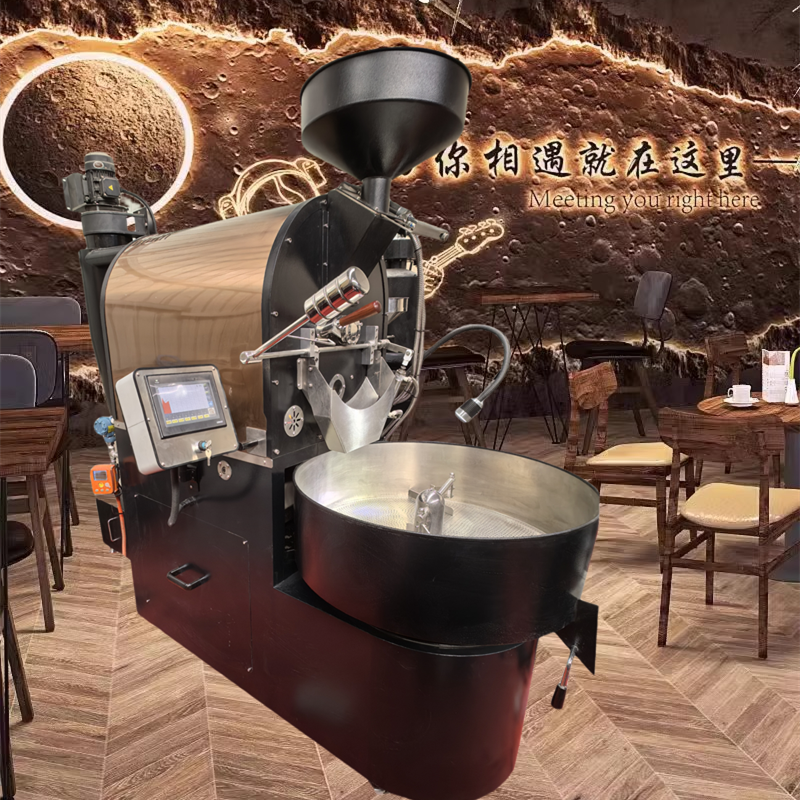
Tools Associated with Coffee Roasters: Enhancing Your Roasting Experience
Temperature – Monitoring Instruments
Precise temperature control is the cornerstone of successful coffee roasting. Different stages of the roast demand specific temperature ranges to bring out the unique flavors and aromas locked within the coffee beans.
Infrared Thermometers
Infrared thermometers are a non – contact way to measure the surface temperature of various parts of the coffee roaster. They are incredibly useful for quickly checking the temperature of the roasting drum, the bean mass, or the exhaust. For instance, during the initial drying phase of the roast, you can use an infrared thermometer to ensure that the drum is at the right temperature to start removing moisture from the beans without scorching them. As the roast progresses, you can monitor the temperature of the bean mass to make sure it’s following the desired roast profile. These thermometers are easy to use and provide instant readings, allowing for quick adjustments during the roasting process.
Probe Thermometers
Probe thermometers are inserted directly into the bean mass or the roasting environment to get an accurate internal temperature reading. They are essential for understanding what’s happening inside the roaster at a deeper level. When inserted into the beans, a probe thermometer can tell you if the beans are heating evenly and if they’ve reached the critical temperatures for different flavor development stages. For example, during the Maillard reaction, which is responsible for creating many of the complex flavors in coffee, the probe thermometer can help you maintain the right temperature range to achieve the desired flavor profile. Some probe thermometers come with long cables, allowing you to monitor the temperature from outside the roaster without interfering with the roasting process.
Bean – Handling Equipment
Properly handling the coffee beans before, during, and after roasting is crucial for achieving consistent results. These tools help with tasks such as weighing, transferring, and sampling the beans.
Digital Scales
Accurate measurement of coffee beans is vital for maintaining consistency in the roasting process. Digital scales allow you to measure the exact amount of beans you want to roast, whether it’s a small batch for personal use or a larger batch for commercial purposes. They are highly precise, often measuring down to the gram, ensuring that you can replicate the same roast every time. Before roasting, you can use a digital scale to weigh out the green beans according to your desired batch size. During the roasting process, you can also use it to measure any additional beans you might want to add to adjust the roast profile. After roasting, you can weigh the roasted beans to calculate the yield and make any necessary adjustments for future roasts.
Bean Scoops and Spatulas
Bean scoops and spatulas are simple yet essential tools for transferring coffee beans. They come in different sizes and shapes to suit various tasks. A large bean scoop can be used to transfer green beans from storage containers to the roaster’s hopper. During the roasting process, a smaller spatula can be used to gently stir the beans in the roasting drum to ensure even heating. After roasting, bean scoops can be used to transfer the roasted beans from the cooling tray to storage containers. These tools are usually made of food – grade materials, such as stainless steel or plastic, to ensure they don’t contaminate the coffee beans.
Bean Sampling Devices
Taking samples of the beans during the roasting process is a great way to assess their progress and make adjustments as needed. Bean sampling devices, such as long – handled spoons or specialized sampling probes, allow you to safely remove a small amount of beans from the roaster at different intervals. By examining the color, smell, and texture of these samples, you can determine if the roast is proceeding as planned. For example, if the beans are developing too quickly and starting to look burnt on the outside while still being under – roasted on the inside, you can lower the temperature or increase the airflow in the roaster to slow down the roast and ensure even development.
Roaster Maintenance Tools
Keeping your coffee roaster in good working condition is essential for consistent roast quality and long – term durability. These tools help with cleaning, lubricating, and inspecting the various components of the roaster.
Cleaning Brushes
Roasting coffee generates a significant amount of chaff, which is the thin, papery outer layer of the coffee beans. Chaff can accumulate inside the roaster, especially in the roasting drum, chutes, and exhaust system, potentially affecting the airflow and the quality of the roast. Cleaning brushes are designed to remove this chaff and other debris from the roaster’s components. They come in different shapes and sizes, with soft bristles for delicate areas and stiffer bristles for more stubborn buildup. Regular use of cleaning brushes after each roast can prevent the accumulation of chaff and ensure that the roaster operates smoothly.
Lubricating Oils
Some moving parts of the coffee roaster, such as the bearings in the roasting drum or the fan motor, require lubrication to reduce friction and wear. Lubricating oils are formulated to provide long – lasting protection and smooth operation for these components. When applying lubricating oil, it’s important to use a food – grade product to ensure that it doesn’t contaminate the coffee beans. Follow the manufacturer’s instructions for the amount and frequency of application, as over – lubricating can attract dust and debris, which can cause problems in the long run.
Inspection Mirrors
Inspection mirrors are useful for checking hard – to – reach areas of the coffee roaster, such as the inside of the roasting drum or the back of the exhaust system. They allow you to see if there are any signs of damage, wear, or buildup without having to disassemble the entire roaster. For example, you can use an inspection mirror to check for cracks in the roasting drum or clogs in the exhaust pipes. By regularly inspecting these areas, you can identify potential problems early and take appropriate action to prevent them from causing more serious issues during the roasting process.