

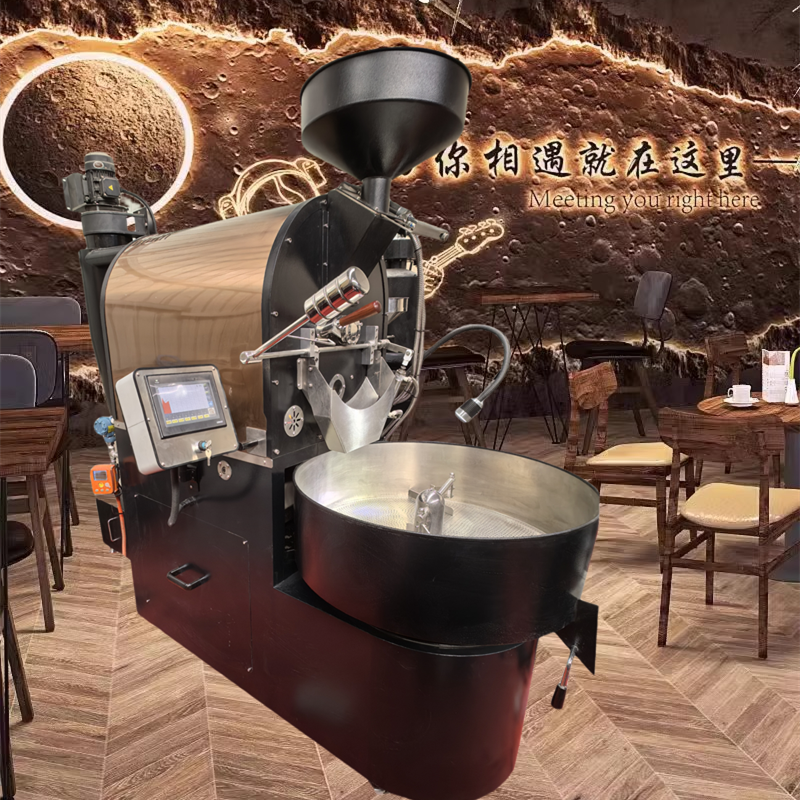
Achieving Even Roasting in Coffee Roasters: Techniques for Consistent Results
Uniform roasting ensures every coffee bean develops balanced flavors, avoiding the pitfalls of under-roasted or burnt batches. This requires careful control of heat distribution, airflow, and bean movement throughout the roasting process. Below, explore methods to optimize your machine for evenness, troubleshoot common issues, and adapt techniques for different batch sizes.
Understanding the Science Behind Even Roasting
Even roasting hinges on two principles: heat transfer consistency and bean agitation. Heat must penetrate each bean uniformly, while constant movement prevents hot spots or stagnant zones. Factors like bean density, moisture content, and drum design also influence results. For example, beans with varying sizes or moisture levels may roast unevenly if not managed properly.
The Role of Heat Distribution in Consistency
Heat enters beans through conduction (direct contact with the drum) and convection (hot air circulation). A well-designed roaster balances both methods to avoid over-reliance on one. For instance, if conduction dominates, beans touching the drum may scorch while others remain underdeveloped. To improve balance:
- Preheat the drum evenly: Ensure the entire surface reaches the target temperature before loading beans. Use an infrared thermometer to check for cold spots.
- Adjust airflow: Increase convection by raising airflow slightly, especially during the drying phase, to help heat penetrate beans faster.
How Bean Movement Impacts Evenness
Agitation keeps beans tumbling, exposing all surfaces to heat and airflow. Insufficient movement leads to clumping, where beans stick together and roast unevenly. To enhance movement:
- Optimize drum speed: A faster rotation (typically 50–60 RPM for most machines) prevents clumping without launching beans too aggressively.
- Use a roasting curve with gradual heat changes: Avoid sudden temperature spikes, which can cause beans to stick or bounce erratically.
Adjusting Machine Settings for Uniform Results
Most roasters can achieve evenness by fine-tuning preheat temperatures, airflow, and drum speed. Start with small adjustments and monitor outcomes closely.
Preheat Temperature and Initial Load
- Preheat to the correct range: For a 5–10 kg batch, aim for a drum temperature 10–15°C higher than your target roast start temperature (e.g., 190°C for a 180°C roast). This compensates for heat loss when beans are added.
- Load beans gradually: Pour beans in slowly to avoid sudden temperature drops. If your machine allows, use a hopper to regulate the flow.
Fine-Tuning Airflow Throughout the Roast
- Drying phase (first 2–3 minutes): Use moderate airflow to remove moisture without drying beans too quickly, which can lead to uneven development.
- Maillard phase (middle of roast): Increase airflow slightly to promote even caramelization. Watch for beans turning from yellow to brown uniformly.
- Development phase (after first crack): Reduce airflow by 10–15% to stabilize heat and prevent scorching as beans darken.
Drum Speed and Bean Agitation
- Match drum speed to batch size: For smaller batches (3–5 kg), use a slightly faster speed (60–70 RPM) to ensure beans tumble continuously. For larger batches (8–10 kg), a moderate speed (50–60 RPM) prevents excessive friction.
- Listen for clumping: If beans sound “clunky” or stick to the drum’s sides, increase speed or adjust airflow to break up clusters.
Troubleshooting Common Evenness Issues
Problem: Some Beans Are Darker Than Others
This often stems from uneven heat distribution or poor agitation. Solutions include:
- Check drum calibration: Ensure the drum rotates smoothly without wobbling, which creates hot spots.
- Reduce batch size: Overloading the machine leads to uneven heat penetration. Roast 70–80% of your machine’s maximum capacity for better control.
- Stir beans manually: Pause the roast 4–5 minutes in and gently shake the drum or use a tool to redistribute beans.
Problem: Underdeveloped or Bitter Beans in the Same Batch
Inconsistent development occurs when some beans don’t absorb enough heat or roast too long. To fix this:
- Adjust preheat temperature: If underdeveloped beans are common, increase the preheat by 5–10°C to ensure faster initial heat absorption.
- Extend the Maillard phase: Let beans develop 30–60 seconds longer during the yellow-to-brown transition to deepen flavor without burning.
- Monitor airflow near first crack: If some beans taste bitter, reduce airflow slightly to prevent over-roasting the exterior while the interior catches up.
Problem: Scorched Spots on Beans
Scorching happens when beans touch a overly hot drum surface for too long. To prevent this:
- Lower preheat temperature: Reduce it by 5–10°C and observe if beans roast more evenly.
- Increase airflow: More air circulation helps cool the drum’s surface slightly while maintaining overall roast temperature.
- Use a “flavor pause”: Near the end of the Maillard phase, briefly reduce heat (by 10–15°C) for 20–30 seconds to stabilize flavor development before first crack.
Adapting Techniques for Different Batch Sizes
Even roasting requires different approaches for small vs. large batches due to variations in heat retention and bean movement.
Small Batches (1–3 kg)
- Preheat higher: Increase the drum temperature by 15–20°C above your target to compensate for rapid heat loss when adding beans.
- Use slower drum speed: A lower speed (40–50 RPM) prevents beans from bouncing too aggressively, which can cause uneven roasting.
- Monitor closely: Small batches progress faster, so check color and aroma every 30 seconds after the drying phase.
Large Batches (8–12 kg)
- Preheat lower: A drum temperature 5–10°C above your target prevents overheating the exterior of beans.
- Increase airflow: More beans mean less air circulation per bean, so raise airflow by 20–30% to maintain even heat distribution.
- Stir mid-roast: Pause at the halfway point to manually redistribute beans, as larger batches are prone to clumping.
Testing and Refining Your Approach
Even roasting is a skill honed through experimentation. Keep detailed notes on each roast, including:
- Preheat temperature and drum speed
- Airflow settings at each phase
- Time to first crack and end of roast
- Visual and sensory observations (color, aroma, taste)
Compare batches with similar settings to identify patterns. For example, if beans roast unevenly at higher temperatures, try lowering the preheat and extending the Maillard phase. Over time, you’ll develop a intuitive sense for how your machine behaves and how to adjust for consistency.
By mastering heat distribution, bean agitation, and machine settings, you can achieve uniform roasts that highlight each coffee’s unique flavors. Start with small adjustments, stay attentive to your machine’s behavior, and let your palate guide you toward flawless results.