

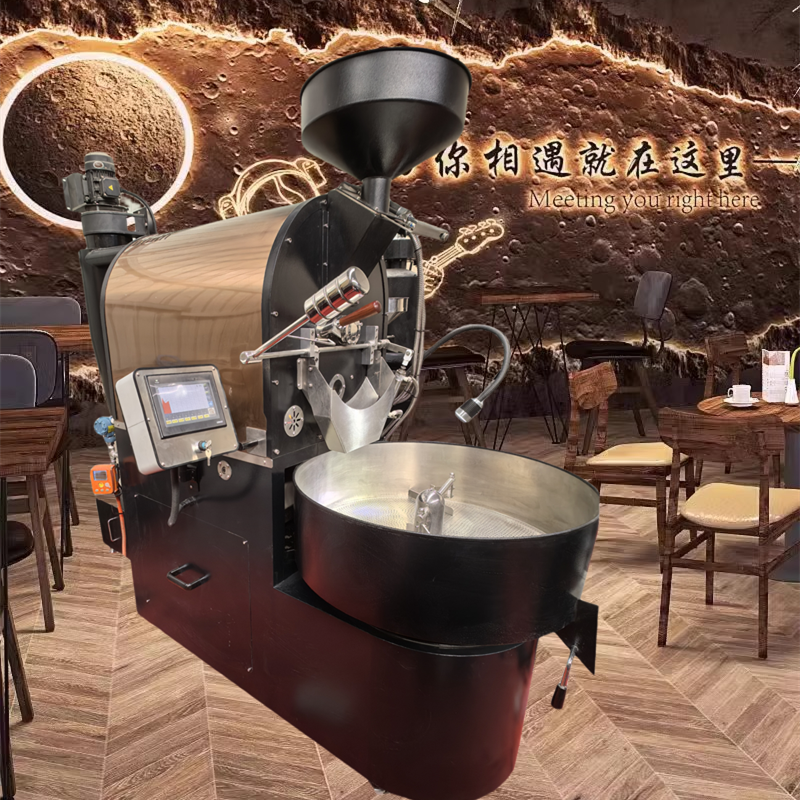
Ensuring Stability in Coffee Roasters: Key Factors and Strategies
Coffee roasters are intricate machines that require a high degree of stability to deliver consistent and high – quality roasts. Stability encompasses various aspects, from the physical structure of the machine to the consistency of its operational processes. Here are several crucial elements that contribute to the stability of coffee roasters.
Robust Physical Construction
Durable Frame Material Selection
The frame of a coffee roaster serves as its backbone, providing support and withstanding the stresses generated during operation. Opting for high – strength materials is essential for ensuring long – term stability. Metals such as stainless steel and thick – gauge aluminum are popular choices due to their excellent mechanical properties.
Stainless steel offers high corrosion resistance, which is vital in a coffee roasting environment where exposure to heat, moisture, and coffee oils is common. Its strength allows it to bear the weight of the roaster’s components and resist deformation under the vibrations and forces generated during the roasting process. Thick – gauge aluminum, on the other hand, is lightweight yet strong enough to provide stability while also facilitating heat transfer, which can be beneficial for certain roasting techniques.
Precision Engineering in Assembly
Even with high – quality materials, the stability of the coffee roaster depends heavily on the precision of its assembly. Each component must be accurately positioned and securely fastened to prevent any movement or misalignment during operation.
During the assembly process, strict quality control measures should be implemented. This includes using precise measuring tools to ensure that all parts fit together correctly. For example, the alignment of the roasting drum with the drive shaft and the heating elements must be exact to avoid any wobbling or uneven heating, which could lead to inconsistent roasts. Additionally, all bolts and screws should be tightened to the recommended torque specifications to prevent loosening over time, which could compromise the stability of the machine.
Consistent Heat Distribution
Even Heating Element Design
The heating elements in a coffee roaster are responsible for providing the heat necessary for roasting the beans. For stable roasting results, it is crucial that the heat is distributed evenly throughout the roasting chamber.
One way to achieve this is by using heating elements with a uniform design. For example, some roasters use tubular heating elements that are evenly spaced around the roasting drum. This ensures that heat is radiated uniformly, preventing hot spots and cold spots within the chamber. Another approach is to use infrared heating technology, which can provide more precise and even heat distribution compared to traditional heating methods. Infrared heaters can be designed to target specific areas of the roasting drum, allowing for better control over the roasting process and enhancing stability.
Effective Airflow Management
In addition to the heating elements, proper airflow management is essential for consistent heat distribution in a coffee roaster. Airflow helps to circulate the heat within the roasting chamber, ensuring that all the beans are exposed to the same temperature conditions.
The design of the airflow system should include strategically placed vents and fans. The vents should be designed to allow for the controlled entry and exit of air, preventing any stagnant areas within the chamber. The fans should be powerful enough to create a consistent airflow but also adjustable to accommodate different roasting profiles. For example, during the initial stages of roasting, a lower airflow may be required to allow the beans to absorb heat gradually, while a higher airflow may be needed during the later stages to cool the beans quickly and prevent over – roasting.
Reliable Control Systems
Accurate Temperature Sensors
Temperature control is one of the most critical aspects of coffee roasting, and accurate temperature sensors are essential for maintaining stability in the roasting process. These sensors are responsible for monitoring the temperature within the roasting chamber and providing feedback to the control system.
High – quality temperature sensors, such as thermocouples or resistance temperature detectors (RTDs), should be used. These sensors offer high accuracy and fast response times, allowing the control system to make immediate adjustments to the heating elements based on the measured temperature. The sensors should be strategically placed within the roasting chamber to ensure that they accurately represent the temperature experienced by the beans. For example, placing sensors at different heights and positions within the drum can provide a more comprehensive picture of the temperature distribution, enabling the control system to maintain a stable roasting environment.
User – Friendly and Responsive Control Interface
A user – friendly and responsive control interface is also crucial for the stability of a coffee roaster. The control interface allows the operator to set the desired roasting parameters, such as temperature, time, and airflow, and monitor the progress of the roast.
The interface should be intuitive and easy to use, with clear displays and simple controls. This reduces the likelihood of operator errors, which could lead to inconsistent roasts. Additionally, the control system should be responsive to changes in the roasting conditions. For example, if the temperature starts to deviate from the set point, the control system should quickly adjust the heating elements or airflow to bring the temperature back to the desired level. This real – time adjustment capability ensures that the roasting process remains stable and consistent, regardless of external factors or variations in the beans.