

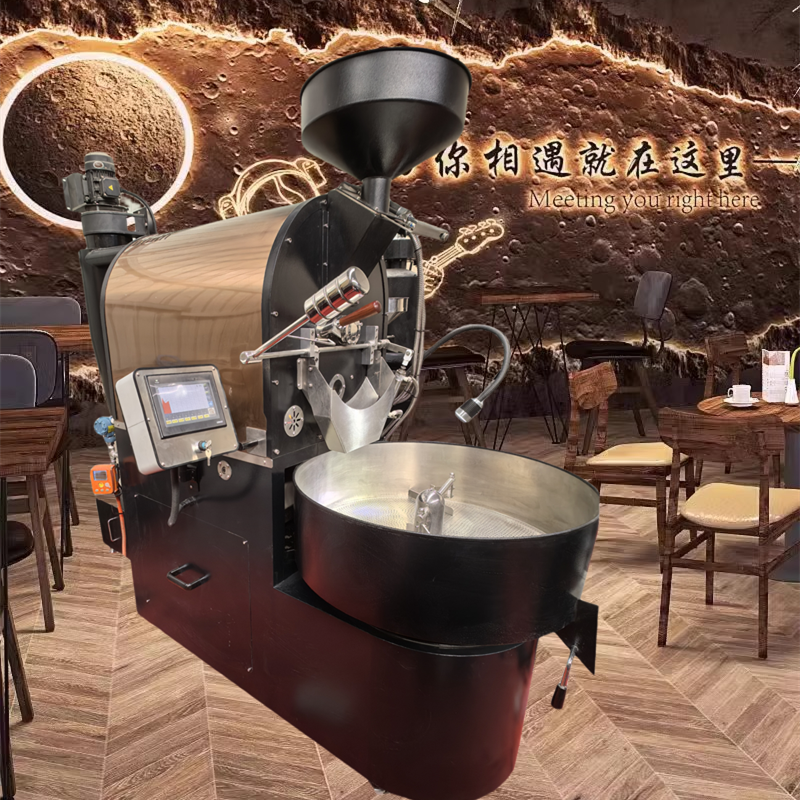
Understanding Coffee Roaster Dimensions: Key Considerations
The physical size of a coffee roaster is determined by its capacity, heating method, and intended use. Commercial models designed for high-volume production typically occupy larger footprints to accommodate larger roasting drums and advanced airflow systems. For example, a 12kg-capacity roaster may measure 175cm (L) × 110cm (W) × 185cm (H), while smaller 1kg models for specialty cafés or home use might range between 95cm (L) × 65cm (W) × 98cm (H). These variations reflect the balance between output efficiency and spatial constraints.
Industrial-grade roasters often prioritize durability and heat retention, leading to bulkier designs with reinforced frames. Conversely, compact roasters for small businesses or home enthusiasts emphasize portability without sacrificing performance. A 300g-capacity unit, for instance, could fit within 25cm (L) × 42.5cm (W) × 43cm (H), making it ideal for countertop use. Understanding these dimensions helps align equipment choices with operational needs and available space.
Factors Influencing Roaster Size
Roasting Capacity and Drum Design
The volume of beans processed per batch directly impacts the roaster’s size. Larger drums require more internal space for even heat distribution, which translates to a wider and taller chassis. For example, a roaster handling 5kg of beans may need a drum diameter 30% larger than a 1kg model, increasing its overall width by 20–30cm. Drum material also plays a role; cast iron drums, known for heat retention, may add weight and thickness compared to stainless steel alternatives.
Heating Method and Airflow Systems
Direct-flame roasters often feature external burners and exhaust ducts, increasing their length and height. In contrast, hot-air or recirculation systems integrate heating elements within the chassis, allowing for more compact designs. A roaster using infrared heating might reduce its footprint by 15–20% compared to a traditional gas-powered model, as it eliminates the need for bulky combustion chambers.
Ventilation and Safety Requirements
Proper ventilation is critical for removing smoke and chaff during roasting. Commercial roasters require robust exhaust systems, which may extend their height by 40–60cm to accommodate ducting and filtration units. Smaller roasters for home use often rely on built-in fans and shorter exhaust pipes, enabling them to fit under standard kitchen cabinets. Safety certifications for overheating protection or automatic shutoff mechanisms can also influence design, sometimes adding bulk for insulation or control panels.
Selecting the Right Size for Your Needs
Commercial Applications: Balancing Output and Space
Cafés or roasteries processing 50kg+ daily need roasters with capacities of 10–12kg per batch. These machines typically occupy 1.5–2 square meters of floor space, including clearance for loading and maintenance. Vertical designs with stacked components, such as dual-drum systems, can optimize space in narrow environments. For example, a two-tier roaster might fit into a 1.2m-wide area while maintaining high throughput.
Small Business and Home Use: Compact Efficiency
Startups or home roasters prioritizing flexibility often opt for 1–3kg roasters. These models, measuring 0.5–1 square meter, are designed to integrate into existing workflows without requiring dedicated rooms. Some ultra-compact units even offer wall-mounted or tabletop configurations, reducing their footprint to 0.3 square meters or less. Features like detachable components for easy storage further enhance their practicality.
Future-Proofing and Scalability
When selecting a roaster, consider long-term growth. A modular design that allows for capacity upgrades—such as swapping a 5kg drum for an 8kg one—can extend the machine’s lifespan without requiring a full replacement. Similarly, choosing a roaster with adjustable height or width settings ensures compatibility with evolving workspace layouts. For instance, a model with telescoping legs might adapt to both low-ceiling basements and taller commercial kitchens.