

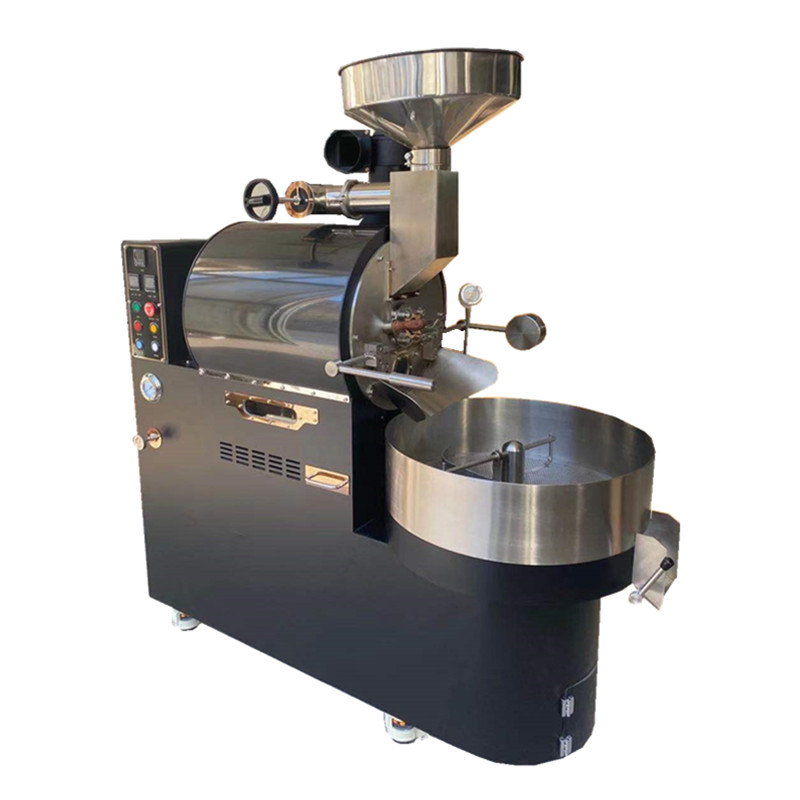
Effective Vibration – Dampening Designs for Coffee Roasters
Coffee roasters are complex machines that generate significant vibrations during operation due to the rotation of the roasting drum, the movement of beans, and the functioning of various mechanical components. Excessive vibrations can lead to a range of issues, including structural damage, misalignment of parts, and reduced roasting quality. Implementing proper vibration – dampening designs is crucial to ensure the smooth and efficient operation of coffee roasters.
Structural Reinforcement for Stability
Robust Frame Construction
A well – built frame is the foundation of a vibration – resistant coffee roaster. The frame should be constructed using high – quality, sturdy materials such as thick – gauge steel or aluminum alloys. These materials offer high strength – to – weight ratios, allowing the frame to withstand the vibrations generated during roasting without excessive flexing or deformation.
When designing the frame, consider using triangular bracing in key areas. Triangles are inherently stable geometric shapes, and adding triangular braces between frame members can significantly increase the overall rigidity of the structure. For example, bracing the corners of the frame where the vertical and horizontal members meet can help distribute the vibrational forces more evenly and reduce the risk of stress concentrations that could lead to cracks or breaks.
Isolation of Vibration – Prone Components
Identify the components of the coffee roaster that generate the most vibrations, such as the motor, drive shaft, and roasting drum. These components should be isolated from the main frame as much as possible to prevent the vibrations from transferring throughout the entire machine.
One way to achieve this is by using vibration – isolating mounts or pads. These mounts are typically made of rubber or other elastic materials that can absorb and dampen vibrations. Place the motor on vibration – isolating mounts that are securely fastened to the frame but allow for some degree of movement to absorb the vibrations. Similarly, use flexible couplings between the motor and the drive shaft to reduce the transmission of vibrations from the motor to the roasting drum.
Drum Design for Reduced Vibration
Balanced Rotation
The roasting drum is a major source of vibrations in a coffee roaster. To minimize vibrations, it is essential to ensure that the drum rotates in a balanced manner. This can be achieved through precise manufacturing and assembly processes.
During manufacturing, the drum should be machined to very tight tolerances to ensure that its weight is evenly distributed around its circumference. Any irregularities in the drum’s shape or weight distribution can cause it to wobble as it rotates, generating significant vibrations. Additionally, during assembly, make sure that the drum is properly aligned on the drive shaft and that all mounting bolts are tightened evenly to prevent any misalignment that could lead to vibrations.
Internal Baffle Design
The internal baffles within the roasting drum play a crucial role in the roasting process by agitating the beans and ensuring even heat distribution. However, poorly designed baffles can also contribute to vibrations.
Opt for baffle designs that are aerodynamically shaped and smoothly integrated into the drum’s interior. Avoid sharp edges or abrupt changes in the baffle’s shape, as these can create turbulent airflow and cause the beans to bounce unevenly, leading to increased vibrations. Instead, use curved or sloped baffles that guide the beans gently through the drum, reducing the impact forces and minimizing vibrations.
Motor and Drive System Optimization
Smooth – Running Motors
The motor is the powerhouse of the coffee roaster, and its performance has a direct impact on the level of vibrations generated. Select motors that are designed for smooth operation and low vibration output. Look for motors with high – quality bearings and precision – balanced rotors.
High – quality bearings reduce friction and wear, allowing the motor to run more smoothly and with less vibration. Precision – balanced rotors ensure that the motor’s rotating parts are evenly distributed, preventing any imbalance that could cause vibrations. Additionally, consider using variable – speed motors that allow for precise control of the drum’s rotation speed, which can help optimize the roasting process and reduce vibrations at different operating conditions.
Efficient Drive Systems
The drive system that transfers power from the motor to the roasting drum should be designed to minimize vibrations. Belt – driven systems are a common choice for coffee roasters, and using high – quality, properly tensioned belts can help reduce vibrations.
Choose belts that are made of durable materials with good elasticity to absorb vibrations. Ensure that the belts are tensioned correctly according to the manufacturer’s specifications. Over – tensioned belts can put excessive stress on the motor and drive components, while under – tensioned belts can slip, causing vibrations and uneven rotation of the drum. Regularly inspect and adjust the belt tension to maintain optimal performance and minimize vibrations.