

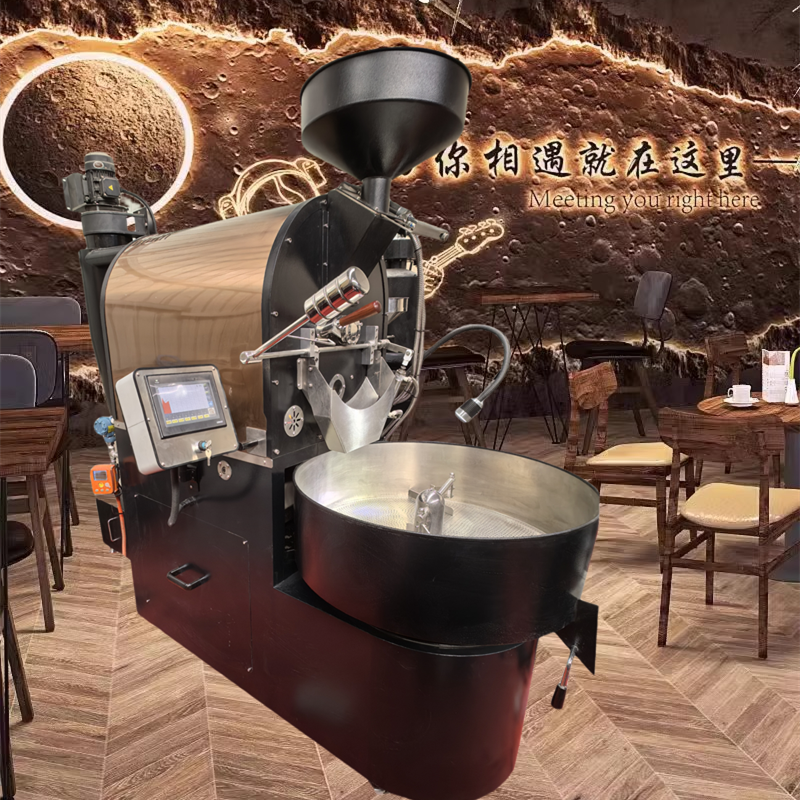
Mastering Coffee Roasting with Tactile Knob Controls
The Intuitive Appeal of Analog Precision
Rotary knobs on coffee roasting machines offer a tactile, hands-on approach to controlling critical parameters like temperature, airflow, and drum speed. Unlike digital interfaces, knobs provide immediate feedback through resistance and physical movement, allowing roasters to make incremental adjustments by feel. For example, turning a temperature knob might require a firm grip to increase heat rapidly or a lighter touch for fine-tuning, creating a connection between the operator and the machine that digital controls often lack. This analog precision is especially valued by artisan roasters who prioritize sensory feedback during the roasting process.
The durability of knob-based systems is another advantage. Built to withstand high temperatures and frequent use, these controls rarely malfunction due to software glitches or touchscreen sensitivity issues. Their simplicity also reduces the risk of accidental changes—a slight bump to a knob is less likely to alter settings than a misplaced tap on a screen. This reliability makes knob controls ideal for small-batch roasters or environments where consistent performance is paramount, such as in specialty coffee shops or training facilities.
Temperature Management Through Resistance-Based Adjustment
Controlling bean temperature is a cornerstone of successful roasting, and knob-operated systems excel in this area. A dedicated temperature knob typically features a weighted mechanism that requires deliberate effort to turn, preventing unintended shifts during operation. As the roaster rotates the knob, internal sensors communicate with heating elements to adjust flame intensity or electric resistance, maintaining the desired temperature curve. Some designs incorporate detents or click stops at common temperature intervals (e.g., 180°C, 200°C), offering quick reference points for standard roast profiles.
For advanced users, knobs can be paired with analog gauges or needle displays that show real-time temperature readings. This combination of tactile control and visual feedback allows roasters to develop a rhythm, anticipating changes before they appear on the gauge. During critical phases like the Maillard reaction, where small temperature fluctuations dramatically impact flavor, this hands-on approach enables nuanced adjustments that digital presets might oversimplify. The result is a more dynamic, responsive roasting experience tailored to the bean’s unique characteristics.
Fine-Tuning Airflow with Ergonomic Rotary Controls
Airflow plays a pivotal role in regulating heat distribution and moisture removal during roasting. Knob-based airflow controls are designed for ergonomic use, often placed within easy reach of the operator’s dominant hand. Turning the knob adjusts fan speed or damper position, altering the rate at which hot air circulates through the roasting chamber. A smooth, dampened rotation ensures gradual changes, avoiding sudden surges that could scorch beans or create uneven roasts. Some systems use labeled knobs with icons indicating airflow direction (in/out) or intensity levels, simplifying operation for beginners.
Experienced roasters appreciate the ability to “feel” airflow adjustments through the knob’s resistance. For instance, a heavier turn might correspond to opening vents fully for high-volume roasting, while a lighter twist fine-tunes airflow during the delicate development stage. This sensory connection allows roasters to respond instantly to environmental factors like ambient humidity or bean density, which digital sliders might not account for dynamically. By integrating airflow control into a knob-based system, roasters maintain greater command over the roasting environment, ensuring consistency across batches.
Drum Speed Customization for Versatile Roasting Styles
The rotation speed of the roasting drum influences how evenly beans are heated and how quickly they move through the chamber. Knob-operated drum speed controls offer a straightforward way to switch between roasting styles, from slow, gentle rotations for delicate beans to faster speeds for high-capacity batches. The knob’s design often includes a locking mechanism to prevent accidental changes mid-roast, ensuring stability during critical phases. Some models feature a secondary indicator, such as a colored ring or LED light, that shows the current speed setting at a glance.
This level of customization is particularly useful for experimenting with different roast profiles. For example, a slower drum speed might extend the drying phase, emphasizing floral notes in African beans, while a faster rotation could accelerate the Maillard reaction for bolder, caramel-forward flavors in South American varieties. The tactile nature of knob controls makes it easy to replicate successful settings or make spontaneous adjustments based on visual cues like bean color or aroma. By putting drum speed at the operator’s fingertips, knob-based systems empower roasters to adapt their technique to each batch’s unique needs.
Balancing Simplicity and Advanced Functionality
While knob controls are celebrated for their simplicity, modern designs often incorporate subtle enhancements to support advanced roasting workflows. For instance, some knobs feature dual functionality, switching between temperature and airflow modes with a press or twist. Others include memory settings that allow roasters to save preferred configurations for quick recall, combining the reliability of analog controls with the convenience of digital storage. These hybrid approaches cater to roasters who value tradition but want to streamline repetitive tasks without sacrificing precision.
The placement of knobs also contributes to their effectiveness. Strategically positioned on the machine’s control panel, they minimize the need for operators to reach or strain, reducing fatigue during long roasting sessions. Labels and color-coding further aid usability, ensuring that even complex machines remain approachable for new hires or trainees. By striking a balance between intuitive design and sophisticated features, knob-operated coffee roasting machines continue to thrive in an industry increasingly dominated by digital technology, proving that analog controls still have a vital role to play in crafting exceptional coffee.