

Navigating Coffee Roasting with Button-Based Precision
The Practicality of Discrete Button Controls
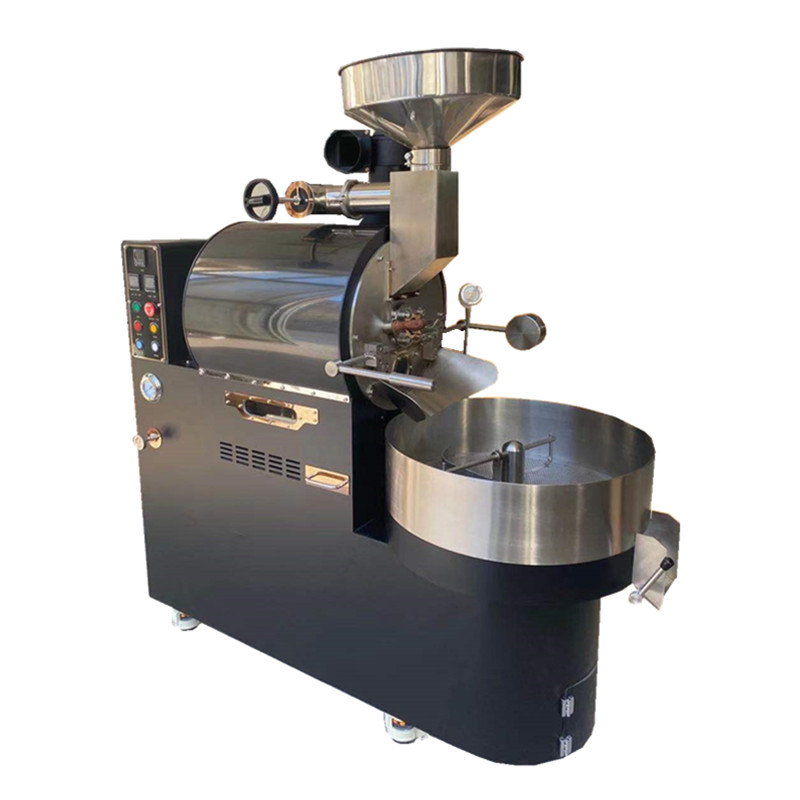
Button-operated coffee roasting machines prioritize clarity and ease of use, making them ideal for environments where speed and accuracy are essential. Unlike rotary knobs or touchscreens, buttons provide distinct, tactile feedback with each press, reducing the risk of accidental adjustments during high-pressure roasting sessions. For example, a dedicated “Start/Stop” button ensures the machine only activates when intentionally pressed, while separate buttons for increasing or decreasing temperature prevent over-correction. This design simplicity is especially valuable in busy cafés or training settings, where operators may need to manage multiple tasks simultaneously without second-guessing their inputs.
The durability of button controls is another key advantage. Built to endure repeated use, these components rarely wear out or lose responsiveness, even in harsh roasting environments filled with heat and dust. Their physical nature also makes them less prone to software glitches or calibration issues that can plague digital interfaces. For roasters who prefer a no-fuss approach, button-based systems offer reliability that aligns with the hands-on nature of coffee roasting, ensuring consistent performance batch after batch.
Streamlined Temperature Adjustments Through Segmented Inputs
Temperature management is critical in coffee roasting, and button controls simplify this process by breaking it into manageable steps. Instead of turning a knob or swiping a slider, operators press buttons labeled with specific increments (e.g., +5°C or -10°F) to fine-tune heat settings. This segmented approach allows for precise control, particularly during delicate phases like the Maillard reaction, where small temperature shifts can dramatically alter flavor profiles. Some machines include a “Hold” button to maintain a target temperature automatically, freeing the roaster to focus on other parameters like airflow or drum speed.
For added convenience, button-based systems often incorporate preset shortcuts. A “Light Roast” button might automatically set the temperature to 190°C and adjust airflow for a balanced, acidic profile, while a “Dark Roast” button could raise the heat to 220°C and slow the drum speed for a bold, caramelized finish. These presets serve as starting points for experimentation, enabling roasters to explore new styles without memorizing complex settings. By combining discrete inputs with intelligent defaults, button controls strike a balance between customization and efficiency.
Airflow Regulation with Dedicated Press-and-Hold Buttons
Controlling airflow is essential for achieving even roasts and preventing scorching, and button-operated machines handle this task with precision. Dedicated “Airflow Increase” and “Airflow Decrease” buttons allow operators to adjust fan speed or damper position in small, controlled steps. For instance, pressing the “Increase” button three times might raise airflow by 10%, providing granular control over heat distribution within the roasting chamber. Some designs include a “Max Airflow” button for rapid cooling during the final stages, ensuring beans stop roasting precisely at the desired moment.
To prevent unintended changes, many systems use press-and-hold functionality for critical adjustments. For example, holding the “Airflow Decrease” button for two seconds might unlock deeper adjustments, while a single press makes minor tweaks. This layered approach reduces the likelihood of over-ventilating the chamber, which could lead to uneven development or loss of volatile aromatic compounds. By combining intuitive button presses with safety features, roasters maintain full command over airflow without sacrificing speed or accuracy.
Drum Speed Customization via Multi-Function Buttons
The rotation speed of the roasting drum influences how beans move through the heat, and button-based systems offer straightforward ways to customize this parameter. Multi-function buttons labeled “Drum Speed” might cycle through preset levels (e.g., Slow, Medium, Fast) with each press, while a separate “Drum Lock” button pauses rotation for manual inspection or sampling. This flexibility allows roasters to adapt their technique to different bean densities or roast styles—slow speeds for high-moisture beans or fast rotations for high-volume batches.
Some machines integrate drum speed control with other functions, such as temperature or airflow, through a single button interface. For example, holding the “Drum Speed” button while pressing “Temperature Up” might simultaneously raise heat and increase rotation, creating a synchronized adjustment for specific roast profiles. This interconnected approach streamlines workflows, reducing the number of buttons operators need to manage during complex roasts. By leveraging multi-function inputs, button-based systems prove that simplicity doesn’t have to mean limited capability.
Enhancing Workflow Efficiency with Programmable Memory Buttons
Modern button-operated roasters often include programmable memory functions, allowing operators to save and recall custom roast profiles with the press of a button. For instance, a “Memory 1” button might store settings for a floral Ethiopian bean, including temperature curves, airflow patterns, and drum speed, while “Memory 2” could retain parameters for a chocolatey Brazilian variety. This feature eliminates the need to manually reconfigure the machine for each batch, saving time and ensuring consistency across production runs.
Programmable buttons also support collaborative roasting environments, where multiple operators share the same machine. Each team member can save their preferred settings under a unique memory slot, preventing confusion or inconsistent results. Some systems even allow exporting memory data to external devices, enabling roasters to share profiles with colleagues or replicate successful batches across different locations. By combining the reliability of button controls with the flexibility of digital storage, these machines cater to both traditionalists and innovators in the coffee industry.