

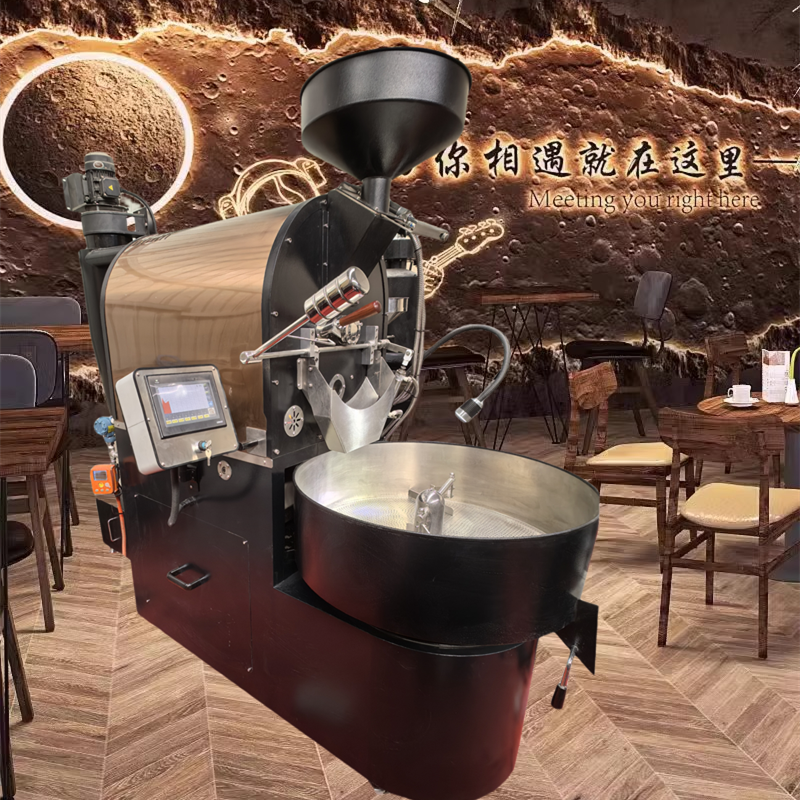
Non-Toxic Certification and Safety Testing for Coffee Roasting Machines: Key Considerations
Material Composition Analysis for Chemical Safety
Heavy Metal Leaching Tests
Coffee roasting machines undergo rigorous testing to ensure no harmful metals contaminate beans during heating. Stainless steel components, commonly used in roasting chambers, are evaluated for chromium, nickel, and manganese migration under simulated roasting conditions (200–250°C). Independent laboratories conduct 24-hour extraction tests using acidic solutions to mimic coffee’s natural acidity, verifying compliance with FDA limits of 0.5 ppm for total metal release.
Food-Grade Coating Verification
Non-stick surfaces and protective coatings must meet FDA 21 CFR Part 175 standards for indirect food contact. This involves analyzing polymer-based finishes for perfluorinated compounds (PFCs) and bisphenol A (BPA), which are banned in many regions due to endocrine-disrupting properties. Testing protocols include gas chromatography-mass spectrometry (GC-MS) to detect trace contaminants at parts-per-billion levels.
Plastic Component Safety
Components like bean hoppers and drip trays made from polycarbonate or ABS plastics are screened for phthalates and styrene migration. Thermal stability tests assess whether these materials degrade at roasting temperatures, releasing volatile organic compounds (VOCs). Only plastics rated for continuous use at 120°C or higher are approved for critical contact zones.
Operational Emission Testing
Volatile Organic Compound (VOC) Monitoring
Roasting machines must limit emissions of harmful gases like formaldehyde and benzene during operation. Continuous airflow analyzers measure VOC concentrations in exhaust streams, ensuring levels remain below 0.1 ppm—a threshold set by occupational safety agencies. Some regions require real-time monitoring systems to alert operators if emissions spike unexpectedly.
Particulate Matter Control
Chaff and dust generated during roasting are captured through HEPA filtration systems rated for 99.97% efficiency at 0.3 microns. Regular maintenance checks verify filter integrity, preventing fine particles (PM2.5) from entering workshop air. Studies link prolonged exposure to coffee dust with respiratory issues, making this critical for worker safety.
Carbon Monoxide (CO) Prevention
Incomplete combustion in gas-powered roasters can produce CO, a lethal gas. Forced-air ventilation systems with CO sensors are mandatory, automatically shutting down equipment if concentrations exceed 35 ppm. Manufacturers optimize burner designs to achieve 99.9% combustion efficiency, minimizing byproduct formation.
Third-Party Certification Requirements
Global Safety Standards Compliance
Roasting machines must pass certifications like UL 197 (North America) or EN 60335 (Europe), which include flame resistance tests for electrical components. These standards require wiring harnesses to withstand 850°C without igniting and insulation materials to resist degradation at 130°C.
NSF International Certification
For commercial use, machines often undergo NSF/ANSI 4 testing, which evaluates material safety in foodservice equipment. This includes microbial resistance tests for surfaces exposed to moisture and stress-cracking assessments for plastic parts under thermal cycling.
RoHS and REACH Compliance
Electronic control systems must comply with the Restriction of Hazardous Substances (RoHS) directive, limiting lead, mercury, and cadmium in solder and circuit boards. The EU’s REACH regulation further mandates documentation for all chemical substances used in gaskets and seals, ensuring no restricted phthalates or flame retardants are present.
Long-Term Durability and Safety
Thermal Aging Tests
Materials are subjected to accelerated aging at 300°C for 500 hours to simulate years of use. This reveals potential degradation in coatings or structural weaknesses in metals. For example, some alloys may develop micro-cracks after prolonged heating, increasing the risk of metal fragmentation into beans.
Corrosion Resistance Validation
Roasting chambers exposed to humid environments must resist rusting. Salt spray tests (ASTM B117) assess stainless steel’s ability to withstand corrosive conditions, ensuring no iron particles enter the roasting process. This is critical for coastal regions with high humidity levels.
Electrical Safety Endurance
Components like heating elements and thermocouples undergo 10,000-cycle fatigue tests to verify reliability under repeated on/off operations. This prevents electrical failures that could spark fires or release toxic fumes from overheated insulation.
Consumer-Level Safety Features
Automatic Shutoff Mechanisms
Overheating protection systems use dual thermocouples to cross-verify temperatures. If discrepancies exceed 5°C, the machine powers down within 10 seconds. Some models incorporate pressure relief valves to prevent explosions if airflow becomes blocked.
Child-Safe Design Elements
Exterior controls are recessed or require tool access to prevent accidental operation. Door latches on roasting chambers include interlock systems that halt drum rotation when opened, reducing pinch hazards during maintenance.
Ergonomic Material Handling
Bean chutes and cooling trays are designed to minimize manual contact with hot surfaces. Non-slip grips on removable parts reduce the risk of drops or spills during cleaning, which could expose users to sharp edges or residual heat.
By adhering to these testing protocols and certifications, manufacturers ensure coffee roasting machines meet stringent safety standards without compromising performance. Regular updates to testing methods reflect evolving scientific understanding of material risks, maintaining consumer trust in product safety.