

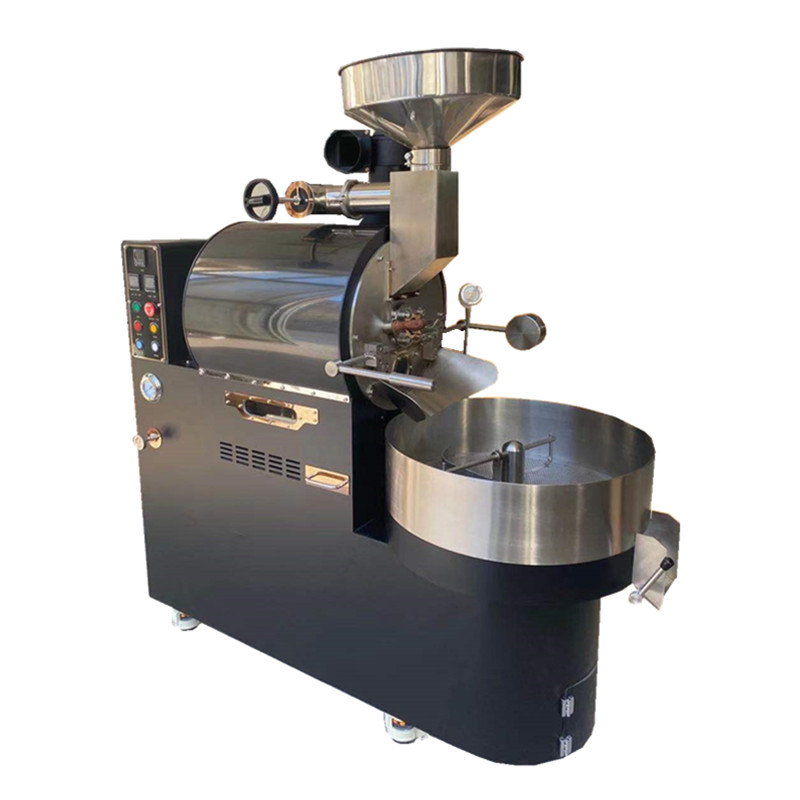
How Hot Air Circulation Technology Transforms Coffee Roasting
Precision in Heat Distribution and Consistency
Hot air circulation technology in coffee roasting machines revolutionizes heat transfer by using forced convection to evenly distribute heat around coffee beans. Unlike traditional drum roasters that rely on conductive heat from a heated metal surface, hot air systems suspend beans in a stream of rapidly moving hot air. This ensures every bean receives uniform exposure to heat, eliminating cold spots and reducing the risk of uneven roasting. For example, beans in the center of the roasting chamber receive the same thermal energy as those near the edges, leading to a consistent roast profile batch after batch.
The technology’s ability to maintain precise temperature control is critical for achieving desired flavor outcomes. By adjusting airflow speed and temperature, roasters can fine-tune the Maillard reaction and caramelization processes. This level of control allows for replication of specific roast curves, ensuring that a Colombian Supremo bean roasted today develops the same nutty sweetness and balanced acidity as one roasted a week earlier. Such consistency is invaluable for commercial roasters serving clients who demand uniform quality.
Enhanced Flavor Development Through Rapid Heat Transfer
Hot air circulation accelerates heat transfer, enabling shorter roasting times without compromising flavor complexity. The rapid movement of hot air around beans ensures moisture evaporates quickly and evenly, preventing localized steam buildup that could lead to uneven development. This efficiency is particularly advantageous for light to medium roasts, where preserving the bean’s origin-specific floral and fruity notes is paramount. For instance, an Ethiopian Yirgacheffe bean roasted using hot air technology retains its signature jasmine aroma and citrus acidity, as the heat penetrates quickly without overcooking the delicate sugars.
The technology also supports multi-stage roasting profiles. By dynamically adjusting airflow and temperature during different phases of the roast, roasters can emphasize specific flavor compounds. Early in the roast, high airflow removes chaff and promotes even drying, while later stages might use reduced airflow to slow down development and enhance body. This flexibility allows roasters to experiment with nuanced flavor profiles, from bright and tangy to rich and chocolatey, without the limitations imposed by slower conductive heating methods.
Operational Efficiency and Environmental Sustainability
Hot air circulation systems are inherently more energy-efficient than traditional roasters. By eliminating the need to heat a large metal drum, these machines reduce energy consumption significantly. The focused heat application means less energy is wasted on heating surrounding components, translating to lower operational costs over time. Additionally, the rapid roasting cycles enabled by hot air technology increase throughput, allowing roasters to process larger batches in less time without sacrificing quality. This efficiency is particularly beneficial for small-to-medium-sized roasteries looking to scale production without investing in multiple machines.
From an environmental perspective, hot air circulation aligns with sustainability goals by minimizing energy waste and reducing carbon footprints. Many modern systems incorporate heat recovery mechanisms that capture and reuse exhaust air, further enhancing efficiency. For example, some designs use the outgoing hot air to preheat incoming fresh air, cutting down on fuel consumption. These innovations not only lower operating costs but also appeal to eco-conscious consumers who prioritize sustainability in their purchasing decisions.
Reduced Maintenance and Improved Workflow
The design simplicity of hot air circulation systems translates to lower maintenance requirements compared to traditional drum roasters. With fewer moving parts—such as gears, belts, and bearings—there’s less wear and tear, reducing the frequency of repairs and downtime. Cleaning is also streamlined, as the open-air design prevents chaff and oil buildup in hard-to-reach areas. For instance, a quick vacuuming of the roasting chamber and airflow ducts is often sufficient to maintain optimal performance, whereas drum roasters may require disassembly and thorough scrubbing to remove stubborn residue.
This ease of maintenance improves workflow efficiency, allowing roasters to focus more on crafting exceptional coffee rather than managing equipment upkeep. The compact footprint of many hot air machines also saves valuable space in roasting facilities, enabling operators to optimize their layouts for maximum productivity. Whether in a bustling urban café or a specialized micro-roastery, the practical advantages of hot air circulation technology contribute to smoother operations and higher output quality.