

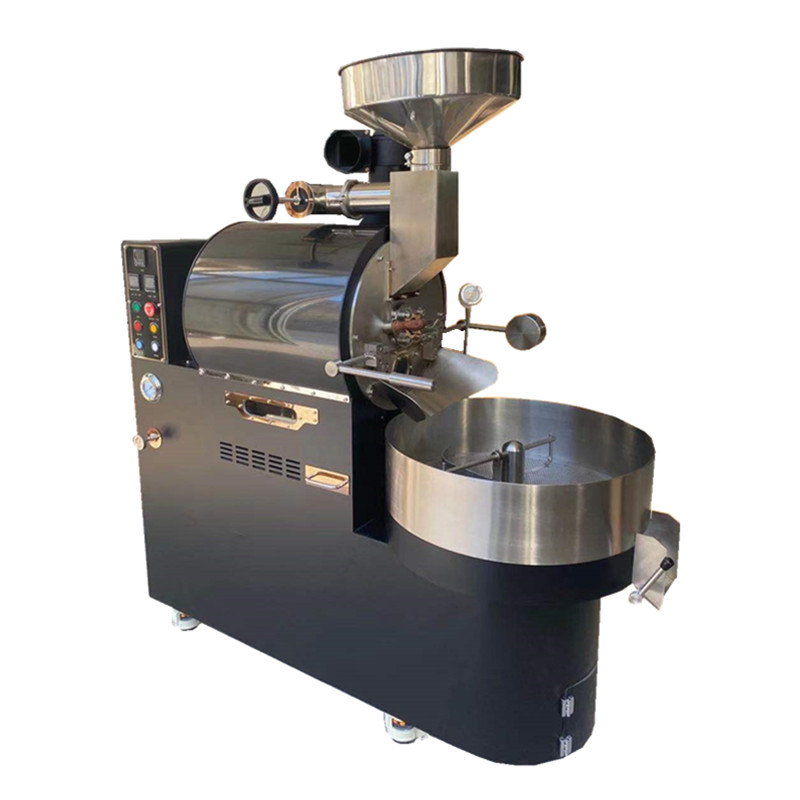
Optimizing Coffee Roaster Performance: The Importance of Effective Heat Dissipation
Coffee roasting is a high-temperature process that generates significant heat, requiring careful management to ensure consistent roast quality, machine longevity, and operator safety. Effective heat dissipation systems in coffee roasters play a crucial role in maintaining optimal operating conditions, preventing overheating, and supporting sustainable energy use.
Understanding Heat Generation in Coffee Roasting
During roasting, coffee beans undergo a series of chemical transformations that require precise temperature control. The heating elements in a roaster—whether gas, electric, or infrared—generate intense heat to drive these changes, from drying the beans to developing their flavor compounds. However, this heat must be carefully regulated to avoid scorching or uneven roasting.
Sources of Excess Heat
Excess heat in a roaster can come from several sources, including the heating system itself, friction between moving parts, and residual heat trapped in the roasting chamber after the process ends. Without proper dissipation, this heat can accumulate, leading to temperature fluctuations that compromise roast consistency. For example, if the roasting chamber retains too much heat between batches, subsequent roasts may begin at a higher temperature than intended, resulting in over-roasted beans.
Additionally, heat generated by the motor, fans, and other mechanical components can contribute to overall thermal stress. This is particularly relevant in commercial roasters, which operate for extended periods and are subject to continuous wear and tear. Effective heat dissipation helps mitigate these issues by ensuring that excess heat is efficiently removed from the system.
Designing for Airflow: The Role of Ventilation Systems
Proper airflow is essential for managing heat in coffee roasters. Ventilation systems are designed to circulate air through the roasting chamber, carrying away excess heat and maintaining a stable temperature environment. This is achieved through a combination of intake and exhaust vents, strategically placed to promote efficient air movement.
Intake Vents and Cool Air Supply
Intake vents allow cool air to enter the roaster, helping to regulate the temperature inside the roasting chamber. These vents are often positioned near the heating elements or at the base of the machine to ensure that incoming air is distributed evenly. In some designs, adjustable intake vents allow operators to control the volume of air entering the system, providing flexibility to adapt to different roast profiles or ambient conditions.
For example, during lighter roasts, which require lower temperatures, increasing the intake of cool air can help prevent the beans from overheating. Conversely, during darker roasts, reducing airflow may be necessary to maintain the higher temperatures needed for caramelization and oil development.
Exhaust Systems for Heat Removal
Exhaust systems are equally important for heat dissipation, as they expel hot air from the roasting chamber. These systems typically include fans or blowers that create negative pressure, drawing hot air out of the machine and preventing it from recirculating. The placement of exhaust vents is critical—they must be positioned to ensure that hot air is removed efficiently without disrupting the roasting process.
In some roasters, exhaust systems are equipped with heat exchangers or filters to recover and reuse heat or remove particulates from the air. This not only improves energy efficiency but also reduces the environmental impact of roasting operations by minimizing heat waste and air pollution.
Material Selection for Enhanced Heat Dissipation
The materials used in constructing a coffee roaster significantly influence its ability to dissipate heat. High-thermal-conductivity materials, such as aluminum or copper alloys, are often used in components like heat sinks, roasting drums, and exhaust ducts to facilitate efficient heat transfer.
Heat Sinks and Thermal Mass
Heat sinks are passive components that absorb and dissipate heat through their large surface area. In coffee roasters, heat sinks may be integrated into the design of the roasting chamber or attached to critical components like motors or electronic controls. These devices help prevent localized overheating by spreading heat evenly across their surface, where it can be carried away by airflow.
Thermal mass, or the ability of a material to absorb and store heat, also plays a role in heat dissipation. Materials with high thermal mass, such as cast iron or thick steel, can help stabilize temperatures during roasting by absorbing excess heat during peak periods and releasing it slowly as needed. This buffering effect reduces temperature fluctuations and promotes more consistent roast results.
Insulation vs. Dissipation: Finding the Balance
While insulation is important for retaining heat during roasting, it must be balanced with effective dissipation to prevent overheating. Insulating materials like ceramic fibers or silicate blankets are used to line the roasting chamber and reduce heat loss to the environment. However, these materials must be carefully selected and applied to ensure that they do not inhibit airflow or trap excess heat inside the machine.
In some designs, insulation is combined with ventilation channels or perforations to allow controlled heat escape while maintaining thermal efficiency. This approach ensures that the roaster retains enough heat to drive the roasting process but releases excess heat before it can cause damage or inconsistency.
Advanced Cooling Technologies for High-Performance Roasters
As coffee roasting technology evolves, advanced cooling solutions are being incorporated to improve heat dissipation in high-capacity or specialized roasters. These technologies range from liquid cooling systems to phase-change materials, offering enhanced thermal management capabilities.
Liquid Cooling Systems
Liquid cooling systems use a circulating coolant—typically water or a water-glycol mixture—to absorb and carry away heat from critical components. In coffee roasters, liquid cooling may be applied to motors, electronic controls, or even the roasting drum itself. The coolant flows through channels or jackets surrounding these components, absorbing heat and transferring it to a radiator or heat exchanger, where it is dissipated into the environment.
Liquid cooling is particularly effective in high-temperature applications, as it can remove large amounts of heat quickly and consistently. This technology is often used in industrial roasters or specialized machines designed for continuous operation, where traditional air cooling may be insufficient.
Phase-Change Materials for Thermal Buffering
Phase-change materials (PCMs) are substances that absorb or release heat as they change between solid and liquid states. In coffee roasters, PCMs can be integrated into the design to provide thermal buffering, absorbing excess heat during peak roasting periods and releasing it slowly as the machine cools down. This helps maintain stable temperatures and reduces the strain on cooling systems.
For example, a PCM with a melting point around the desired roasting temperature could be placed near the roasting chamber or heating elements. As the temperature rises during roasting, the PCM absorbs heat by melting, preventing the temperature from spiking. Once the roasting process ends, the PCM solidifies again, releasing the stored heat and helping the machine cool down more efficiently.
By incorporating advanced heat dissipation designs, coffee roasters can achieve greater precision, efficiency, and reliability. From optimized airflow systems to innovative cooling technologies, these solutions ensure that roasters operate at their best, delivering consistent, high-quality coffee with every batch.