

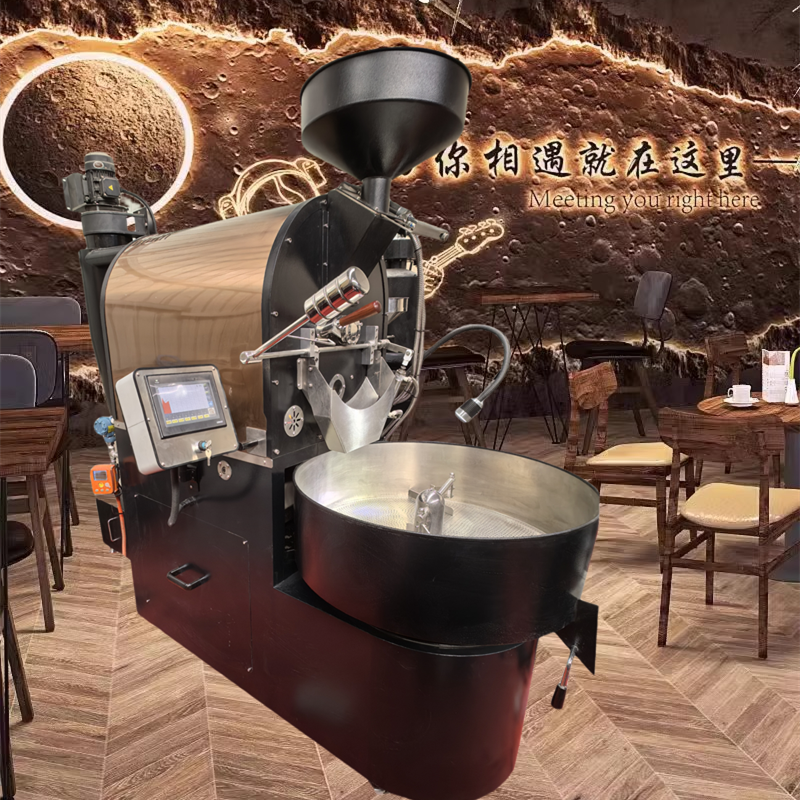
Technological Innovations Driving Precision and Efficiency
The future of coffee roasting machines will be shaped by advancements in precision control and automation. Innovations like AI-powered roast profiling enable machines to analyze bean moisture, density, and origin data, automatically adjusting temperature and airflow parameters to achieve optimal flavor development. For instance, real-time monitoring systems using infrared sensors and thermal cameras will detect uneven roasting, triggering instant corrections to ensure consistency across batches. This level of automation reduces human error and allows professional roasters to replicate complex profiles with minimal intervention, catering to the growing demand for specialty-grade coffee.
Another key area is energy efficiency. Manufacturers are integrating regenerative braking systems and heat recovery units to minimize energy waste during roasting cycles. Some prototypes utilize electromagnetic induction heating, which reduces warm-up times by 40% compared to traditional gas-powered models. These innovations not only lower operational costs but also align with global sustainability goals, appealing to eco-conscious roasters and regulatory bodies alike.
Sustainability as a Core Design Principle
Environmental concerns are pushing the industry toward greener solutions. Future roasting machines will prioritize recyclable materials, such as biodegradable insulation and corrosion-resistant aluminum alloys, to reduce lifecycle environmental impact. Additionally, emission control systems with advanced filtration technologies will become standard, capturing particulate matter and volatile organic compounds (VOCs) to meet stricter air quality regulations.
Water usage is another focus area. Closed-loop cooling systems that recirculate water are being developed to cut consumption by up to 90%, addressing scarcity issues in drought-prone regions. Some designs even eliminate water entirely, relying on air-cooled mechanisms that maintain performance without compromising bean quality. These features not only reduce ecological footprints but also position roasters as leaders in sustainable practices, attracting partnerships with certified green coffee programs.
Customization and Modularity for Diverse Needs
The rise of micro-roasteries and niche coffee brands is driving demand for adaptable equipment. Modular roasting machines with interchangeable components, such as drum sizes or heating elements, allow users to switch between small-batch artisanal roasts and larger commercial volumes without investing in separate devices. For example, a base unit with detachable drums (e.g., 1kg, 3kg, or 5kg capacities) enables roasters to scale operations seamlessly as their business grows.
Software integration is also critical. Cloud-based platforms will let roasters remotely monitor multiple machines, track roast data, and adjust settings via mobile apps. This connectivity facilitates collaboration across global supply chains, enabling roasters to share profiles with partners or troubleshoot issues in real time. Furthermore, API compatibility with inventory management systems ensures raw bean usage aligns with production schedules, minimizing waste and optimizing resource allocation.
Enhanced User Experience Through Intuitive Design
Ease of use is becoming a differentiator in high-end roasting equipment. Touchscreen interfaces with multilingual support and guided workflows simplify operation for staff with varying skill levels. Voice-activated controls and haptic feedback systems are emerging to reduce physical strain during long roasting sessions, while self-cleaning cycles automate maintenance tasks like chaff removal and drum descaling.
Safety enhancements are equally important. Machines equipped with pressure relief valves and automatic shutdown protocols for overheating or malfunctions protect both operators and equipment. Transparent viewing windows with heat-resistant glass allow roasters to observe the process without opening the chamber, preserving temperature stability and reducing burn risks. These features cater to professional environments where efficiency and workplace safety are non-negotiable.