

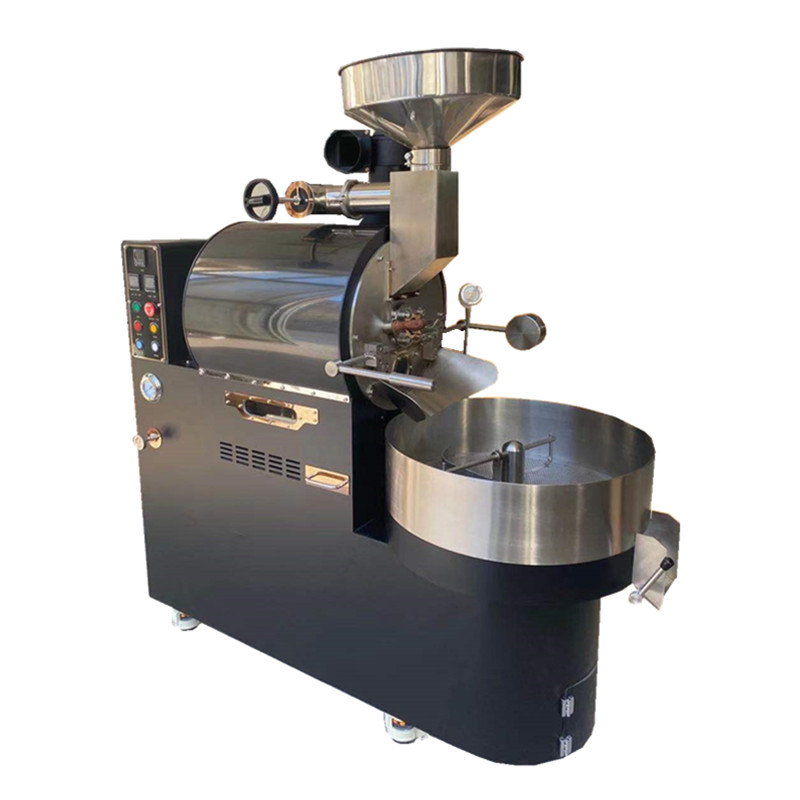
The Core Functions of Intelligent Coffee Bean Roasting Machines
Coffee bean roasting is a transformative process that unlocks the complex flavors hidden within raw beans. Intelligent coffee bean roasting machines have revolutionized this craft by integrating advanced technology with precision control, enabling both professionals and enthusiasts to achieve consistent, high-quality results. Below are the key functionalities that define these modern devices.
Precision Temperature and Airflow Management
Modern roasting machines leverage dual-heat systems to ensure uniform roasting. By combining conductive heat from metal drums with convective heat from hot air circulation, these devices eliminate the risk of unevenly roasted beans—a common issue in traditional direct-flame or full-convection methods. For instance, some models use 230°环绕热源 (230° surrounding heat sources) and adjustable bottom airflow to synchronize the internal and external roasting of beans, even during light roasts. This balance ensures that delicate floral notes in Ethiopian beans or the chocolatey undertones of Brazilian beans are preserved without burning.
Advanced sensors play a crucial role in maintaining stability. Real-time monitoring of bean temperature and environmental heat allows the machine to adjust parameters dynamically. For example, during the Maillard reaction phase, where sugars and amino acids interact to create aromatic compounds, the system can fine-tune heat intensity to prevent over-caramelization. This level of control is particularly valuable for specialty coffee roasters aiming to highlight terroir-specific characteristics.
Customizable Roasting Profiles for Diverse Flavors
Intelligent machines empower users to experiment with roasting curves—time-temperature graphs that dictate how heat is applied throughout the process. Beginners can rely on pre-programmed profiles for popular roast levels (light, medium, dark), while experienced roasters can create and save their own curves. A typical profile might involve a slow initial drying phase at 150°C, followed by a rapid ramp-up to 200°C during development, and a final cooling stage to halt the roast at the desired point.
The ability to replicate profiles is another game-changer. Some devices allow users to scan QR codes or share digital files to reproduce a specific roast exactly, ensuring consistency across batches or even different locations. This feature is indispensable for coffee shops maintaining brand standards or roasters supplying beans to multiple outlets. Additionally, manual overrides for variables like drum speed, airflow rate, and heat intensity provide granular control for crafting unique flavors, such as a nutty medium roast or a fruity light roast with pronounced acidity.
Real-Time Monitoring and Data-Driven Optimization
Visual and digital feedback systems keep users informed at every stage. Transparent viewing windows or internal cameras let roasters observe bean color changes, while digital displays show critical metrics like temperature, time, and roast progress. Some models even include sample probes to extract beans mid-roast for tactile and olfactory evaluation, allowing adjustments on the fly.
Data logging capabilities turn roasting into a science. By recording parameters for each batch, roasters can analyze trends and identify patterns that affect flavor outcomes. For example, they might discover that a slightly lower drying temperature enhances sweetness in a particular origin bean. Over time, this data-driven approach leads to more efficient processes and higher-quality results. Cloud connectivity further extends functionality, enabling remote monitoring via smartphones or tablets and integration with inventory management software for seamless operations.
Efficient Cooling and Post-Roast Handling
Proper cooling is as vital as roasting itself. Intelligent machines incorporate rapid cooling systems to halt the roast quickly, preventing residual heat from continuing to cook the beans and altering their flavor profile. Some models use forced-air cooling or multi-hole trays to reduce bean temperature from 200°C to 40°C in under four minutes, locking in freshness.
Post-roast maintenance is also streamlined. Detachable chaff collectors and waste trays simplify cleanup, while self-cleaning cycles reduce downtime between batches. For commercial settings, high-capacity machines with automated bean discharge mechanisms ensure continuous operation without manual intervention, even during power outages. These features not only save time but also minimize waste, contributing to sustainable practices.
Adaptability for Home and Commercial Use
Whether roasting a few hundred grams for personal use or several kilograms daily for a café, intelligent machines offer scalable solutions. Compact designs with foldable components or modular attachments suit small kitchens, while industrial-grade models with robust stainless-steel construction handle heavy-duty demands. Multi-functional units may include grinding or packaging attachments, creating all-in-one stations for small-batch roasters.
Energy efficiency is another priority. Innovations like heat recovery systems reuse excess energy to preheat incoming beans, cutting power consumption by up to 30%. This not only reduces operational costs but also aligns with global sustainability goals, making intelligent roasting machines a smart choice for eco-conscious businesses.
By blending cutting-edge technology with user-centric design, intelligent coffee bean roasting machines have democratized the art of roasting. They empower everyone from home enthusiasts to professional roasters to explore endless flavor possibilities while maintaining precision and efficiency. As the coffee industry continues to evolve, these devices will remain at the forefront, driving innovation and quality in every cup.