

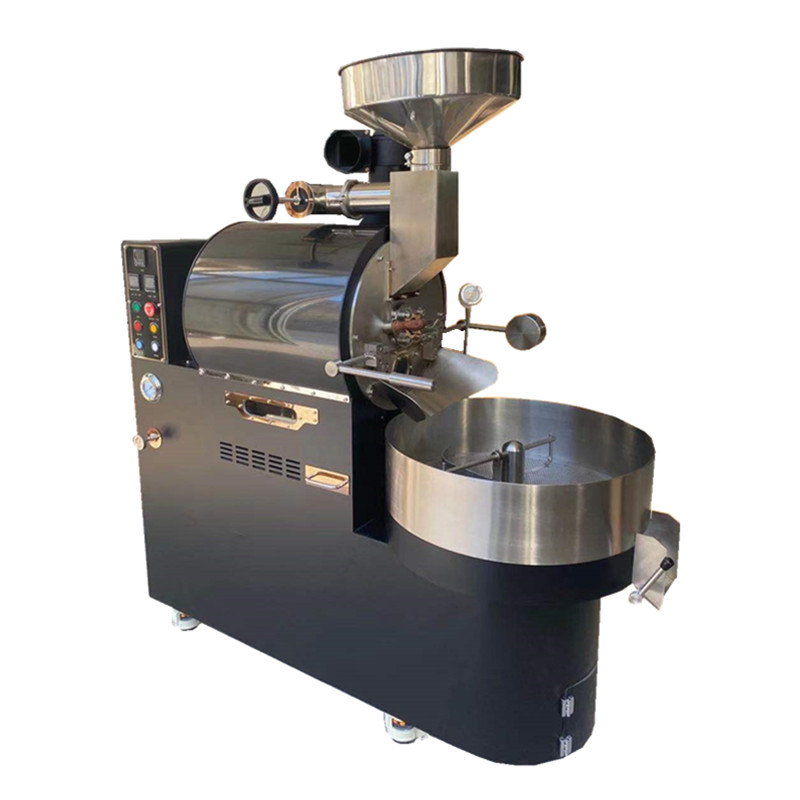
Environmental Standards for Coffee Roasting Machines: A Global Compliance Guide
Coffee roasting machines, as industrial equipment handling high-temperature processes, must adhere to stringent environmental standards to minimize emissions, energy waste, and health risks. These standards vary by region but share core principles focused on air quality, energy efficiency, and waste management. Below is a detailed breakdown of key compliance requirements across major markets.
Air Emission Controls: From VOCs to Particulate Matter
EU Ecodesign Directive and IED Compliance
The European Union’s Industrial Emissions Directive (IED) and Ecodesign Directive set strict limits on volatile organic compounds (VOCs), carbon monoxide (CO), and particulate matter (PM) emissions from coffee roasting facilities. For example:
- VOC Reduction: Roasters must install catalytic oxidizers or regenerative thermal oxidizers (RTOs) to destroy VOCs at temperatures above 760°C, achieving >95% destruction efficiency.
- PM Capture: Multi-stage filtration systems, combining cyclonic separators and electrostatic precipitators, are required to capture >90% of PM2.5 and PM10 particles.
- CO Limits: Continuous monitoring systems must ensure CO emissions remain below 50 mg/Nm³, with automatic shutdown protocols for non-compliance.
U.S. EPA and State-Level Regulations
In the United States, the Environmental Protection Agency (EPA) enforces National Emission Standards for Hazardous Air Pollutants (NESHAP) for coffee roasting. Key requirements include:
- Control Device Efficiency: Afterburners must maintain a minimum residence time of 0.5 seconds at 816°C to oxidize organic pollutants.
- Opacity Limits: Exhaust plumes must not exceed 20% opacity (measured via EPA Method 9) to prevent visible smoke emissions.
- Recordkeeping: Facilities must log operational data (e.g., burner temperature, filter pressure drops) for at least five years to demonstrate compliance.
China’s GB 16297 and Local Standards
China’s GB 16297-1996 standard specifies emission limits for coffee roasting, with additional provincial rules (e.g., Jiangsu’s DB32/4041-2021) imposing stricter caps:
- VOC Concentration: Emissions must not exceed 60 mg/m³ for new facilities and 100 mg/m³ for existing ones.
- PM Thresholds: PM10 emissions are capped at 80 mg/m³, with some regions requiring electrostatic precipitators for large-scale roasters.
- Odor Control: Facilities must install activated carbon filters to reduce odor complaints, with effluent concentrations below 2,000 odor units.
Energy Efficiency: Reducing Carbon Footprints
EU Energy Labeling and Ecodesign
The EU’s Energy Labeling Regulation requires coffee roasters to display energy efficiency classes (A-G) based on specific metrics:
- Standby Power: Machines must consume ≤0.5W in off mode and ≤1W in standby mode (with displays).
- Thermal Efficiency: Drum roasters must recover ≥70% of exhaust heat via heat exchangers to preheat incoming air or water.
- Smart Controls: Models with IoT connectivity must offer energy-saving modes (e.g., automatic shutdown after 30 minutes of inactivity).
U.S. ENERGY STAR and DOE Standards
While ENERGY STAR does not currently certify coffee roasters, the U.S. Department of Energy (DOE) recommends:
- Insulation Requirements: Roasting chambers must use mineral wool or ceramic fiber insulation to minimize heat loss (≤2% per hour).
- Variable-Speed Drives: Drum motors must adjust RPM based on batch size to reduce idle energy use by up to 40%.
- Heat Recovery Systems: Facilities are encouraged to install waste heat boilers to generate steam for other processes (e.g., bean drying).
China’s GB/T 46503-2025 and Beyond
China’s GB/T 46503-2025 standard for household coffee machines includes energy provisions applicable to small-scale roasters:
- Power Consumption: Models must limit peak power to ≤3,000W during roasting cycles.
- Idle Power: Machines must draw ≤1W when not in use, with automatic sleep modes activated after 15 minutes.
- Efficiency Testing: Roasters must demonstrate ≥85% energy transfer efficiency from heating elements to beans during standardized tests.
Waste Management: From Chaff to Used Filters
Hazardous Waste Handling
Coffee roasting generates several waste streams requiring careful management:
- Chaff Disposal: Silver skin (chaff) must be collected in sealed containers and disposed of as non-hazardous waste, though some regions classify it as biomass for energy recovery.
- Used Filters: Activated carbon filters saturated with VOCs must be treated as hazardous waste and incinerated at licensed facilities.
- Oily Wastewater: Water used in wet scrubbers must undergo oil-water separation before discharge, with oil residues sent for refining or incineration.
Recycling and Circular Economy
Leading roasters are adopting closed-loop systems to reduce waste:
- Chaff Recycling: Dried chaff is repurposed as animal bedding, compost additive, or biofuel feedstock.
- Heat Recovery: Exhaust gases are used to preheat combustion air or generate hot water for facility heating.
- Packaging Innovation: Roasters are switching to biodegradable bags made from coffee husks or sugarcane fiber to cut plastic use.
Compliance Strategies for Manufacturers and Operators
Documentation and Certification
- EU CE Marking: Roasters must comply with LVD (EN 60335-1), EMC (EN 55014-1), and RoHS (2011/65/EU) directives to affix the CE mark.
- U.S. EPA Permits: Large facilities need Title V operating permits, requiring annual emissions testing and quarterly reporting.
- China CCC Certification: Electrically heated roasters must pass CCC safety tests (GB 4706.1-2005) before market entry.
Operational Best Practices
- Preventive Maintenance: Clean burners, filters, and ductwork monthly to avoid efficiency drops and emission spikes.
- Staff Training: Train operators on proper batch sizing, temperature control, and emergency shutdown procedures.
- Digital Monitoring: Use IoT sensors to track emissions, energy use, and equipment performance in real time.
By aligning with these standards, coffee roasters can reduce environmental impact, lower operational costs, and meet consumer demand for sustainable products. As regulations tighten globally, proactive compliance will become a competitive advantage in the $200+ billion coffee industry.