

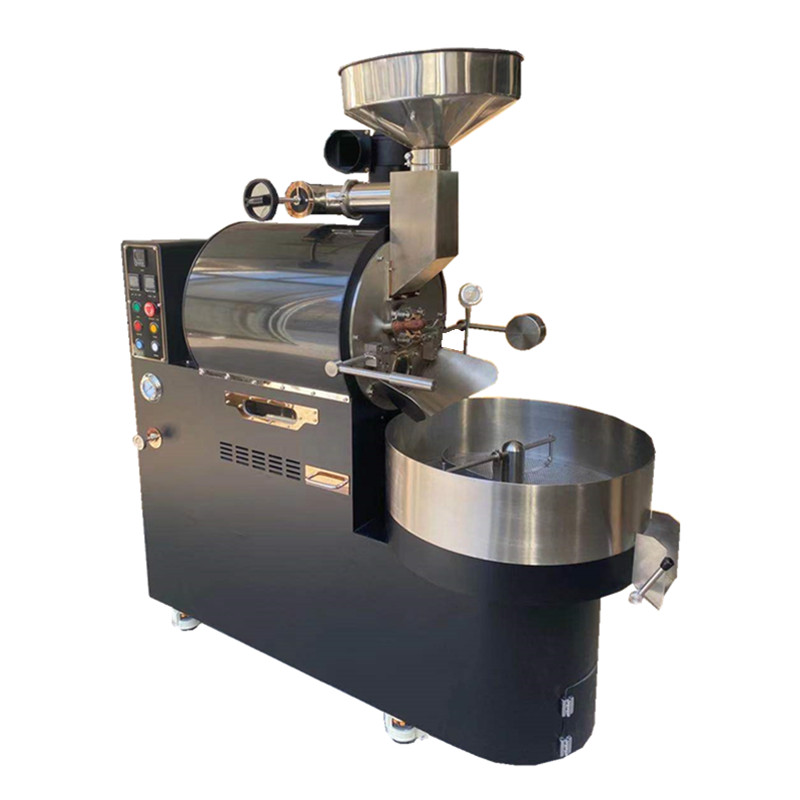
Energy Consumption of Coffee Roasting Machines: A Detailed Analysis
Understanding the energy consumption of coffee roasting machines is crucial for businesses aiming to optimize operational costs and reduce environmental impact. Several factors influence the energy efficiency of these machines, including their heating type, batch size, and operational settings. Below, we explore these aspects in detail.
Heating Type and Energy Efficiency
Coffee roasting machines utilize different heating methods, each with varying energy consumption profiles. The primary types include direct-fire, semi-direct fire (or semi-hot air), and hot air (or pneumatic) roasting machines.
Direct-Fire Roasting Machines
These machines rely on direct contact between the flame and the beans, typically through a perforated drum. While they offer excellent control over the roasting process, they tend to have lower thermal efficiency. Heat loss through the drum’s surface and exhaust can be significant, leading to higher energy consumption. For instance, older drum-style roasters may have thermal efficiencies below 50%, with a substantial portion of heat escaping via smoke and equipment surfaces.
Semi-Direct Fire Roasting Machines
Combining elements of both direct-fire and hot air roasting, these machines introduce hot air into the drum while maintaining some direct flame contact. This hybrid approach improves thermal efficiency by reducing heat loss through the drum’s surface. By adjusting the balance between hot air and direct flame, operators can optimize energy use based on the desired roast profile.
Hot Air Roasting Machines
Hot air roasters utilize forced hot air to circulate around the beans, eliminating direct flame contact. This method offers superior thermal efficiency, as heat is evenly distributed throughout the roasting chamber. Studies indicate that hot air roasters can consume approximately half the energy of traditional drum roasters for the same batch size. Additionally, they require no预热 (preheating), further reducing energy consumption. Their design also minimizes heat loss through exhaust, making them ideal for large-scale operations prioritizing energy savings.
Batch Size and Energy Consumption
The batch size significantly impacts the energy efficiency of coffee roasting machines. Both excessive and insufficient batch sizes can lead to inefficiencies.
Overloading the Roaster
When the batch size exceeds the machine’s capacity, the beans may not receive uniform heat distribution. This results in uneven roasting, with some beans over-roasted and others under-roasted. Moreover, the machine must work harder to maintain the desired temperature, increasing energy consumption. Overloading can also strain the machine’s components, leading to premature wear and higher maintenance costs.
Underloading the Roaster
Conversely, roasting small batches can also be inefficient. The machine must still heat the entire roasting chamber, regardless of the batch size. With fewer beans to absorb the heat, a larger proportion of energy is wasted. Research suggests that when the batch size falls below 40% of the machine’s capacity, unit energy consumption rises sharply. To mitigate this, operators should aim for batch sizes that optimize the machine’s thermal efficiency, typically between 60% and 80% of its maximum capacity.
Operational Settings and Energy Optimization
Fine-tuning operational settings can further enhance the energy efficiency of coffee roasting machines. Key parameters include temperature control, airflow management, and roasting time.
Temperature Control
Maintaining precise temperature control is essential for consistent roast quality and energy efficiency. Advanced roasting machines feature PID (Proportional-Integral-Derivative) controllers that continuously adjust the heat input to maintain the desired temperature profile. This prevents overheating and reduces energy waste. Operators should regularly calibrate temperature sensors to ensure accuracy and avoid unnecessary energy consumption due to temperature fluctuations.
Airflow Management
Proper airflow is critical for even roasting and efficient heat transfer. In hot air roasters, adjusting the airflow rate can significantly impact energy consumption. Higher airflow rates increase heat transfer efficiency but may require more energy to generate the forced air. Conversely, lower airflow rates reduce energy use but may compromise roast uniformity. Finding the optimal balance is key to minimizing energy consumption without sacrificing roast quality.
Roasting Time
The duration of the roasting process also affects energy use. Longer roasting times increase energy consumption, as the machine must maintain the desired temperature for an extended period. However, rushing the roast can lead to underdeveloped flavors and uneven roasting. Operators should aim for roasting times that balance energy efficiency with the desired flavor profile. Using high-efficiency roasting machines and optimizing batch sizes can help reduce roasting time without compromising quality.