

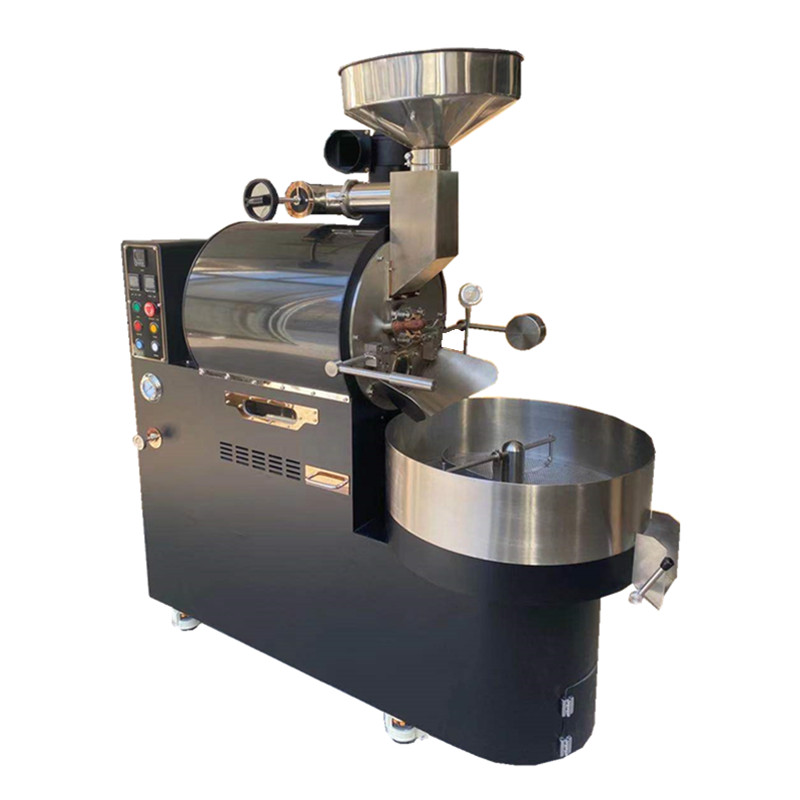
Navigating the Drying Phase in Coffee Roasting: Key Techniques and Observations
The drying phase, often referred to as the initial stage of coffee roasting, sets the foundation for flavor development by removing moisture from green beans and preparing them for the Maillard reaction and caramelization. This phase is critical for achieving even roasting and preventing defects like scorching or uneven color. Below, we explore its defining characteristics, environmental influences, and practical strategies for optimization.
Temperature and Time Management During Dearing Phase
The drying phase typically begins when the roasting drum reaches 150–180°F (65–82°C) and lasts until the beans’ internal moisture content drops from 10–12% to around 5–7%. This process usually spans 4–6 minutes in a standard drum roaster, though timelines vary based on bean density, moisture content, and machine design.
To manage this phase effectively, start with a moderate heat input (e.g., 40–50% of your roaster’s maximum capacity) to avoid rapid temperature spikes that can cause surface scorching. Gradually increase heat as the beans absorb energy, ensuring a steady rise in drum temperature. For example, aim for a rate of rise (RoR) of 5–8°F per minute during the first 2–3 minutes, then adjust to 3–5°F per minute as the beans approach the end of drying. This gradual acceleration helps maintain moisture evaporation without overwhelming the beans’ thermal mass.
Monitoring the beans’ appearance is equally important. Early in the drying phase, green beans retain their pale, olive-like hue and matte texture. As moisture evaporates, they transition to a yellowish-green color and develop a slightly glossy surface, indicating the onset of enzymatic browning. Use a magnifying glass or sampling spoon to inspect beans periodically, ensuring uniform color change across the batch.
Airflow and Environmental Control for Even Drying
Airflow plays a pivotal role in the drying phase by regulating heat distribution and moisture removal. Proper airflow ensures that hot air circulates evenly around the beans, preventing hot spots that lead to uneven roasting. In drum roasters, airflow is controlled by dampers or fans that draw air through the drum’s perforations.
During the early drying phase, lower airflow settings (e.g., 20–30% of maximum capacity) help retain heat near the beans, accelerating moisture evaporation. As the beans dry and their thermal mass increases, gradually increase airflow to 40–60% to carry away excess moisture and prevent condensation inside the drum. For example, if you notice steam lingering around the beans after 3–4 minutes, boost airflow to disperse it, ensuring a dry environment for the next stages.
Environmental factors like ambient humidity and altitude also influence drying efficiency. In humid climates, beans may absorb moisture from the air before roasting, requiring longer drying times or higher initial heat. Conversely, in dry, high-altitude environments, beans lose moisture faster, necessitating closer monitoring to avoid over-drying. Pre-conditioning green beans by storing them in a controlled environment (e.g., 60–70% humidity) can mitigate these variables, promoting consistent drying across batches.
Sensory and Physical Cues to Monitor Drying Progress
While temperature and airflow provide quantitative metrics, sensory and physical cues offer qualitative insights into the drying phase’s progress. One of the most reliable indicators is aroma. Early in drying, beans emit a grassy, vegetal scent reminiscent of freshly cut hay or green tea. As moisture decreases, this aroma transitions to a toasty, bread-like fragrance, signaling the onset of enzymatic browning. If you detect a burnt or acrid smell, reduce heat immediately to prevent scorching.
Another key cue is bean movement within the drum. In the early stages, beans may clump together or stick to the drum’s sides due to residual moisture. As they dry, they become more mobile, tumbling freely in a single layer. This increased mobility ensures even heat exposure, reducing the risk of uneven roasting. Use a clear viewing window or sampling port to observe bean movement, adjusting drum speed or airflow if clumping persists.
Finally, sound provides subtle feedback during drying. As beans lose moisture, they become less dense and more brittle, producing a faint rattling or rustling noise when they collide inside the drum. This sound is distinct from the later cracking stages and indicates that the beans are approaching the end of drying. Pair auditory cues with visual and olfactory checks to confirm progress, ensuring a seamless transition to the Maillard phase.
Common Challenges and Solutions in the Drying Phase
One frequent challenge is uneven drying, where some beans dry faster than others, leading to inconsistent roast levels. This often stems from improper airflow distribution or uneven heat application. To troubleshoot, check your roaster’s airflow dampers for blockages or uneven settings. Use a thermal camera or infrared thermometer to map temperature variations across the drum, adjusting heat sources or fan speeds to create a balanced environment.
Another issue is stalled drying, where the beans’ temperature plateaus despite sustained heat input. This can occur if moisture evaporates too quickly, creating a cooling effect that counteracts the heat. To resolve this, reduce airflow slightly to retain heat near the beans or increase heat input by 10–15% for 1–2 minutes. Monitor the beans closely to avoid overheating once drying resumes.
Lastly, over-drying can strip beans of essential sugars and acids, resulting in a flat, dull flavor profile. Prevent this by setting a target moisture loss percentage (e.g., 5–7% from initial levels) and using a moisture meter to track progress. If you lack a meter, rely on sensory cues like aroma and bean movement to gauge dryness. When in doubt, err on the side of slightly higher moisture content—it’s easier to extend the roast later than to recover lost complexity from over-dried beans.
By mastering the drying phase’s temperature, airflow, and sensory dynamics, roasters lay the groundwork for vibrant, balanced coffees. Whether crafting a bright, acidic light roast or a rich, full-bodied dark roast, understanding drying’s nuances ensures every batch achieves its full potential.