

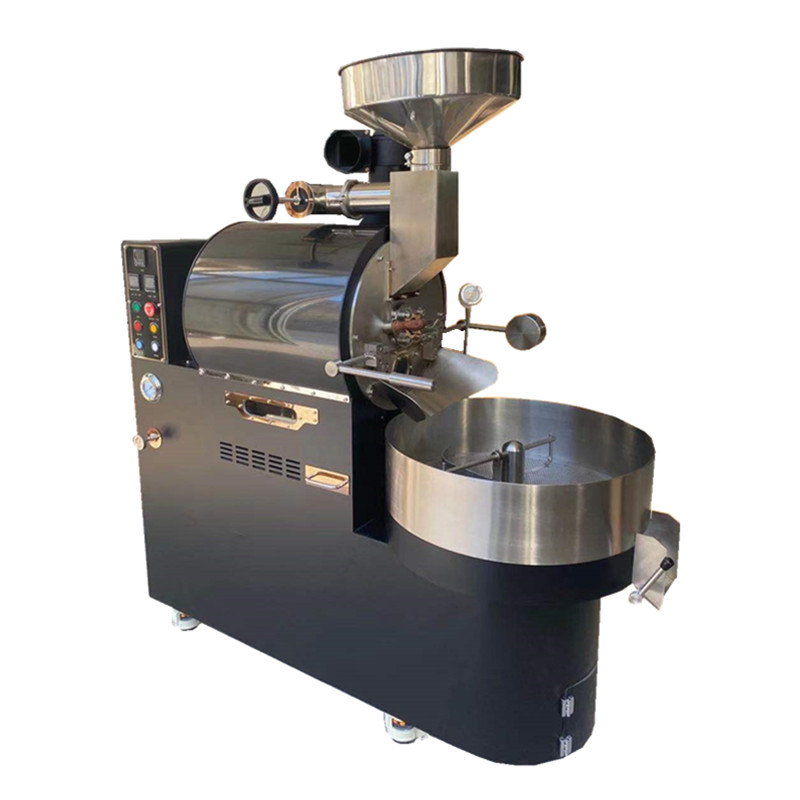
The Automation Level of Coffee Roasting Machines: A Comprehensive Exploration
Evolution of Automation in Coffee Roasting
The journey of coffee roasting automation has been marked by continuous innovation aimed at enhancing precision, consistency, and efficiency. Initially, coffee roasting was a manual process, relying heavily on the skill and experience of the roaster. This method, while artisanal, often led to inconsistencies in flavor profiles due to human error and environmental factors.
As technology advanced, the introduction of basic automated controls began to transform the industry. These early systems allowed for more precise temperature regulation, reducing the variability in roast levels. However, they still required significant human intervention, particularly in monitoring and adjusting parameters throughout the roasting cycle.
The real breakthrough came with the development of fully automated coffee roasting machines. These systems integrate advanced sensors, microprocessors, and software algorithms to control every aspect of the roasting process, from preheating to cooling. This level of automation not only ensures consistent quality but also frees up roasters to focus on more creative and strategic tasks, such as recipe development and customer engagement.
Key Features of Highly Automated Coffee Roasting Machines
Precision Temperature Control
One of the most critical aspects of coffee roasting is maintaining precise temperature control throughout the process. Highly automated machines utilize advanced PID (Proportional-Integral-Derivative) controllers to monitor and adjust the temperature in real-time. This ensures that the beans are roasted evenly, bringing out their full flavor potential without over or under-roasting.
These systems can also account for variations in ambient temperature and humidity, automatically adjusting the roasting profile to compensate. This level of precision is particularly important when roasting different varieties of coffee beans, each with its unique characteristics and optimal roasting parameters.
Automated Batch Management
In a commercial setting, consistency across batches is essential for maintaining brand reputation and customer satisfaction. Automated coffee roasting machines excel in this area by implementing sophisticated batch management systems. These systems can store multiple roasting profiles, allowing roasters to quickly switch between different recipes with minimal setup time.
Moreover, they can automatically adjust the roasting parameters based on the batch size, ensuring that each batch receives the same level of attention and care. This not only improves efficiency but also reduces waste by minimizing the risk of ruined batches due to human error.
Integrated Quality Control
Quality control is an integral part of the coffee roasting process, and automation has made it easier than ever to maintain high standards. Modern roasting machines are equipped with a range of sensors that monitor various aspects of the roasting process, such as bean color, moisture content, and aroma development.
These sensors feed data into the machine’s control system, which can then make real-time adjustments to ensure that the beans meet the desired quality criteria. In some cases, the system can even reject batches that do not meet the specified standards, preventing subpar products from reaching the market.
Benefits of Automation in Coffee Roasting
Enhanced Consistency and Quality
The primary benefit of automation in coffee roasting is the enhanced consistency and quality of the final product. By eliminating human error and variability, automated machines can produce roasts that are identical batch after batch, ensuring that customers receive the same great taste every time.
This consistency is particularly important for coffee shops and retailers that rely on a consistent flavor profile to build their brand identity. It also allows roasters to experiment with new recipes and flavors with confidence, knowing that they can replicate successful roasts on a large scale.
Increased Efficiency and Productivity
Automation also significantly increases efficiency and productivity in the coffee roasting process. By automating repetitive tasks such as temperature monitoring and batch management, roasters can focus their time and energy on more value-added activities, such as recipe development and customer service.
Moreover, automated machines can operate continuously with minimal downtime, allowing roasters to produce larger quantities of coffee in a shorter amount of time. This increased productivity can help roasters meet growing demand and expand their market reach.
Improved Safety and Ergonomics
Coffee roasting can be a physically demanding and potentially hazardous job, particularly when done manually. High temperatures, heavy equipment, and repetitive motions can all pose risks to the health and safety of roasters.
Automation helps to mitigate these risks by reducing the need for manual intervention in the roasting process. Automated machines are designed with safety features such as emergency stop buttons, protective enclosures, and automatic shut-off systems to prevent accidents and injuries. Additionally, by automating repetitive tasks, roasters can reduce the risk of repetitive strain injuries and other musculoskeletal disorders.