

The Critical Role of Cooling Systems in Coffee Roasting: A Technical Guide to Post-Roast Management
Effective cooling after roasting is essential for halting development, preserving flavor integrity, and ensuring safety. This guide explores the mechanics, timing, and techniques of cooling systems in coffee roasting machines without relying on brand-specific tools or recommendations.
Understanding the Cooling Process: Why It Matters
Cooling systems rapidly reduce bean temperature after roasting, preventing over-development and locking in desired flavor profiles. When beans exit the roaster, they retain residual heat that continues to drive chemical reactions, potentially turning a balanced medium roast into a bitter dark one if not addressed promptly.
The primary goal of cooling is to lower bean temperature from around 200–220°C (post-roast) to below 40°C within 3–5 minutes. This rapid transition stops caramelization and Maillard reactions, preserving acidity, sweetness, and aroma. Slow cooling risks flavor degradation, moisture absorption, and mold growth, especially in humid environments.
Heat Retention Risks:
Beans stored warm release CO2 and volatile compounds, which can escape through packaging, leading to stale flavors. Additionally, residual heat may cause condensation inside sealed bags, creating an environment for microbial activity. Proper cooling mitigates these issues, ensuring beans remain fresh and stable.
Components of a Roaster Cooling System
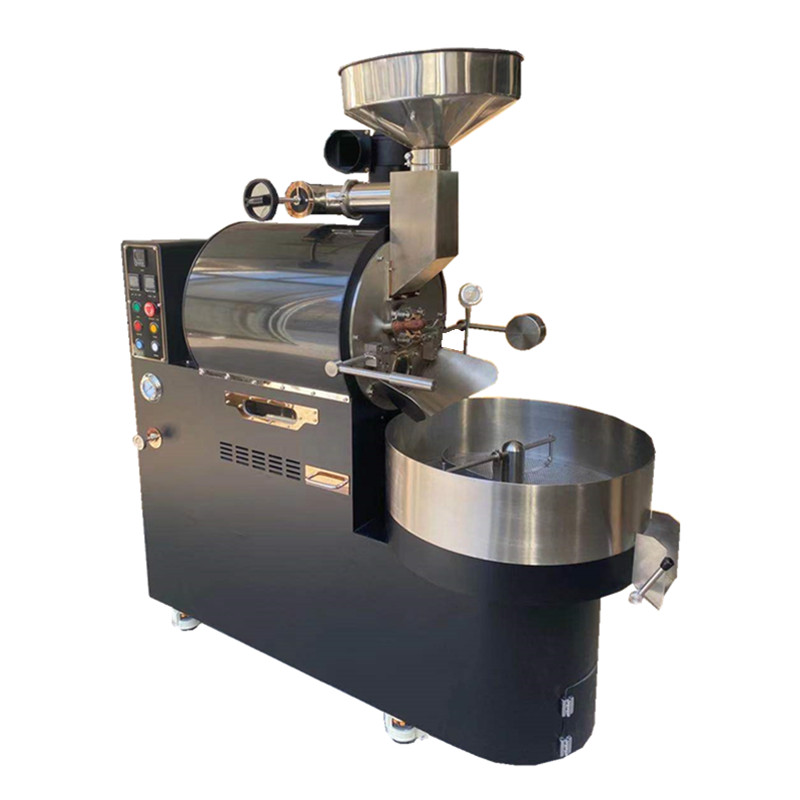
Cooling systems typically consist of three key elements: a cooling tray, airflow mechanisms, and agitation tools, all working together to dissipate heat efficiently.
The cooling tray holds freshly roasted beans, providing a surface for heat exchange. Its design—whether perforated metal, mesh, or slotted—affects airflow penetration. A well-ventilated tray allows hot air to escape while preventing bean loss during agitation.
Airflow mechanisms, such as fans or forced-air ducts, draw ambient air through the beans, accelerating heat loss. Some systems use adjustable fans to control airflow intensity, while others rely on natural convection. The direction of airflow (top-down or bottom-up) also influences cooling efficiency, with bottom-up designs often preferred for even distribution.
Agitation tools, like rotating paddles or vibrating trays, keep beans moving during cooling, ensuring uniform exposure to airflow. Stagnant beans cool unevenly, leading to inconsistent flavor development. Manual agitation (e.g., shaking the tray) works for small batches, while automated systems handle larger volumes more consistently.
Airflow Dynamics:
The volume of air passing through the beans directly impacts cooling speed. Higher airflow removes heat faster but may strip away delicate aromatic compounds if excessive. Lower airflow preserves nuanced flavors but risks incomplete cooling. Finding the balance depends on roast level, batch size, and ambient conditions.
Timing and Techniques for Optimal Cooling
Cooling timing and method vary based on roast level, batch size, and environmental factors. Mastering these variables ensures beans retain their intended flavor and shelf life.
Immediate Post-Roast Action:
Transfer beans to the cooling tray as soon as they exit the roaster. Delaying this step by even 30 seconds can cause over-development, especially for light roasts. Use a trier or scoop to move beans quickly, minimizing heat retention in the roasting chamber.
For small batches (100–500g), manual agitation—such as gently shaking the tray or stirring with a wooden spoon—suffices. Larger batches (1–5kg) require automated agitation, like rotating arms or vibrating platforms, to maintain consistency. Monitor bean temperature with an infrared thermometer, aiming for a drop of 15–20°C per minute initially.
Adjusting for Roast Level:
Light roasts, which retain more heat due to shorter development times, need aggressive cooling (high airflow, frequent agitation) to prevent further caramelization. Medium roasts benefit from moderate cooling (medium airflow, intermittent agitation) to balance sweetness and body. Dark roasts, already low in moisture, require gentler cooling (low airflow, minimal agitation) to avoid drying out and losing their oily sheen.
Environmental Considerations:
Ambient temperature and humidity influence cooling efficiency. In hot climates (above 25°C), increase airflow by 20–30% to compensate for warmer intake air. In humid environments (above 60% RH), reduce cooling time slightly to prevent moisture absorption, which can soften beans and mute flavors. Use a dehumidifier nearby if conditions are extreme.
Advanced Cooling Strategies for Flavor Precision
Experienced roasters employ nuanced techniques to fine-tune cooling and enhance flavor clarity. These methods require practice but offer greater control over final profiles.
Two-Stage Cooling:
For delicate origins (e.g., Ethiopian Gesha), use a two-stage approach: initial rapid cooling (high airflow for 1–2 minutes) to halt development, followed by gentle cooling (low airflow for 2–3 minutes) to preserve volatile aromatics. This method captures bright acidity while maintaining floral notes that might dissipate under aggressive cooling.
Cooling with Intentional Airflow Restrictions:
Limiting airflow during the final cooling stage (e.g., partially closing vents or reducing fan speed) creates a “flavor lock” effect. This technique works well for dark roasts, where retaining oils and body is critical. Monitor bean surface oils: if they appear dull or patchy, increase airflow slightly; if overly shiny, reduce it further.
Batch-Specific Calibration:
Each batch of beans behaves differently based on density, moisture content, and origin. Calibrate cooling parameters by roasting small test batches and adjusting airflow, agitation, and timing accordingly. For example, a high-density Brazilian Santos may require 10% more cooling time than a low-density Colombian Supremo due to its heat retention capacity.
Post-Cooling Storage Prep:
After cooling, let beans rest in a well-ventilated area for 12–24 hours before packaging. This “degassing” period allows residual CO2 to escape, preventing package bloating and preserving freshness. Store beans in airtight containers only after they’ve stabilized at room temperature to avoid condensation.
By understanding cooling system components, timing techniques, and advanced strategies, roasters can elevate consistency and flavor precision. Start with incremental adjustments, prioritize sensory feedback, and adapt to environmental factors to master the art of post-roast cooling.