

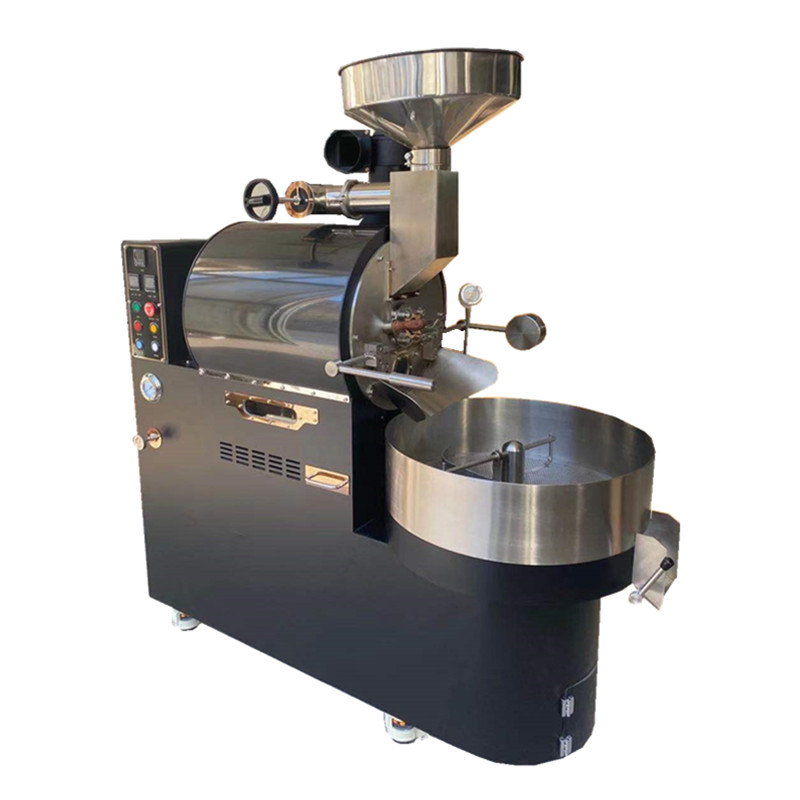
Understanding Coffee Roaster Bean Hopper Capacity: Key Considerations for Home and Commercial Use
When selecting a coffee roaster, the bean hopper capacity is a critical factor that influences workflow efficiency, flavor consistency, and operational convenience. Whether you’re a home enthusiast or a commercial operator, understanding how hopper size impacts roasting outcomes can help you make an informed decision.
How Hopper Capacity Affects Roasting Frequency and Bean Freshness
The size of a bean hopper determines how often you need to refill it during roasting sessions. For home users, smaller hoppers (typically holding 200–500 grams) are suitable for occasional roasting, allowing you to experiment with single-origin beans without excess waste. These compact designs also minimize exposure to oxygen, preserving freshness between batches.
In commercial settings, larger hoppers (1–3 kilograms or more) reduce downtime by enabling continuous roasting. For example, a café roasting multiple batches daily benefits from a high-capacity hopper that minimizes interruptions, ensuring consistent supply for espresso blends or drip coffee. However, larger hoppers require careful monitoring to prevent stale beans, as prolonged storage can degrade flavor profiles.
Balancing Capacity with Space and Maintenance Needs
Hopper size directly correlates with the roaster’s physical footprint. Home roasters often prioritize countertop-friendly models with modest capacities, while commercial machines prioritize throughput over compactness. For instance, a high-volume roaster might integrate a 2-kilogram hopper into a floor-standing unit, whereas a home model could use a 300-gram hopper mounted on a countertop.
Maintenance is another consideration. Larger hoppers may accumulate residual chaff or oils, requiring more frequent cleaning to avoid cross-contamination between batches. Smaller hoppers, while easier to clean, might demand daily refilling, which can be tedious for frequent roasters. Striking a balance between capacity and upkeep ensures optimal performance without unnecessary labor.
Matching Hopper Size to Roasting Goals and Bean Types
Your roasting objectives influence the ideal hopper capacity. If you focus on micro-lots or specialty beans, a smaller hopper lets you roast in smaller batches, preserving nuanced flavors. This is particularly useful for light roasts, where subtle differences in bean origin or processing method shine.
Conversely, if you prioritize volume—such as roasting for a busy café or producing blends for wholesale—a larger hopper streamlines production. Dark roasts, which often use blended beans, benefit from consistent batch sizes enabled by high-capacity hoppers, ensuring uniformity across large quantities.
Practical Tips for Managing Hopper Capacity
- For Home Roasters: Opt for a hopper that holds 1–2 days’ worth of beans to maintain freshness without frequent refills. Use airtight containers to store excess beans away from light and heat.
- For Commercial Roasters: Choose a hopper size that aligns with peak-hour demand. For example, a café serving 100 cups daily might need a 1.5-kilogram hopper to avoid mid-day refills.
- Bean Type Considerations: Denser beans (like some Robustas) may require adjustments to hopper settings to prevent jamming, while lighter beans (like Ethiopian Yirgacheffe) flow more freely.
By aligning hopper capacity with your roasting scale, space, and flavor goals, you can optimize efficiency while ensuring every batch meets your quality standards. Whether you’re crafting a single perfect cup or scaling up for a bustling business, the right hopper size is a foundational element of successful roasting.