

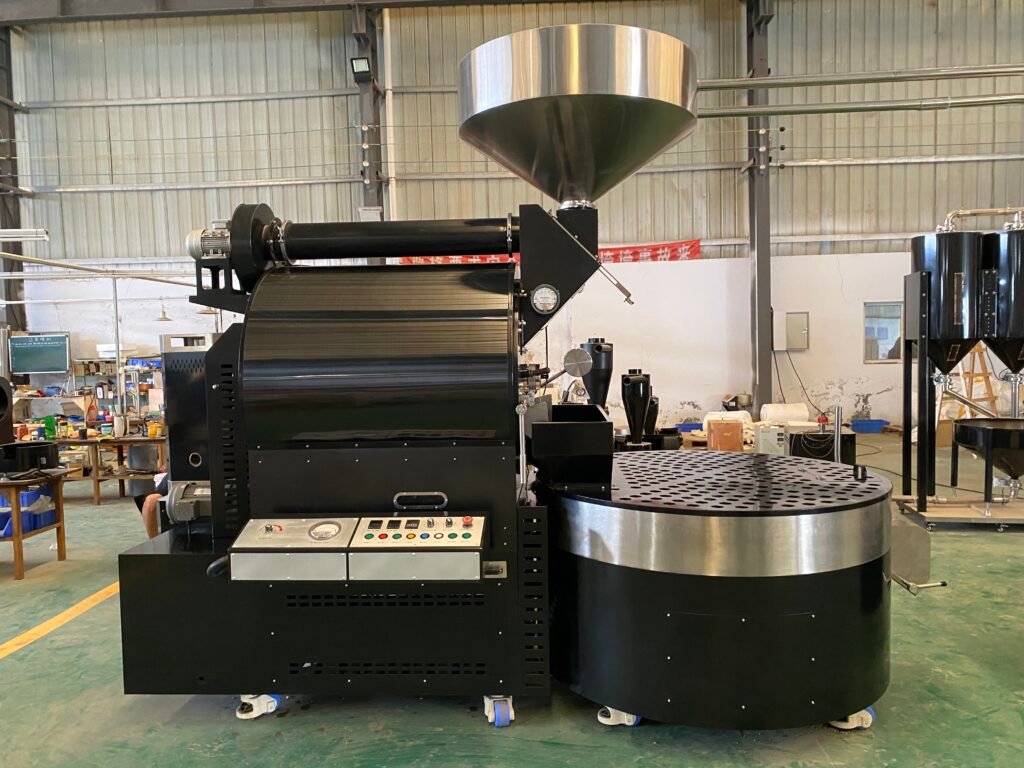
The Essential Process of Home Coffee Bean Roasting
Coffee enthusiasts seeking to elevate their brewing experience often turn to home roasting, a practice that unlocks nuanced flavors and aromas unavailable in pre-roasted beans. This guide explores three accessible methods—stovetop pan, oven, and air fryer—each offering unique control over the roasting process.
Understanding the Roasting Stages
Roasting transforms green coffee beans through a series of thermal and chemical reactions. The process begins with dehydration, where beans lose 7–11% of their moisture content over 5–8 minutes at temperatures below 170°C. As water evaporates, beans transition from green to yellow, emitting a grassy aroma.
The first crack marks the onset of caramelization and Maillard reactions, producing fruity acids and sugars. This stage (200–210°C) defines light roasts, ideal for highlighting terroir-specific notes like citrus or floral tones. Continuing past the first crack leads to medium roasts (215–225°C), balancing acidity with caramel sweetness, while dark roasts (230–240°C) develop bitter chocolate and smoky flavors through prolonged pyrolysis.
A second crack, occurring at higher temperatures, signals the breakdown of cellulose structures, releasing oils to the bean surface. This stage requires precise timing to avoid burnt flavors, as residual heat continues processing beans even after removal from the heat source.
Stovetop Pan Roasting: A Hands-On Approach
This method suits beginners due to its simplicity and direct control. Start with a heavy-bottomed skillet (12–14 inches) and 100–150g of high-quality green beans. Preheat the pan over medium heat (200–250°C) for 2–3 minutes, ensuring even distribution.
Key Steps:
- Initial Stirring: Add beans in a single layer, stirring continuously with a wooden spoon every 15–20 seconds. This prevents uneven browning, a common issue with direct-heat methods.
- Monitoring Development: At 4–5 minutes, beans turn yellow and emit a toasty scent. The first crack begins around 6–8 minutes, indicating light roast readiness. For medium roasts, extend heating 2–3 minutes post-first crack, adjusting stirring frequency to manage temperature.
- Cooling: Immediately transfer beans to a metal sieve, shaking vigorously or using a fan for 2–3 minutes. Rapid cooling halts residual cooking, preserving desired acidity or sweetness.
Pro Tip: Use a thermometer to track pan temperature, reducing heat if beans darken too quickly. Ventilation is critical, as chaff (silver skin) and smoke increase with roast depth.
Oven Roasting: Batch Processing with Precision
Ovens offer batch consistency, accommodating 100–200g per session. A perforated baking sheet or wire rack enhances airflow, mimicking commercial drum roasters.
Preparation:
- Preheat to 230–250°C (220°C for convection models), using an oven thermometer to correct calibration errors.
- Spread beans evenly, avoiding overlap. Place the tray on the middle rack for optimal heat distribution.
Roasting Dynamics:
- Early Stage (0–5 mins): Beans dehydrate, turning pale yellow. Open the oven door briefly every 2–3 minutes to release steam, reducing humidity buildup.
- First Crack (6–10 mins): Listen for popping sounds, signaling light roast completion. For medium roasts, rotate the tray and stir beans gently to address hot spots, then continue heating 4–6 minutes.
- Final Adjustments: Deep roasts require 2–3 minutes post-second crack, monitoring color closely—dark beans should glisten with oils without appearing burnt.
Cooling Protocol: Transfer beans to a sieve, shaking vigorously while directing a fan underneath. This step locks in flavor complexity, as delayed cooling mutes acidity and amplifies bitterness.
Air Fryer Roasting: Compact Efficiency
Air fryers leverage hot air circulation for uniform roasts, ideal for small batches (50–100g). Their compact size suits urban dwellers with limited kitchen space.
Setup:
- Preheat to 200–220°C for 3–5 minutes, ensuring the basket is clean and dry.
- Add beans in a single layer, activating the rotation function if available to minimize manual stirring.
Roasting Workflow:
- Initial Phase (0–4 mins): Beans yellow and emit a grassy scent. Pause the machine every 2 minutes to shake the basket, redistributing heat.
- First Crack (5–8 mins): Popping indicates light roast readiness. For medium roasts, increase temperature to 210–220°C and heat 3–4 minutes longer, pausing to check color uniformity.
- Dark Roast Caution: Avoid exceeding 225°C, as uneven airflow in some models may scorch beans. If pursuing deep roasts, reduce batch size to 70g for better control.
Post-Roast Care: Empty beans into a sieve, cooling rapidly to prevent overdevelopment. Clean the fryer basket thoroughly to remove chaff, which can affect future batches.
Post-Roasting Considerations
Regardless of method, degassing is crucial. Seal roasted beans in an airtight container for 12–24 hours, allowing CO2 release without oxygen exposure, which accelerates staling. For optimal freshness, grind beans within one week of roasting, storing whole beans in a cool, dark place to maintain aromatic compounds.
Experimentation is key—adjust batch sizes, temperatures, and cooling techniques to refine your signature roast profile. By mastering these methods, home roasters can craft bespoke blends rivaling specialty café offerings, one batch at a time.