

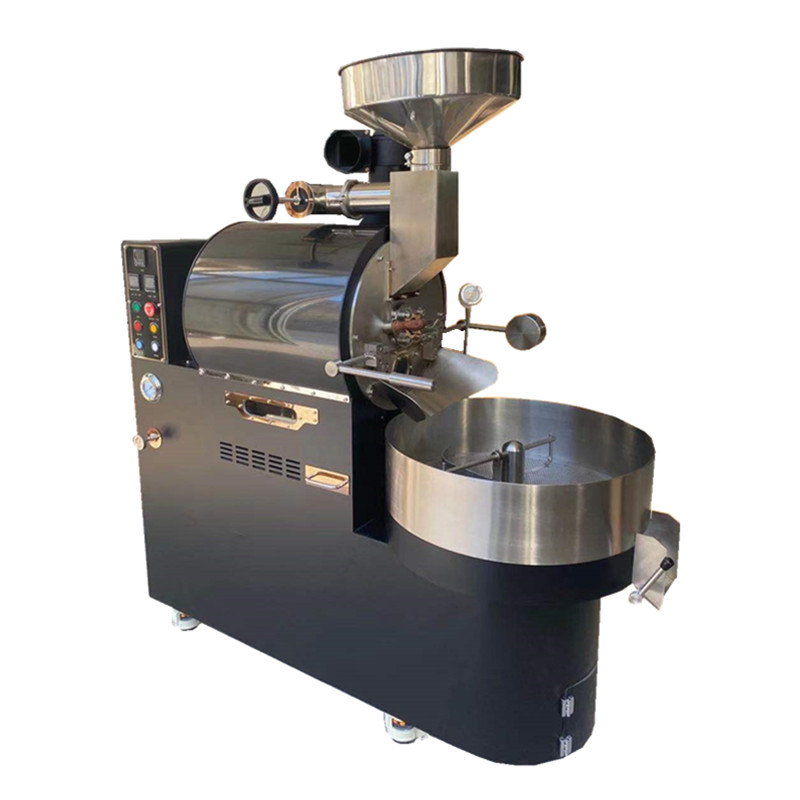
Comprehensive Guide to Coffee Roaster Evaluation: From Features to Practical Performance
Understanding the Core Components of Coffee Roasters
The foundation of evaluating any coffee roaster lies in dissecting its key components. The heating system is the heart of the machine, determining how heat is transferred to the beans. Traditional direct-flame systems, while powerful, risk uneven heating if not properly engineered. Modern semi-hot-air designs balance conduction and convection, ensuring consistent heat distribution. For instance, some advanced models use double-layer stainless steel boilers with insulation to maintain stable temperatures, reducing the risk of scorching beans during high-heat phases like the Maillard reaction.
The drum design also plays a pivotal role. Thicker drums, often made of cast iron or heavy-duty stainless steel, retain heat better but may respond slower to temperature adjustments. Thinner drums heat up faster but can lead to erratic temperature swings. A well-designed drum incorporates a variable-speed motor, allowing roasters to adjust the rotation speed based on bean density and moisture content. For example, denser high-altitude beans might require slower rotation to ensure even heat penetration, while softer, lower-altitude beans benefit from faster agitation to prevent uneven roasting.
Airflow control is another critical factor. Roasters with adjustable airflow systems enable precise management of smoke extraction and heat circulation. During the drying phase, lower airflow helps retain heat, while higher airflow during the development phase ensures even browning and prevents over-roasting. Some models even feature bidirectional airflow, though this can introduce complexity in maintaining consistent flavor profiles if not properly calibrated.
Performance Metrics: Consistency, Control, and Efficiency
Consistency Across Batches
A hallmark of a high-quality roaster is its ability to produce identical results batch after batch. This requires a combination of precise temperature control, uniform heat distribution, and reliable mechanical components. For example, roasters equipped with digital temperature probes and PID controllers can maintain temperature fluctuations within ±1°C, ensuring that each batch follows the same roasting curve. Additionally, automated systems that record and replicate roasting parameters—such as drum speed, airflow, and heat input—eliminate human error, making it easier to achieve consistent results even for novice roasters.
Fine-Tuned Control Over Roasting Parameters
The ability to manipulate variables like heat intensity, drum speed, and airflow is essential for crafting unique flavor profiles. Advanced roasters offer granular control over these parameters, allowing roasters to experiment with different roasting styles, from light and fruity to dark and chocolatey. For instance, during the first crack phase, reducing heat and increasing airflow can help develop complex acidity, while maintaining high heat and lower airflow can emphasize body and sweetness. Some models even allow for real-time adjustments during the roast, giving roasters the flexibility to respond to unexpected changes in bean behavior.
Energy Efficiency and Operational Costs
While often overlooked, energy efficiency is a crucial consideration for commercial roasters operating multiple batches daily. Gas-powered roasters are generally more energy-efficient than electric models, especially for larger capacities, as they provide instant heat and require less preheating time. However, electric roasters with advanced insulation and heat recovery systems can also achieve impressive efficiency, reducing long-term operational costs. Additionally, roasters with automated shutdown features and low-idle power consumption help minimize energy waste during downtime.
Practical Considerations: Usability, Maintenance, and Safety
User-Friendly Design and Ergonomics
A roaster’s design should prioritize ease of use, especially for those new to the craft. Intuitive control panels with clear displays and simple interfaces reduce the learning curve, allowing roasters to focus on the roasting process rather than deciphering complex settings. Ergonomic features, such as easy-access bean chutes, removable cooling trays, and adjustable viewing windows, enhance the overall experience. For example, a roaster with a side-mounted bean chute eliminates the need to lift heavy bags over the machine, reducing strain and the risk of spills.
Maintenance and Longevity
Regular maintenance is essential for ensuring a roaster’s longevity and consistent performance. Models with modular designs and easily accessible components simplify cleaning and repairs. For instance, roasters with removable drum assemblies and detachable chaff collectors allow for thorough cleaning without requiring specialized tools. Additionally, corrosion-resistant materials, such as stainless steel or anodized aluminum, extend the machine’s lifespan by withstanding the harsh conditions of roasting, including high temperatures and exposure to smoke and chaff.
Safety Features and Compliance
Safety should never be an afterthought when evaluating coffee roasters. Look for models with built-in safety mechanisms, such as over-temperature shutoff, flame failure detection, and pressure relief valves. These features protect both the operator and the machine from potential hazards, such as fires or explosions. Additionally, compliance with industry standards, such as CE or UL certifications, ensures that the roaster meets rigorous safety and quality requirements, providing peace of mind for commercial operators.
Real-World Application: Adapting to Different Roasting Environments
Home Roasting vs. Commercial Roasting
The needs of home roasters differ significantly from those of commercial operations. Home roasters typically prioritize compact size, ease of use, and affordability, while commercial roasters require higher capacity, durability, and the ability to produce consistent results at scale. For example, a home roaster might opt for a smaller, electric model with basic controls, while a café or roastery would need a larger, gas-powered machine with advanced automation and batch tracking capabilities.
Adapting to High-Altitude or Humid Environments
Roasting in high-altitude or humid environments presents unique challenges. At higher altitudes, lower air pressure affects heat transfer and bean behavior, requiring adjustments to roasting parameters, such as longer drying times and higher heat input. Humid conditions can also impact roasting, as moisture in the air can slow down the drying phase and lead to uneven roasting. Roasters with adjustable airflow and precise temperature control are better equipped to handle these variables, allowing roasters to maintain consistent quality regardless of environmental conditions.
Scaling Up: From Sample Roasting to Production
For roasters looking to scale their operations, the transition from sample roasting to production requires careful consideration of machine capabilities. Sample roasters, designed for small batches and precise experimentation, may not have the capacity or durability needed for high-volume production. Production roasters, on the other hand, must balance efficiency with quality, ensuring that they can handle larger batches without sacrificing flavor consistency. Some models offer modular designs, allowing roasters to upgrade components or add features as their needs evolve, providing a flexible solution for growing businesses.
By focusing on these key aspects—core components, performance metrics, practical considerations, and real-world application—coffee enthusiasts and professionals alike can make informed decisions when evaluating coffee roasters, ensuring that they select a machine that meets their specific needs and delivers exceptional results.