

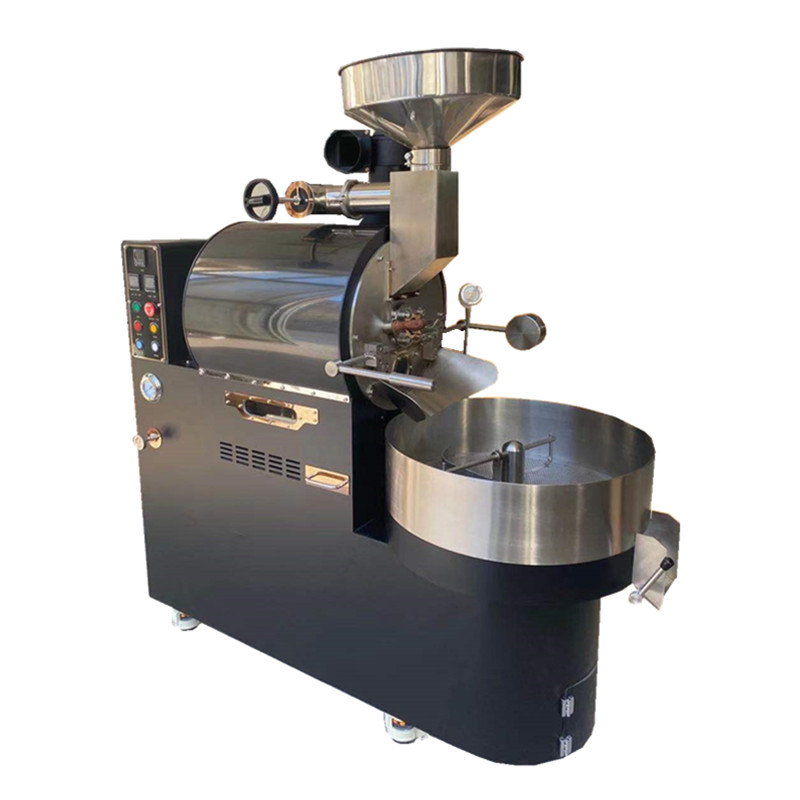
Balancing Cost and Quality: Key Features to Look For
When evaluating coffee roasting machines for cost-effectiveness, prioritize models that offer precision control without excessive complexity. Look for machines with adjustable temperature settings and airflow management systems, as these allow users to fine-tune roast profiles for different bean origins and preferences. For example, a machine with ±2°C temperature stability ensures consistent results across batches, reducing waste and improving flavor clarity. This level of control is particularly valuable for small businesses or enthusiasts aiming to replicate specialty-grade roasts at home.
Another critical feature is energy efficiency. Machines designed with insulated chambers or heat recovery systems minimize energy consumption, lowering operational costs over time. Some models incorporate smart sensors that adjust power usage based on ambient temperature or batch size, further optimizing resource efficiency. These innovations not only reduce environmental impact but also appeal to budget-conscious buyers seeking long-term savings.
Durability and Maintenance: Long-Term Value Considerations
Investing in a roasting machine built with high-grade materials like stainless steel or reinforced alloys ensures longevity, even under heavy use. Components such as bearings, seals, and heating elements should be engineered to withstand high temperatures and frequent operation, minimizing wear and tear. For instance, machines with modular designs allow for easy replacement of individual parts, extending the lifespan of the entire system. This approach is more cost-effective than replacing entire units due to single-component failures.
Ease of maintenance is equally important. Machines with self-cleaning cycles or detachable parts for manual cleaning reduce downtime and labor costs. Automated chaff collection systems, which separate bean husks from the roasting chamber, prevent clogs and maintain consistent airflow. These features are especially beneficial for small-scale roasters who lack dedicated maintenance staff, as they simplify upkeep without requiring specialized knowledge.
Adaptability to Diverse Environments and Needs
High-value roasting machines are designed to perform reliably across varying climates and altitudes. In humid regions, corrosion-resistant coatings and moisture-sealed components prevent rust and electrical damage. Conversely, models intended for cold climates feature enhanced insulation to maintain stable internal temperatures, ensuring consistent roast quality regardless of external conditions. Some machines even include altitude compensation settings, adjusting pressure parameters to account for thinner air at higher elevations.
Cultural preferences also influence machine design. For markets prioritizing espresso, roasters often emphasize deep roasting capabilities to enhance body and caramelization. In contrast, regions favoring light roasts seek machines that preserve acidity and floral notes, incorporating gentle heat application and rapid cooling systems. User interfaces may include multilingual support or preset programs for popular local bean varieties, streamlining operation for international buyers. These adaptations ensure the machine remains versatile and relevant across global markets.
Scalability: From Home Use to Commercial Production
Cost-effective roasting machines cater to evolving needs by offering scalable solutions. Compact, desktop-sized models suit home enthusiasts, providing professional-grade features like programmable roast curves and real-time monitoring via mobile apps. As demand grows, these users can upgrade to larger, semi-industrial machines with higher batch capacities and advanced automation. For example, modular production lines handle 1–5 kg batches, integrating functions like automatic stone removal and post-roast smoke purification to meet global safety standards.
This scalability reduces the need for multiple machines as operations expand, protecting the initial investment. Businesses can start small and incrementally increase output without sacrificing quality, a strategy particularly effective in emerging coffee regions building sustainable supply chains. By supporting seamless transitions between scales, these machines empower users to adapt to market fluctuations while maintaining cost efficiency.