

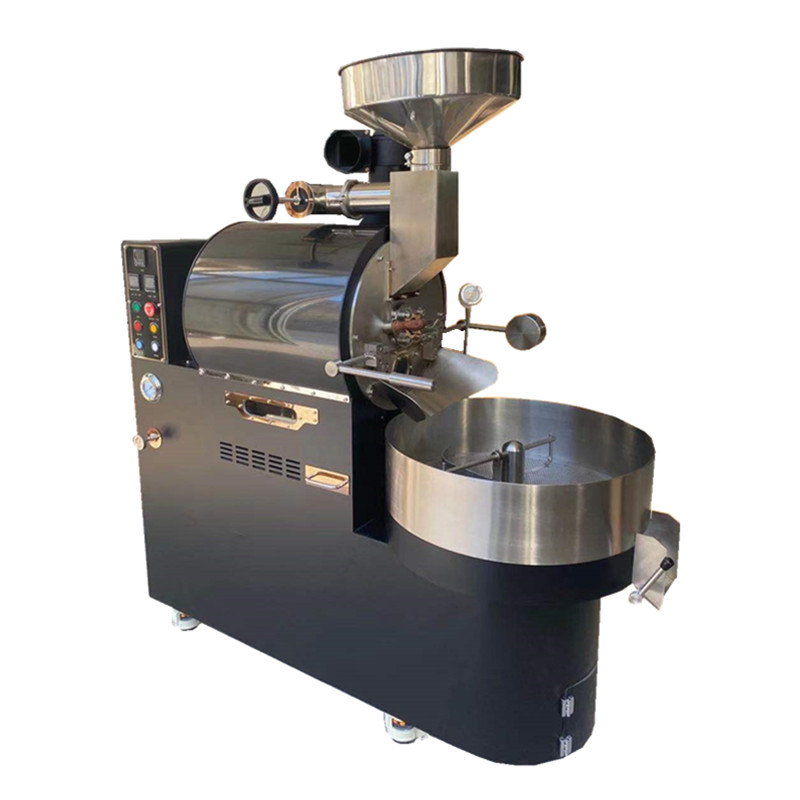
Essential Factors to Consider Before Buying a Coffee Roasting Machine
Understanding Your Roasting Goals and Scale
Before purchasing a coffee roasting machine, clarify your intended use. Home enthusiasts may prioritize compact, user-friendly models for small batches, while cafés or small businesses might need machines capable of handling larger volumes without sacrificing consistency. Consider whether you aim to roast specialty beans with distinct flavor profiles or produce uniform batches for commercial sales. For example, if you plan to experiment with light, medium, and dark roasts, look for machines with adjustable temperature and airflow settings. Scalability is also critical—choose a machine that can grow with your business to avoid frequent upgrades.
Assessing Thermal Control and Roast Uniformity
Precision in temperature management is non-negotiable for achieving desired roast levels. Machines with advanced thermal sensors and digital displays allow real-time monitoring, reducing the risk of uneven roasting. Look for models that maintain stable internal temperatures, ideally within a ±2°C range, to preserve delicate flavor notes in specialty beans. Airflow systems play an equally vital role; consistent circulation ensures even heat distribution, preventing under-roasted or burnt batches. Beginners may benefit from machines with preset roast profiles, while experienced users often prefer fully programmable interfaces for customization. Rapid cooling mechanisms are another plus, as they lock in flavors immediately after roasting.
Evaluating Build Quality and Long-Term Durability
Invest in a machine built to withstand frequent use. High-grade stainless steel or reinforced alloys resist corrosion and wear, extending the machine’s lifespan. Components like heating elements, bearings, and seals should endure high temperatures without degrading quickly. For instance, insulated chambers improve energy efficiency while protecting internal parts from thermal stress. Users in humid climates should prioritize rust-resistant materials, while those in colder regions may need enhanced insulation to maintain stable roasting temperatures. Modular designs with replaceable parts simplify maintenance, reducing long-term costs. Avoid machines with flimsy construction, as they may require frequent repairs or replacements.
Prioritizing Ease of Use and Maintenance
User-friendly features streamline the roasting process, especially for beginners. Intuitive interfaces, such as touchscreens or mobile app integration, simplify parameter adjustments like temperature and roast time. Automated functions, like self-cleaning cycles or chaff collection systems, minimize manual labor and downtime. For example, detachable parts for cleaning ensure consistent performance and hygiene. Clear instructional manuals or video tutorials are invaluable for troubleshooting common issues. Ergonomic designs, such as adjustable heights or lightweight components, cater to users with physical limitations, making the machine accessible to diverse teams. Avoid overly complex machines that require extensive training to operate.
Checking Energy Efficiency and Environmental Impact
Sustainability matters, both for cost savings and environmental responsibility. Look for machines with energy-saving technologies, such as heat recovery systems or smart sensors that adjust power usage based on batch size. Insulated chambers reduce heat loss, lowering energy consumption over time. Some models incorporate smoke purification systems, improving workplace air quality and complying with safety regulations. Durable designs that minimize waste by reducing the need for frequent repairs also contribute to a lower carbon footprint. For eco-conscious buyers, machines with low emissions or recyclable materials align with green business practices.
Adapting to Local Conditions and Cultural Preferences
Coffee roasting machines should suit your region’s climate and cultural tastes. In humid areas, corrosion-resistant materials prevent rust, while insulated models perform better in cold climates. Altitude compensation settings are useful for high-elevation roasters, where thinner air affects pressure and heat distribution. Cultural adaptations, such as multilingual interfaces or preset programs for popular local bean varieties, simplify operation for international users. For example, markets favoring light roasts may need machines with gentle heat application, whereas espresso-centric regions might prioritize deep roasting capabilities. These features ensure the machine remains versatile and relevant across global markets.