

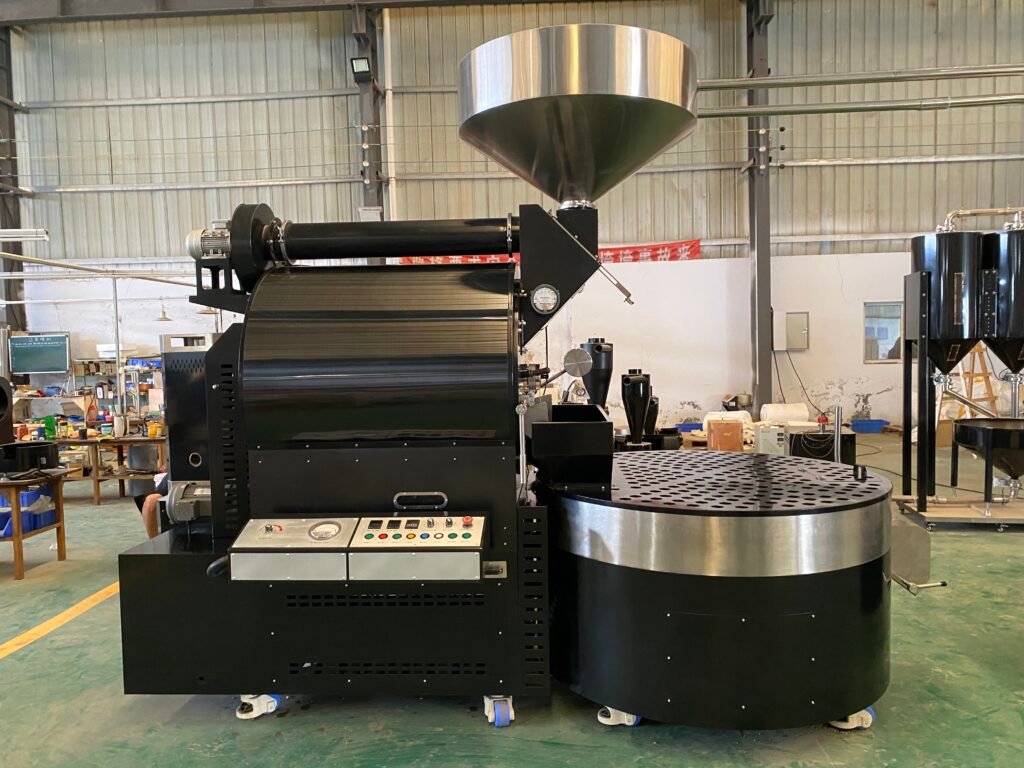
Mastering Fire Control in Coffee Roasting: A Technical Guide
Effective fire control in coffee roasting hinges on understanding thermal dynamics, bean behavior, and machine responsiveness. This guide breaks down the process into actionable stages, emphasizing precision without relying on brand-specific tools.
Pre-Roast Calibration: Setting the Foundation
Before loading beans, calibrate your machine’s heat output to ensure stability. Start by heating the drum to a baseline temperature 10–15°C below your target roast temperature (e.g., 185°C for medium roasts). This accounts for thermal shock when beans enter the chamber. Use a probe thermometer to verify drum temperature uniformity, adjusting airflow or heat distribution if hotspots exist.
For machines without digital controls, preheat for 10–15 minutes, monitoring temperature trends. If the drum struggles to maintain heat, reduce batch size by 20–30% to avoid underdevelopment. Conversely, if temperatures spike rapidly, lower the initial heat setting and extend preheating to build consistent thermal mass.
Initial Heat Application: Balancing Aggression and Control
The first 2–3 minutes after loading beans are critical for establishing roast momentum. Apply heat aggressively (70–80% of maximum output) to counteract the temperature drop caused by bean absorption. Monitor the rate of rise (RoR)—the speed at which temperature climbs per minute—aiming for 5–8°C/min during this phase.
If RoR exceeds 10°C/min, reduce heat by 10–15% to prevent scorching, particularly for delicate origins like Ethiopian Yirgacheffe. For dense beans (e.g., Brazilian Santos), maintain higher initial heat to ensure thorough penetration. Use manual stirring or drum rotation adjustments if your machine lacks automated agitation, ensuring even heat distribution.
Mid-Roast Adjustments: Refining Flavor Development
As beans transition from the drying phase to the Maillard reaction (around 150–190°C), shift focus to flavor clarity. Reduce heat by 20–30% to slow RoR to 3–5°C/min, allowing sugars to caramelize without burning. This stage demands frequent sampling—use a trier to check bean color and surface oils every 30–60 seconds.
For fruity profiles, maintain a slightly higher RoR (4–6°C/min) to preserve acidity. For nutty or chocolatey notes, lower RoR to 2–3°C/min, extending the Maillard phase by 1–2 minutes. Adjust airflow during this stage: increase by 10–15% to carry away chaff, reducing bitterness, or decrease to retain heat for deeper caramelization.
Final Stages: Nailing the Finish
Approaching first crack (195–205°C), stabilize heat to avoid runaway development. If using a gas roaster, reduce flame height by 50%; for electric models, lower power output to 40–50%. Monitor bean expansion—glossy surfaces and audible cracking indicate readiness for the next step.
For light roasts, cut heat immediately after first crack, using residual drum temperature to finish development. Medium roasts benefit from 30–60 seconds of post-crack heat before cooling. Dark roasts require careful management: reduce heat to 20–30% and extend development time by 1–2 minutes, watching for second crack (225–235°C). Avoid letting temperatures exceed 240°C to prevent charring.
Environmental and Mechanical Considerations
External factors like ambient temperature and humidity impact heat retention. In cold climates, preheat the machine 5–10°C higher than usual to compensate for heat loss. In humid environments, extend the drying phase by 1–2 minutes to prevent moisture-related unevenness.
Machine maintenance also plays a role. Clean burners or heating elements weekly to ensure consistent output. Check airflow vents for blockages, as restricted airflow can cause temperature fluctuations. If your machine lacks automated cooling, prepare a cooling tray with a fan to halt development immediately after roasting.
By calibrating pre-roast settings, managing initial heat aggression, refining mid-roast parameters, and executing precise final adjustments, you can master fire control without relying on proprietary tools. Experiment with incremental changes, documenting results to refine your approach over time.