

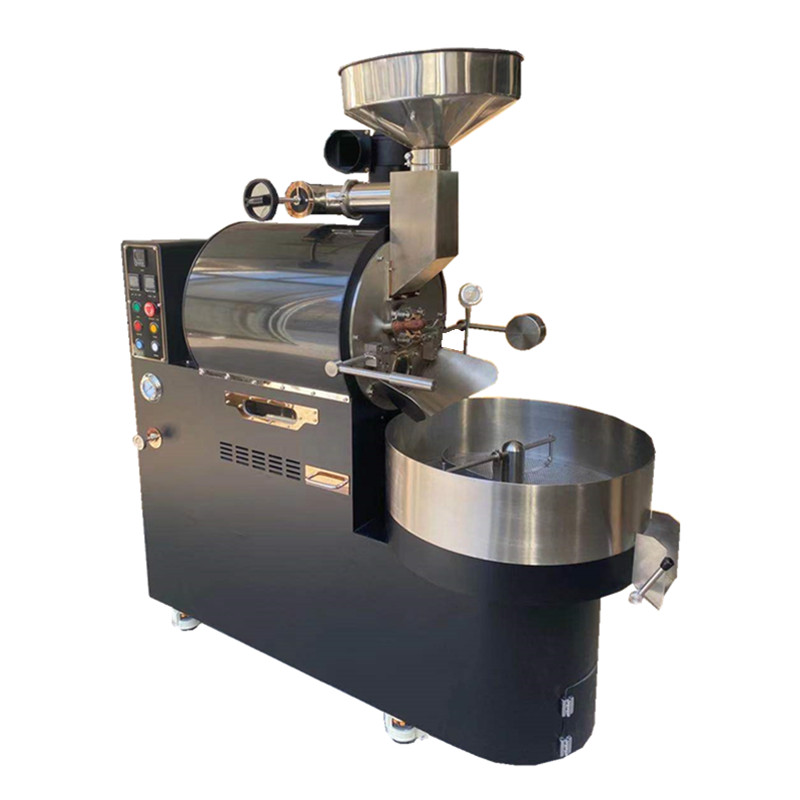
Fine-Tuning Your Coffee Roaster: Essential Parameter Settings for Perfect Batches
Mastering coffee roasting requires understanding how temperature, airflow, and time interact to shape flavor profiles. Whether you’re using a drum roaster, fluid bed system, or hybrid model, adjusting these parameters ensures consistency and highlights the unique characteristics of each bean origin.
Temperature Control: Balancing Heat for Optimal Development
Temperature is the most critical variable in roasting, influencing caramelization, acidity, and body. Most roasters operate within a range of 180°C to 240°C, but precise calibration depends on batch size and desired roast level.
Preheat Settings:
Start by preheating your machine to a baseline temperature 10–15°C below your target roast temperature. For light roasts, aim for 190–200°C; medium roasts thrive at 205–215°C; and dark roasts require 220–230°C. Preheating ensures even heat distribution from the moment beans enter the chamber, preventing uneven development.
Charge Temperature Adjustments:
The initial temperature when adding beans (charge temperature) should be slightly lower than preheat settings to account for thermal shock. For delicate origins like Ethiopian Yirgacheffe, use a charge temperature 5–8°C below preheat to preserve floral notes. Denser beans, such as Sumatran Mandheling, tolerate higher charge temperatures (3–5°C below preheat) to ensure thorough development.
Rate of Rise (RoR) Management:
RoR measures how quickly temperature climbs per minute during the roast. A steady RoR (5–8°C/min) maintains flavor clarity, while erratic spikes risk scorching. Use your roaster’s software or manual thermometers to monitor this metric, adjusting heat input if RoR exceeds 10°C/min, which may indicate excessive drum speed or airflow.
Airflow Dynamics: Enhancing Flavor Clarity and Consistency
Airflow regulates heat transfer and chaff removal, directly impacting roast uniformity. Proper airflow prevents “baking” (stagnant heat causing flat flavors) and ensures each bean develops evenly.
Initial Airflow Setup:
Begin with moderate airflow (40–60% of maximum capacity) to stabilize the environment as beans dehydrate. High airflow early on can strip away volatile aromatic compounds, muting acidity. For light roasts, maintain lower airflow (30–50%) to emphasize fruitiness; increase to 60–70% for dark roasts to carry away smoke and prevent bitterness.
Mid-Roast Adjustments:
Around the first crack, adjust airflow based on bean density and moisture content. High-density beans (e.g., Brazilian Santos) benefit from increased airflow (10–15% higher than initial settings) to prevent uneven pyrolysis. Low-density beans (like Kenyan AA) require gentler airflow (5–10% reduction) to avoid over-drying.
Final Stage Fine-Tuning:
As roasting nears completion, reduce airflow by 20–30% to slow heat transfer, allowing sugars to caramelize without burning. This step is critical for dark roasts, where excessive airflow can create harsh, ashy flavors. Monitor bean color and surface oils—glossy beans indicate proper caramelization, while dry, matte finishes suggest insufficient heat retention.
Drum Speed and Batch Size: Synchronizing Mechanics for Even Roasts
Drum speed and batch size work in tandem to influence agitation and heat penetration. Misaligned settings lead to “tipping” (uneven browning) or “scorching” (burnt patches), ruining batch consistency.
Drum Speed Optimization:
Most roasters operate at 50–70 RPM, but adjustments depend on bean density and roast level. Light roasts benefit from slower speeds (45–55 RPM) to extend development time, preserving acidity. Dark roasts require faster speeds (60–70 RPM) to ensure rapid heat transfer, preventing underdevelopment. Test speeds in 5 RPM increments, noting how beans tumble—ideal movement shows continuous rotation without clumping.
Batch Size Considerations:
Small batches (50–100g) need lower drum speeds (40–50 RPM) to avoid excessive agitation, which can chip beans and create fines. Larger batches (200–500g) thrive at higher speeds (60–70 RPM) to maintain consistent heat distribution. Always fill the drum to 70–80% capacity; overloading restricts airflow, while underloading causes uneven heating.
Origin-Specific Adjustments:
Beans with irregular shapes (e.g., Ethiopian Harrar) require slower drum speeds (5–10 RPM below standard) to prevent breaking. Round beans (like Colombian Supremo) tolerate faster speeds, enhancing heat penetration. For blended batches, prioritize the densest bean’s requirements, adjusting airflow to compensate for lighter components.
Real-Time Monitoring: Leveraging Sensors and Software for Precision
Modern roasters integrate sensors and software to track temperature, airflow, and drum speed in real time. Use these tools to refine parameters mid-roast, addressing deviations before they compromise quality.
Data Logging Benefits:
Record RoR, airflow, and drum speed for each batch to identify patterns. For example, if a Guatemalan Antigua batch develops unevenly, compare its data to successful roasts of the same origin. Look for correlations between RoR spikes and tipping or between low airflow and flat flavors.
Manual Override Capabilities:
Even with automated systems, manual controls allow instant adjustments. If your roaster’s software suggests a 210°C finish but beans appear underdeveloped, manually increase temperature by 5–10°C while reducing airflow to retain heat. Trust sensory cues (aroma, crack intensity) alongside digital data for holistic control.
Environmental Factors:
Ambient temperature and humidity affect roaster performance. In cold climates, preheat longer to compensate for heat loss. In humid environments, increase initial airflow by 10–15% to prevent moisture retention, which can extend development time and mute acidity.
By calibrating temperature, airflow, drum speed, and monitoring tools, you can transform raw green beans into nuanced, flavorful roasts. Experiment with incremental adjustments, prioritizing consistency and origin-specific traits to craft batches that delight even the most discerning palates.