

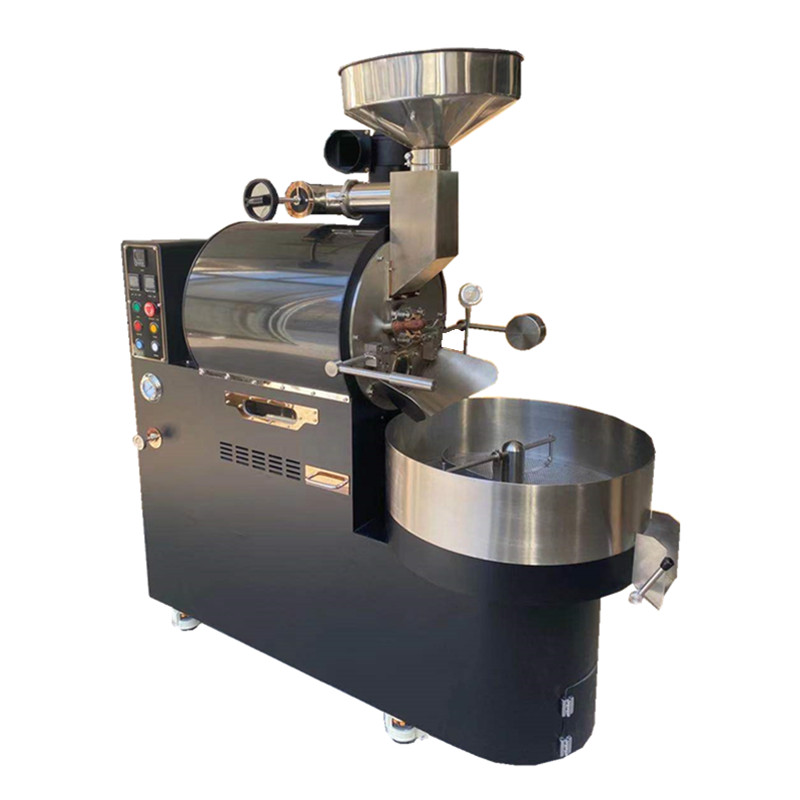
Insights from Using a Coffee Roaster: A Journey of Flavor Discovery
Mastering the Basics: Understanding Your Roaster’s Behavior
When I first started using a coffee roaster, the most crucial lesson was learning how it behaves under different conditions. Every machine has its own quirks, and understanding these nuances is key to achieving consistent results.
Temperature Control: The Heart of Roasting
Temperature management is the foundation of successful coffee roasting. I quickly realized that even slight variations in temperature can dramatically alter the flavor profile of the beans. During the initial drying phase, a lower temperature is essential to prevent scorching the beans’ outer layers while allowing moisture to escape evenly. As the roast progresses into the Maillard reaction stage, a gradual increase in temperature helps develop complex flavors and aromas. However, it’s vital to avoid sudden spikes, as they can lead to uneven roasting or burnt notes. I found that using a digital thermometer with a probe inserted into the bean mass provided real-time feedback, enabling me to make precise adjustments on the fly.
Airflow Dynamics: Balancing Heat and Movement
Airflow plays a pivotal role in controlling the roasting process. In the early stages, a gentle airflow helps retain heat around the beans, promoting even drying. As the roast advances, increasing the airflow becomes necessary to carry away chaff and prevent overheating. I experimented with different airflow settings and discovered that a moderate, consistent flow worked best for most bean varieties. However, for denser, high-altitude beans, a slightly higher airflow helped ensure even heat penetration, while softer, lower-altitude beans benefited from a more subtle approach to avoid excessive agitation.
Drum Speed: Finding the Right Rhythm
The rotation speed of the roasting drum also influences the outcome. A slower drum speed allows beans to stay in contact with the heat source longer, which can be beneficial for developing deep, rich flavors. However, it also increases the risk of uneven roasting if the heat distribution isn’t perfect. On the other hand, a faster drum speed promotes more uniform agitation, ensuring that all beans are exposed to heat equally. I found that a medium drum speed struck a balance between these two extremes, providing consistent results without sacrificing flavor complexity. For certain specialty beans, I adjusted the speed slightly based on their density and moisture content to achieve optimal roasting.
Experimenting with Bean Varieties: Unleashing Unique Flavors
One of the most exciting aspects of using a coffee roaster is the opportunity to explore different bean varieties and their unique flavor potential. Each origin brings its own set of characteristics, and understanding how to roast them to highlight their best qualities is a rewarding challenge.
High-Altitude Beans: Embracing Complexity
High-altitude beans, grown in regions with cooler temperatures and longer maturation periods, often exhibit bright acidity, floral aromas, and complex flavor profiles. When roasting these beans, I aimed for a lighter to medium roast to preserve their delicate nuances. A slower roasting curve with a gradual temperature increase allowed the beans to develop their characteristic flavors without becoming overly bitter or astringent. I also paid close attention to the first crack phase, as it marked the transition from underdeveloped to well-balanced flavors. By adjusting the heat and airflow during this critical stage, I was able to achieve a roast that highlighted the beans’ natural sweetness and acidity.
Low-Altitude Beans: Building Body and Depth
Low-altitude beans, grown in warmer climates with shorter maturation periods, tend to have a fuller body, lower acidity, and notes of chocolate or nuts. For these beans, a medium to dark roast was often more suitable, as it brought out their rich, caramelized flavors. I increased the heat slightly during the later stages of the roast to encourage the development of these deeper notes, while maintaining a steady airflow to prevent over-roasting. The result was a coffee with a smooth, velvety mouthfeel and a lingering, satisfying finish.
Blending Beans: Creating Harmonious Flavors
Blending different bean varieties is an art form that allows roasters to create unique flavor profiles. I experimented with various combinations, starting with complementary flavors and gradually introducing more contrasting notes. For example, a blend of a bright, acidic high-altitude bean with a smooth, nutty low-altitude bean created a balanced cup with both complexity and approachability. When blending, I paid attention to the roast levels of each component, ensuring that they complemented rather than overpowered each other. A lighter roast on the acidic bean and a slightly darker roast on the nutty bean helped achieve a harmonious blend that showcased the best qualities of each variety.
Troubleshooting Common Issues: Overcoming Roasting Challenges
Even with careful planning and execution, roasting coffee can sometimes present unexpected challenges. Learning how to troubleshoot common issues has been an essential part of my journey as a roaster.
Uneven Roasting: Identifying the Causes
Uneven roasting is a frustrating problem that can result in a mix of underdeveloped and over-roasted beans in the same batch. I discovered that this issue could stem from several factors, including poor heat distribution, inconsistent airflow, or improper drum speed. To address uneven roasting, I first checked the roaster’s heating system to ensure that heat was being evenly distributed across the drum. I also adjusted the airflow settings to promote more uniform circulation of hot air around the beans. Additionally, I experimented with different drum speeds to find the optimal setting for each bean variety, ensuring that all beans were exposed to heat equally throughout the roasting process.
Scorching: Preventing Burnt Notes
Scorching occurs when beans are exposed to excessive heat, resulting in burnt or charred flavors. This can happen during the initial drying phase if the temperature is too high or if the beans are not moving properly within the drum. To prevent scorching, I lowered the initial temperature and increased the drum speed slightly to promote more even agitation. I also paid close attention to the beans’ appearance during the roast, looking for signs of uneven browning or dark spots. If scorching was detected, I immediately adjusted the heat and airflow settings to bring the roast back on track.
Stalling: Keeping the Roast Moving Forward
Stalling refers to a situation where the roast progress slows down or stops altogether, often due to insufficient heat or poor airflow. This can lead to underdeveloped flavors and a flat, uninteresting cup of coffee. To avoid stalling, I monitored the roast temperature closely and made sure to maintain a consistent heat input throughout the process. I also adjusted the airflow settings as needed to ensure that hot air was circulating effectively around the beans. If stalling occurred, I increased the heat slightly and adjusted the airflow to jumpstart the roast and prevent further delays.
By mastering the basics, experimenting with different bean varieties, and troubleshooting common issues, using a coffee roaster has become a fulfilling and creative endeavor. Each batch offers new opportunities for discovery, allowing me to continuously refine my skills and create exceptional coffee experiences.