

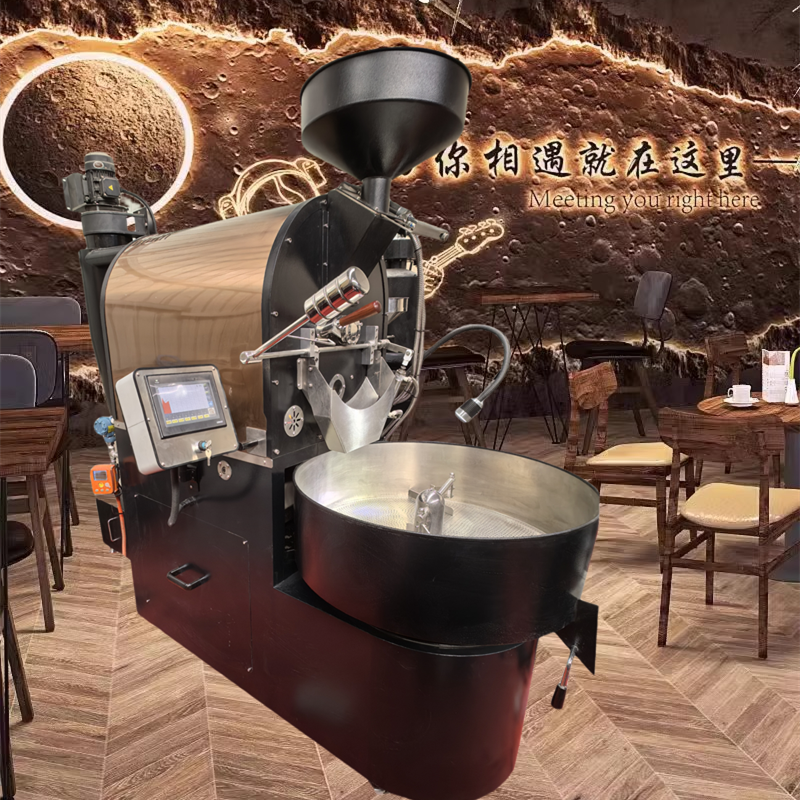
Mastering Coffee Roaster Temperature Adjustment: Techniques for Perfect Roasts
Controlling the temperature of your coffee roaster is the cornerstone of crafting consistent, flavorful batches. Unlike cooking where recipes offer fixed guidelines, coffee roasting demands dynamic adjustments based on bean characteristics, environmental conditions, and desired flavor profiles. Understanding these adjustment techniques transforms roasting from guesswork into a precise science.
Understanding Thermal Behavior in Roasting Chambers
The relationship between heat input and bean development follows non-linear patterns. During the initial drying phase, beans absorb heat rapidly while evaporating moisture, creating a temporary thermal lag. As Maillard reactions begin around 150°C, exothermic chemical processes contribute additional heat, requiring careful compensation.
Key adjustment principles:
- Early aggression: Apply 65-75% of maximum heat capacity during the first 90 seconds to penetrate bean cores
- Mid-roast moderation: Reduce heat input by 40-50% during the development phase to prevent scorching
- Final finesse: Use 10-15% residual heat for finishing when targeting lighter roasts
Environmental factors significantly impact temperature management. Roasting at altitude requires 3-5°C lower target temperatures due to reduced air pressure affecting heat transfer efficiency. Humidity levels above 70% necessitate longer preheating cycles to stabilize chamber temperatures.
Manual Adjustment Techniques for Precision Control
Experienced roasters rely on sensory feedback loops combining visual, auditory, and olfactory cues with thermal readings. The “crack” stages serve as critical adjustment markers:
First Crack Management
When beans reach 196-205°C, their cellular structure ruptures, releasing steam and creating audible cracking. At this point:
- Reduce gas pressure by 20-30% to prevent thermal runaway
- Increase airflow by 15% to carry away chaff and stabilize temperature
- Monitor exhaust temperature, which should rise 8-12°C after first crack initiation
Second Crack Preparation
For dark roasts approaching 225°C:
- Begin cooling cycle 45-60 seconds before expected second crack onset
- Maintain drum rotation speed at 55-60 RPM to ensure even heat distribution
- Prepare cooling tray with ambient airflow to halt development immediately post-roast
Manual adjustments require anticipation rather than reaction. Seasoned roasters develop muscle memory for when to nudge temperature controls based on bean color transitions and aroma intensity changes.
Advanced Adjustment Strategies for Specialty Roasting
Specialty coffee demands micro-adjustments throughout the roast curve. Three techniques elevate precision:
Thermal Buffering
Introducing inert materials like ceramic balls into the roasting drum creates thermal mass that absorbs excess heat during peak reactions. This technique:
- Reduces temperature spikes by 3-5°C during Maillard stage
- Extends development time by 20-35 seconds for complex flavor development
- Requires recalibration of roast profiles when changing bean densities
Airflow Modulation
Manipulating airflow serves dual purposes:
- Convection control: Higher airflow (60-70 CFM) accelerates heat transfer for faster roasts
- Moisture management: Lower airflow (30-40 CFM) retains humidity for sweeter, more developed profiles
- Chaff removal: Optimal airflow prevents chaff accumulation that creates hot spots
Pre-Roast Bean Conditioning
Adjusting green bean moisture content through controlled humidification or drying impacts thermal behavior:
- Beans at 10-11% moisture require 5-8°C higher starting temperatures
- Overly dry beans (8% moisture) develop faster, needing 10-15% reduced heat input
- Conditioning should occur 12-24 hours before roasting for optimal results
Real-Time Adjustment Using Sensor Data
Modern roasters integrate multiple sensor types for comprehensive thermal monitoring:
Infrared Surface Sensors
Mounted near the bean discharge point, these detect surface temperatures 3-5 seconds before thermal probes register changes. Data helps:
- Identify uneven roasting patterns
- Adjust airflow to correct temperature gradients
- Prevent tipping (edge scorching) on larger batches
Exhaust Gas Analysis
Monitoring CO and CO2 levels in flue gases provides indirect temperature indicators:
- CO spikes above 50ppm suggest incomplete combustion requiring airflow adjustments
- CO2 levels peak during first crack, signaling optimal development timing
- Rising gas temperatures without corresponding bean temperature changes indicate heat exchanger issues
Vibration Analysis
Accelerometers on drum bearings detect thermal expansion patterns:
- Irregular vibrations may indicate localized overheating
- Frequency changes correlate with bean mass movement efficiency
- Sudden amplitude shifts require immediate temperature reduction
Environmental Compensation Techniques
Roasting facilities must adapt to seasonal and geographical variations:
Ambient Temperature Adjustment
- Cold climates (below 15°C): Preheat roaster 15-20 minutes longer
- Hot environments (above 30°C): Reduce starting temperatures by 5-8°C
- Use thermal insulation blankets on drums during extreme conditions
Power Supply Stabilization
Voltage fluctuations affect heating element performance:
- Install line conditioners to maintain consistent power delivery
- Schedule roasts during off-peak hours when voltage remains stable
- Monitor electrical current draw as indirect temperature indicator
Altitude Compensation
High-elevation roasting (above 1,500 meters) requires:
- Lower boiling points necessitate 3-5°C reduced target temperatures
- Increased airflow to compensate for thinner air
- Longer development times due to slower chemical reactions
Mastering these adjustment techniques transforms coffee roasting into an exacting craft. Each batch presents unique challenges requiring tailored solutions, from compensating for green bean moisture variations to adapting to seasonal environmental changes. The ability to make precise, informed temperature adjustments determines whether roasters produce mundane batches or exceptional coffee that delights discerning palates.