

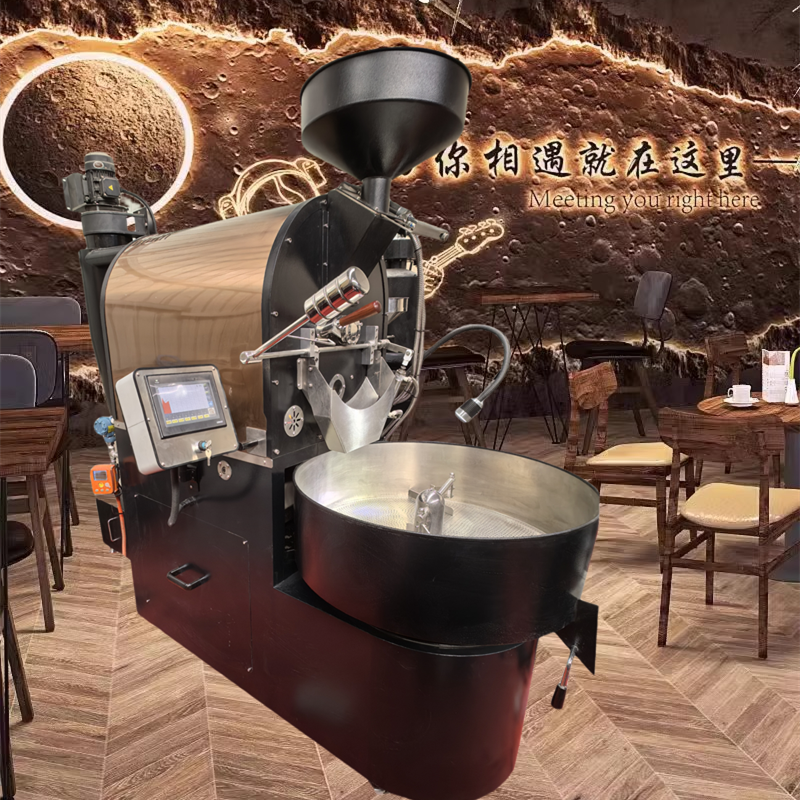
Mastering Low-Temperature Slow Roasting with Your Coffee Roasting Machine
Low-temperature slow roasting is a technique that emphasizes patience and precision, allowing coffee beans to develop nuanced flavors while minimizing bitterness and astringency. Unlike traditional high-heat methods, this approach uses lower temperatures (typically below 190°C) and extended roast times to highlight sweetness, acidity, and aromatic complexity. Below, explore how to adapt your machine for this method, optimize key variables, and troubleshoot common challenges.
Understanding the Science Behind Low-Temperature Roasting
Slow roasting relies on gradual heat application to break down complex sugars and acids without burning them. This method preserves delicate flavor compounds that might evaporate or degrade at higher temperatures. For example, floral or fruity notes in African beans often become more pronounced when roasted slowly, while the caramelized sweetness of Central American beans deepens without turning bitter.
How Heat Transfer Affects Bean Development
In low-temperature roasting, heat penetrates beans more slowly, extending the drying phase (where moisture evaporates) and the Maillard reaction (where sugars and amino acids interact). This longer development time allows for:
- Even caramelization: Sugars brown uniformly, reducing the risk of scorched spots.
- Enhanced aroma retention: Volatile compounds responsible for fragrance remain intact.
- Balanced acidity: Organic acids break down gradually, preventing sharp or sour flavors.
Choosing the Right Beans for Slow Roasting
Not all beans respond equally to low temperatures. Dense, high-altitude beans (e.g., Ethiopian or Kenyan varieties) often thrive in slow roasts, as their tight cell structures benefit from gentle heat. Softer, lower-altitude beans (e.g., Brazilian or Vietnamese beans) may require adjustments to avoid underdevelopment. Prioritize beans with:
- High moisture content: Fresh, recently harvested beans retain more water, which slows the roast naturally.
- Complex flavor potential: Look for origins known for floral, citrus, or berry notes, as these traits intensify with slow roasting.
Adjusting Your Machine for Low-Temperature Roasting
Most standard roasting machines can be adapted for slow roasting by modifying preheat settings, airflow, and drum speed. The goal is to maintain consistent, gentle heat throughout the process.
Preheat Temperature and Initial Setup
Start with a lower preheat temperature (around 160–170°C) to avoid shocking the beans. If your machine lacks precise temperature controls, use a thermometer to monitor the drum’s internal heat. Allow the machine to stabilize at this temperature before loading beans to ensure even heating from the outset.
Managing Airflow and Drum Speed
- Airflow: Reduce airflow slightly compared to high-heat roasts to retain heat around the beans. However, avoid cutting it entirely, as stagnant air can lead to uneven roasting. Aim for a gentle, steady flow that keeps beans tumbling without drying them too quickly.
- Drum speed: Use a moderate drum speed to ensure beans move continuously. Too fast, and beans may not absorb heat evenly; too slow, and they might clump or scorch.
Monitoring Milestones: Drying Phase and Maillard Reaction
- Drying phase (100–160°C): This stage will take longer than usual—often 5–7 minutes compared to 3–4 minutes in high-heat roasts. Listen for a subtle cracking sound as moisture escapes, and watch for beans to turn from green to a pale yellow.
- Maillard reaction (160–205°C): As sugars and proteins react, beans will transition to a golden brown. This phase is critical for flavor development, so extend it by 1–2 minutes compared to your standard roast. Adjust heat slightly upward (to around 175–180°C) to encourage caramelization without rushing the process.
Navigating Challenges in Low-Temperature Roasting
Uneven Roasting or Stalling
If beans appear patchy or the roast stalls (progress slows dramatically), your machine may struggle to maintain heat. To address this:
- Increase preheat temperature incrementally: Raise it by 5–10°C and observe how beans respond.
- Stir beans manually: Pause the roast 3–4 minutes in and gently shake the drum or use a tool to redistribute beans.
- Check for drafts: Ensure no external airflow (e.g., from windows or fans) is disrupting the machine’s internal temperature.
Underdeveloped or Overdeveloped Beans
- Underdeveloped: Beans taste grassy or lack sweetness if the roast ends too early. Extend the Maillard phase by 30–60 seconds, ensuring beans reach a uniform medium brown before cooling.
- Overdeveloped: Beans taste burnt or hollow if the roast goes too long. Shorten the post-crack development time by 15–30 seconds and cool beans immediately after the desired color is achieved.
Loss of Aromatic Intensity
Slow roasting can sometimes mute bright, floral aromas if heat is too low. To preserve fragrance:
- Introduce a “flavor spike”: Near the end of the Maillard phase, briefly raise the temperature to 185–190°C for 20–30 seconds to activate volatile compounds.
- Cool beans rapidly: Use a colander or cooling tray with a fan to halt roasting and lock in aromas.
Experimenting With Roast Profiles for Different Origins
Low-temperature roasting shines when tailored to specific bean characteristics. For example:
- Ethiopian Yirgacheffe: Roast at 165°C preheat, extending the Maillard phase to 7–8 minutes for amplified blueberry and jasmine notes.
- Colombian Supremo: Use a 170°C preheat and a 6-minute Maillard phase to enhance caramel and apple flavors without losing acidity.
- Sumatran Mandheling: Opt for a 160°C preheat and a longer post-crack development (90 seconds) to deepen earthy, chocolatey tones.
Document each roast’s parameters and cupping notes to refine your approach over time. Small adjustments (e.g., 5°C temperature changes or 15-second time tweaks) can yield dramatic differences in flavor.
By embracing low-temperature slow roasting, you unlock a world of subtle, layered flavors that highlight coffee’s natural complexity. Start with small batches, stay attentive to your machine’s behavior, and let your palate guide you toward profiles that resonate with your preferences.