

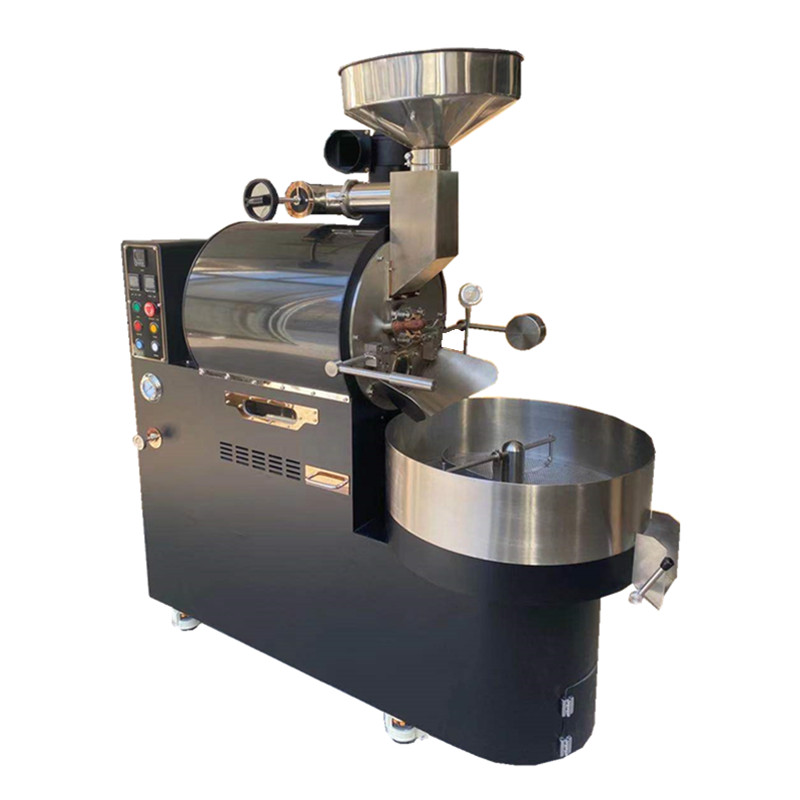
Crafting Specialty Coffee with a Roasting Machine: A Guide to Flavor Precision
Specialty coffee thrives on the interplay of bean origin, roast profile, and brewing method. A coffee roasting machine, when used skillfully, unlocks nuanced flavors—from bright floral notes to deep chocolate undertones. Below, explore how to harness your roaster to elevate coffee from ordinary to extraordinary.
Mastering Roast Profiles for Flavor Clarity
The roast profile—the temperature and time curve applied to beans—dictates flavor development. Light roasts preserve a bean’s inherent acidity and floral or fruity notes, ideal for high-altitude Ethiopian or Central American beans. For example, a light roast on a drum roaster might involve:
- Drying Phase: Heat beans gently at 300°F (150°C) for 4–5 minutes to evaporate moisture without scorching.
- Maillard Reaction: Raise temperature to 350°F (175°C) for 6–8 minutes, encouraging caramelization and nutty flavors.
- Development Phase: Finish at 390°F (200°C) for 1–2 minutes to highlight brightness, pulling beans just before the first crack.
Medium roasts strike a balance, mellowing acidity while introducing caramel and chocolate notes. Dark roasts, with their smoky, bold profiles, suit Indonesian or Brazilian beans but require caution to avoid bitterness. Adjust time and temperature incrementally to avoid over-roasting, which masks origin characteristics.
Controlling Heat Application for Consistency
Heat distribution is critical for even roasting. Drum roasters, which tumble beans in a rotating drum, offer stability but may require preheating to maintain consistent temperatures. Fluid-bed roasters, which suspend beans on hot air, heat faster but demand precise airflow control.
To optimize heat transfer:
- Preheat your roaster: Ensure the drum or chamber reaches the target starting temperature before adding beans.
- Adjust airflow: Increase airflow during the drying phase to remove chaff, then reduce it during the Maillard reaction to retain heat.
- Monitor bean movement: Beans should circulate freely; clumping indicates uneven heat or inadequate airflow.
For example, a fluid-bed roaster might use high airflow (80–90 CFM) for the first 3 minutes, then reduce to 60 CFM as the beans darken. This prevents “tipping,” where bean edges burn while centers remain underdeveloped.
Fine-Tuning with Post-Roast Techniques
The roast doesn’t end when beans exit the machine. Post-roast cooling and resting significantly impact flavor:
- Cool rapidly: Use a cooling tray or forced air to halt caramelization. Beans retain residual heat for 2–4 minutes after roasting; delayed cooling leads to flat, baked flavors.
- Rest beans: Allow 12–24 hours for CO2 to degas, which stabilizes flavor. Freshly roasted coffee tastes vibrant but can be uneven; resting ensures consistency.
- Store properly: Keep beans in airtight containers away from light and heat. Avoid freezing, as condensation can degrade quality.
For specialty-grade results, cup your coffee (taste it professionally) daily post-roast. Note how flavors evolve—acidity may soften, while sweetness peaks after 48 hours. Use this data to refine future roasts.
Leveraging Data for Repeatable Excellence
Track roast variables (time, temperature, airflow) alongside sensory evaluations. Tools like roast logging software or even a simple spreadsheet can reveal patterns. For instance, if a Kenyan coffee tastes overly acidic, extend the development phase by 30 seconds next time to mellow brightness.
Experiment with “profile roasting”—applying different curves to the same bean lot. A slow, low-temperature roast might emphasize floral notes, while a faster, hotter roast brings out caramel. Share samples with fellow roasters or customers for blind feedback to refine your approach objectively.
By treating each roast as a hypothesis and adjusting variables methodically, you’ll develop a signature style that highlights the best in every bean. Specialty coffee isn’t just about equipment—it’s about curiosity, precision, and a willingness to learn from every batch.