

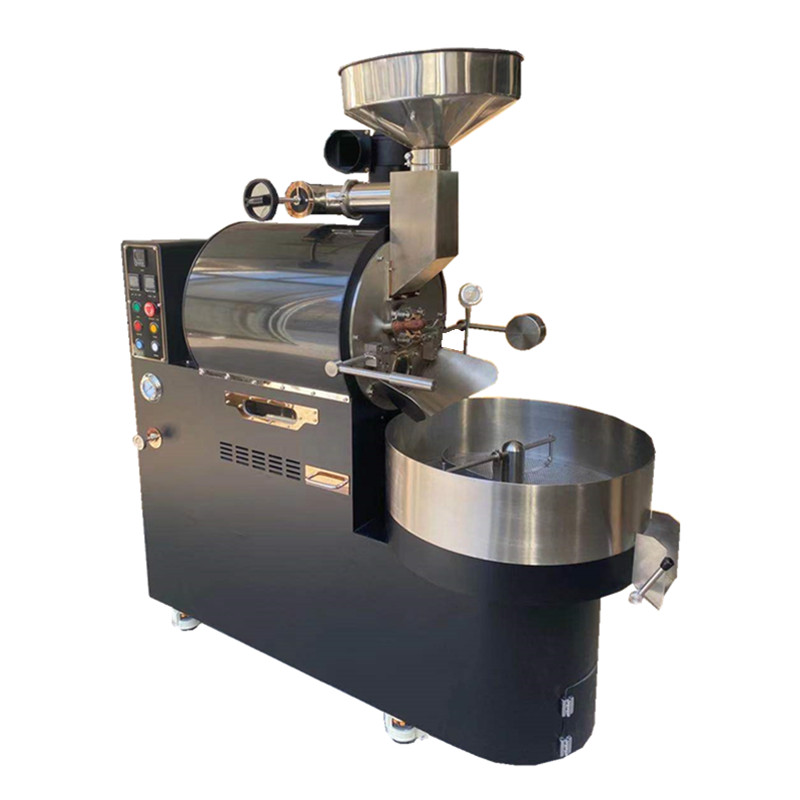
Heat Retention and Stability: The Core Advantage of Cast Iron Construction
Cast iron’s molecular structure enables it to absorb and retain heat more effectively than aluminum or steel. This thermal inertia ensures consistent temperatures throughout the roasting chamber, even when adjusting heat sources or opening the door to inspect beans. For example, during the critical Maillard reaction phase, a cast iron drum maintains a ±2°C temperature variance, compared to ±5°C in thinner-walled alternatives. This stability allows roasters to replicate profiles with precision, reducing the risk of underdeveloped or burnt batches.
The material’s ability to withstand extreme temperatures without warping further enhances reliability. Unlike aluminum, which softens above 400°C, cast iron remains rigid up to 600°C, making it suitable for dark roasts that require prolonged exposure to high heat. This durability also extends the machine’s lifespan, as repeated heating and cooling cycles are less likely to cause structural degradation.
Flavor Development: Enhanced Caramelization and Body
Cast iron’s even heat distribution promotes uniform caramelization of sugars in coffee beans, resulting in a richer, more complex sweetness. The material’s radiant heat penetrates beans from all sides, unlike direct flame methods that can create hot spots. This ensures that each bean undergoes the same chemical transformations, producing a balanced flavor profile with notes of chocolate or caramel.
For medium to dark roasts, cast iron’s heat retention helps develop a fuller body by allowing oils to emerge gradually. The slow, steady transfer of energy prevents the abrupt release of oils that can occur with less stable materials, ensuring a smooth mouthfeel. Roasters often note that beans processed in cast iron machines exhibit a more pronounced crema when brewed as espresso, attributed to the consistent extraction enabled by uniform roasting.
Durability and Maintenance: Long-Term Cost Efficiency
Cast iron’s resistance to corrosion and wear makes it a low-maintenance choice for commercial settings. Unlike stainless steel, which can pit when exposed to acidic compounds in coffee chaff, cast iron forms a protective oxide layer that prevents degradation. This layer also reduces the risk of metallic tastes transferring to beans, ensuring purity of flavor.
Cleaning is straightforward, as cast iron’s non-porous surface resists staining and buildup. A simple brush-down after each batch removes chaff, while occasional seasoning with food-grade oil maintains the drum’s condition. Compared to machines with plastic or aluminum components, cast iron models require fewer replacements over time, lowering total cost of ownership. Their robustness also allows them to handle high-volume production without performance drops, making them ideal for cafés or roasteries.
Design Flexibility: Adapting to Diverse Roasting Styles
Cast iron’s versatility supports a range of roasting techniques, from traditional drum methods to hybrid systems. Its compatibility with both gas and electric heat sources enables roasters to switch between energy types based on cost or availability. Some models incorporate adjustable airflow systems, leveraging cast iron’s heat retention to fine-tune convection currents and achieve specific roast profiles.
For artisanal roasters, cast iron’s ability to maintain low temperatures is particularly valuable. When roasting delicate, high-altitude beans, the material’s slow heat transfer prevents scorching, allowing for gradual development of floral or fruity notes. Conversely, its capacity for high-heat retention suits bold, earthy profiles common in Indonesian or Brazilian coffees. This adaptability makes cast iron machines a favorite among specialists seeking to experiment with diverse origins and processing methods.