

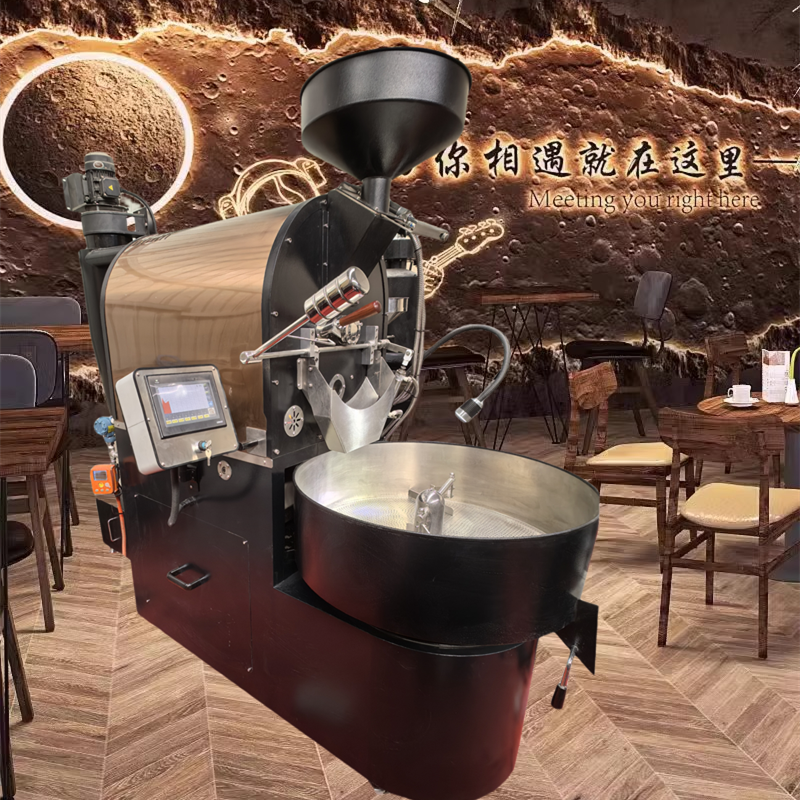
Comparative Testing of Coffee Roasting Machines: A Deep Dive into Performance and Features
Understanding the Core Types of Coffee Roasting Machines
When evaluating coffee roasting machines, it’s essential to grasp the fundamental differences between the three main types: direct-fire, half-hot-air, and hot-air roasters. Each type operates on distinct principles, affecting heat distribution, flavor extraction, and ease of use.
Direct-Fire Roasters: Traditional Power with Precision Challenges
Direct-fire roasters are characterized by their direct exposure of coffee beans to an open flame through a perforated drum. This design allows for rapid heat transfer, making them ideal for achieving deep, complex flavors. However, the intense heat can be challenging to manage, requiring constant attention to prevent uneven roasting or scorching. The open flame also makes these roasters more susceptible to external environmental factors like temperature and humidity, which can influence the roasting process.
Half-Hot-Air Roasters: Balancing Heat and Control
Half-hot-air roasters combine elements of both direct-fire and hot-air roasting. They feature a drum with limited perforations, allowing hot air to circulate while still providing some direct heat from the flame. This hybrid approach offers better temperature control than direct-fire roasters, reducing the risk of uneven roasting. The combination of conduction and convection heating ensures that beans are roasted evenly from all sides, resulting in a more balanced flavor profile. Half-hot-air roasters are particularly well-suited for roasting a variety of bean types, including those with different densities and moisture contents.
Hot-Air Roasters: Efficiency and Consistency
Hot-air roasters rely entirely on forced hot air to roast coffee beans. The beans are suspended in a stream of hot air, which circulates continuously to ensure even heating. This method eliminates the need for a perforated drum, reducing the risk of scorching and allowing for precise temperature control. Hot-air roasters are known for their efficiency, as they can reach the desired roasting temperature quickly and maintain it consistently throughout the process. The uniform heat distribution also results in a clean, bright flavor profile, with less risk of over-roasting or under-roasting. However, some critics argue that hot-air roasting can lack the depth and complexity of flavors achieved with direct-fire or half-hot-air methods.
Performance Metrics: Evaluating Roasting Quality and Consistency
When comparing coffee roasting machines, several key performance metrics should be considered to assess their quality and consistency.
Heat Distribution and Uniformity
One of the most critical factors in coffee roasting is achieving even heat distribution throughout the batch. Uneven heating can lead to inconsistent roast levels, with some beans being over-roasted while others remain under-roasted. This inconsistency can significantly impact the flavor and aroma of the final product. To evaluate heat distribution, observe how evenly the beans are roasted across the entire batch. Look for machines that incorporate advanced airflow systems or drum designs to promote uniform heating.
Temperature Control and Stability
Precise temperature control is essential for achieving the desired roast profile. Fluctuations in temperature during the roasting process can lead to unpredictable results, affecting the flavor, aroma, and body of the coffee. Evaluate the machine’s ability to maintain a stable temperature throughout the roast, especially during critical stages like the drying phase, Maillard reaction, and development phase. Machines with advanced temperature control systems, such as PID controllers, are generally more reliable in this regard.
Roast Time and Efficiency
The time it takes to complete a roast is another important consideration. While longer roast times can allow for more nuanced flavor development, they can also increase the risk of over-roasting if not managed carefully. Conversely, shorter roast times can be more efficient but may sacrifice some complexity in flavor. Evaluate the machine’s ability to achieve the desired roast level within a reasonable timeframe, considering factors like heat transfer efficiency and airflow dynamics.
User Experience: Ease of Use, Maintenance, and Safety
In addition to performance metrics, the user experience is a crucial factor in evaluating coffee roasting machines. This includes ease of use, maintenance requirements, and safety features.
Ease of Use and Operation
A user-friendly interface and intuitive controls can significantly enhance the roasting experience, especially for beginners. Look for machines with clear displays, simple button layouts, and pre-programmed roast profiles that make it easy to achieve consistent results. Some machines also offer advanced features like customizable roast curves and real-time monitoring, allowing for greater control and experimentation.
Maintenance and Cleaning
Regular maintenance and cleaning are essential for ensuring the longevity and performance of a coffee roasting machine. Evaluate the machine’s design for ease of access to critical components like the drum, chaff collector, and airflow system. Machines with removable parts and straightforward cleaning procedures will save time and effort in the long run. Additionally, consider the durability of materials used in construction, as this can impact the machine’s resistance to wear and tear.
Safety Features
Safety should always be a top priority when operating a coffee roasting machine. Look for machines with built-in safety mechanisms like over-temperature shutoff, flame failure detection, and pressure relief valves. These features protect both the operator and the machine from potential hazards like fires or explosions. Additionally, ensure that the machine complies with relevant industry standards and certifications to guarantee its safety and quality.