

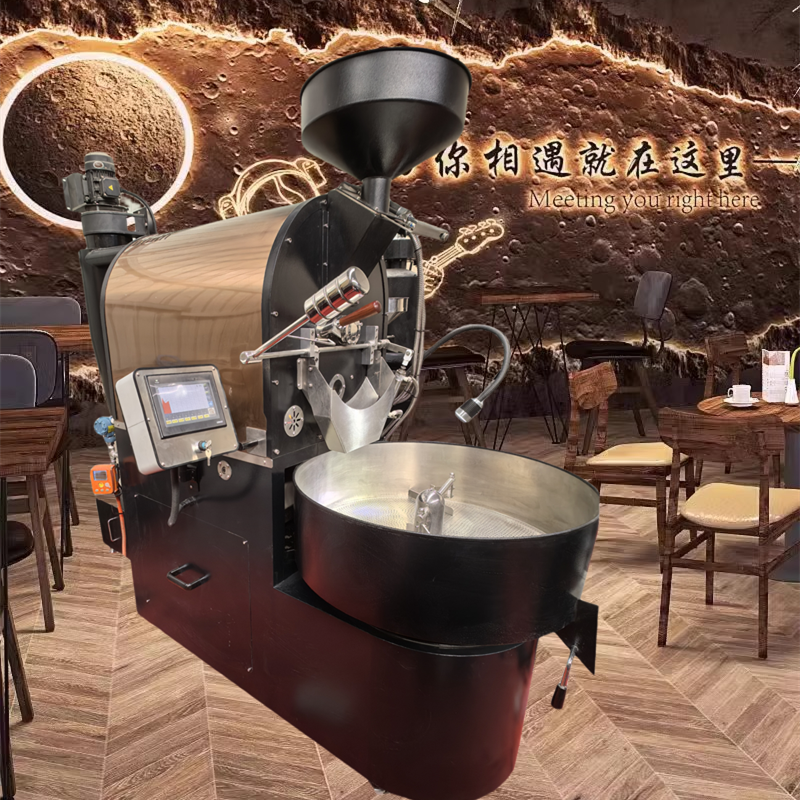
Cost-Effective Advantages of Domestic Coffee Roasting Machines
Precision Engineering for Consistent Quality Without Compromise
Domestic coffee roasting machines prioritize precision in thermal regulation and airflow management, ensuring uniform bean development. Advanced thermal sensors maintain temperature stability within ±2°C, reducing the risk of under- or over-roasting. This level of control is critical for achieving nuanced flavor profiles, whether targeting light, medium, or dark roasts. For instance, modular heat distribution systems allow operators to adjust parameters mid-roast, preserving delicate floral notes in specialty beans. Such adaptability minimizes waste and enhances batch consistency, which is particularly valuable for small-scale roasters aiming to build a reputation for quality.
Many domestic models integrate IoT-enabled interfaces, enabling real-time monitoring via mobile apps. This feature allows users to track roast curves, adjust parameters remotely, and access cloud-based databases of award-winning roasting profiles. Some machines even use AI algorithms to suggest optimal settings based on bean origin and desired flavor outcomes, democratizing professional techniques for novices. Automated cooling systems, which reduce bean temperatures from 210°C to 40°C in under two minutes, further preserve flavor integrity by preventing residual heat from altering the final profile.
Energy Efficiency and Long-Term Cost Savings
Domestic manufacturers optimize production chains to reduce reliance on imported components, cutting procurement costs by up to 40% compared to imported alternatives. This affordability extends to operational expenses, with energy-efficient heat recovery systems slashing gas consumption by 30%. For example, machines using insulated chambers maintain stable internal temperatures in colder climates, minimizing energy waste. Automated cleaning cycles reduce labor costs by half, while modular designs allow incremental upgrades—such as expanding batch capacity from 200g to 500g—without purchasing entirely new equipment.
Maintenance expenses are also lower due to easily replaceable components. Domestic machines often feature standardized parts that cost 90% less to service than integrated systems in foreign models. A commercial-grade unit processing 1.2 tons daily, for instance, consumes 41% less energy than comparable imported machines, translating to annual savings of tens of thousands of dollars. This combination of lower upfront costs and reduced long-term expenses makes domestic models particularly attractive to startups and small businesses operating on tight margins.
Localization for Diverse Environmental and Cultural Needs
Domestic roasters are engineered to thrive in varied climates. In humid regions, enhanced moisture-resistant materials prevent corrosion, while insulated chambers maintain performance in colder areas. Machines destined for high-altitude regions incorporate pressure-adjusted burners to compensate for thinner air, ensuring even heat distribution. For example, a model designed for mountainous areas reduced roast time variability by 18% compared to standard machines, improving efficiency in challenging environments.
Cultural preferences also shape design. Models tailored for espresso-centric markets emphasize deep roasting capabilities to enhance body and caramelization, whereas those for light-roast regions prioritize gentle heat application to preserve acidity. User interfaces often include multilingual support and preset programs for popular local bean varieties, streamlining operation for international buyers. A roaster in Yunnan, China, increased daily output by 40kg after adopting a locally designed modular machine, reducing bean waste from 8.3% to 0.9%—a testament to the practicality of region-specific engineering.
Scalability: From Home Workshops to Industrial Production
The versatility of domestic roasting machines supports seamless transitions across scales. Compact, A4-sized models cater to home enthusiasts, offering 3-minute roasting cycles and app-guided recipes. Semi-professional units with 500g capacity serve small cafés, balancing affordability with consistency. At the industrial level, modular production lines handle 1.2 tons daily, integrating functions like automatic stone removal and post-roast smoke purification to meet global safety standards.
This scalability empowers businesses to expand without equipment overhauls. A cooperative in Brazil increased output by 30% using a locally designed roaster with adjustable batch sizes, while a Vietnamese farm reduced labor costs by 25% by automating quality control checks. Such adaptability positions domestic machines as ideal partners for emerging coffee regions seeking to build sustainable, high-quality supply chains.