

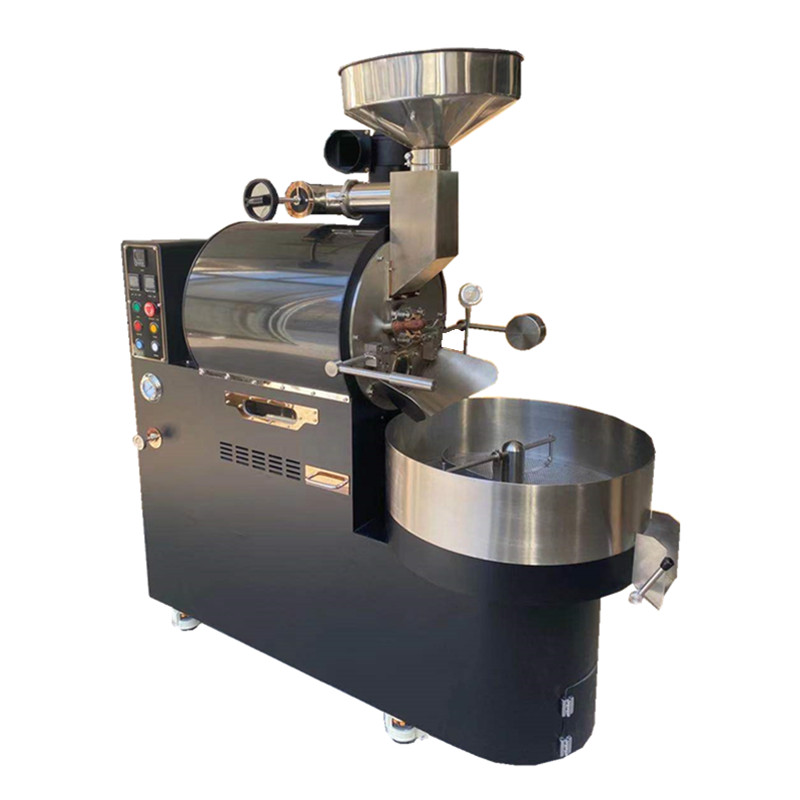
Durability and Corrosion Resistance: The Foundation of Longevity
Stainless steel coffee roasters are engineered to withstand the rigors of daily use. The material’s inherent resistance to corrosion ensures that acidic compounds from coffee beans or cleaning agents do not degrade internal components. Unlike carbon steel, which requires frequent seasoning to prevent rust, stainless steel maintains its structural integrity with minimal maintenance.
In commercial settings, roasters often operate 12–16 hours daily. Stainless steel construction reduces the risk of cracks or leaks in the roasting chamber, a common issue with aluminum or plastic-bodied machines. The material’s tensile strength also allows for thinner walls without compromising durability, optimizing heat retention while minimizing energy waste.
For home users, stainless steel roasters offer peace of mind. Spills, humidity, and occasional neglect pose less risk compared to softer metals. A roaster with a stainless steel drum, for instance, can last 5–10 years longer than its aluminum counterpart under similar conditions.
Thermal Efficiency: Precision in Heat Management
Stainless steel’s thermal properties strike a balance between conductivity and insulation. While not as heat-conductive as copper, it retains heat more effectively than aluminum, reducing temperature fluctuations during roasting. This stability is critical for achieving consistent roast profiles, especially when transitioning between light and dark roasts.
The material’s ability to withstand high temperatures without warping is another advantage. Stainless steel roasting chambers can maintain optimal airflow even at temperatures exceeding 480°F (250°C), preventing hot spots that cause uneven bean development. Some models incorporate double-walled stainless steel drums to further enhance thermal uniformity.
Energy efficiency is another benefit. Stainless steel roasters lose less heat through their casing compared to aluminum models, requiring less power to maintain target temperatures. This translates to lower operational costs for businesses and reduced energy consumption for home users.
Hygienic Design: Simplifying Maintenance and Safety
Stainless steel’s non-porous surface resists bacterial growth and chemical absorption, making it ideal for food-grade equipment. Coffee oils and residues, which can become rancid over time, are easier to remove from stainless steel than from textured materials like aluminum or plastic.
Cleaning protocols are straightforward. A damp cloth with mild detergent is often sufficient to remove buildup, while abrasive cleaners can be used without damaging the surface. This contrasts with aluminum, which is prone to scratching and requires non-abrasive tools to avoid compromising its protective oxide layer.
For commercial kitchens, stainless steel roasters comply with health and safety regulations more easily. The material’s resistance to staining and odor retention ensures that roasters remain sanitary even after processing hundreds of batches. Some models feature removable stainless steel parts, such as chaff collectors or bean hoppers, for deeper cleaning.
Aesthetic Appeal: Blending Functionality with Style
Stainless steel’s sleek, modern appearance elevates the visual appeal of coffee roasters. Its reflective surface complements contemporary kitchen designs, while its neutral tone fits seamlessly into industrial or minimalist spaces. Unlike plastic or painted finishes, stainless steel does not fade or chip over time, maintaining its aesthetic value.
The material’s versatility extends to customization. Brushed or polished stainless steel finishes can create different textures, while laser etching or engraving allows for branding without compromising durability. Some manufacturers offer color-coated stainless steel options for users seeking a pop of color without sacrificing functionality.
For home baristas, the premium look of stainless steel roasters adds a touch of sophistication to countertops. In cafés, the material’s professional appearance reinforces brand credibility, signaling to customers that quality is a priority.