

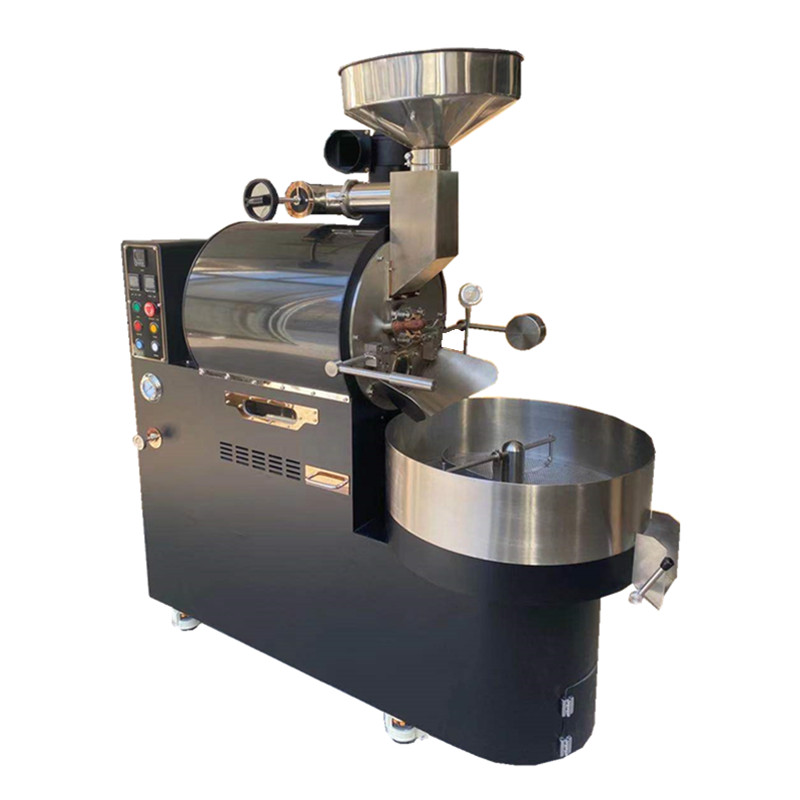
Fine-Tuning Your Dark Roast Coffee Machine: A Comprehensive Guide
Dark roast coffee is beloved for its bold, rich flavors, low acidity, and pronounced bitterness. Achieving the perfect dark roast requires precise control over temperature, airflow, and timing during the roasting process. Unlike lighter roasts, which highlight origin-specific characteristics, dark roasts focus on developing deep caramelization, smoky notes, and a full-bodied mouthfeel. Here’s how to adjust your coffee roasting machine for optimal dark roast results.
Understanding Dark Roast Characteristics
Dark roasts are defined by their visual and sensory attributes. The beans reach a dark brown or nearly black color with a shiny, oily surface, indicating extensive caramelization and the breakdown of sugars. The flavor profile typically includes notes of dark chocolate, burnt sugar, tobacco, and sometimes hints of spice or woodiness. The body is heavy and syrupy, with minimal acidity and a lingering, bitter finish.
To achieve these traits, roasters must push the beans beyond second crack, where the cell structure begins to break down, releasing oils and intensifying flavors. This requires careful calibration of machine parameters to avoid burning the beans or producing overly harsh, ashy flavors.
Key Visual and Sensory Markers
- Bean Color: Deep, dark brown to nearly black with a glossy surface.
- Oil Presence: Visible oil sheen on the beans, indicating advanced caramelization.
- Flavor Profile: Dominant notes of dark chocolate, roasted nuts, and smokiness.
- Acidity: Minimal to none, with a smooth, rounded mouthfeel.
- Bitterness: Pronounced but balanced, not overpowering or harsh.
By focusing on these markers, you can adjust your roasting machine to produce a dark roast that’s rich, complex, and free from defects like scorching or uneven development.
Temperature Adjustments for Dark Roasting
Preheating and Charge Temperature
Preheating your roasting drum is crucial for dark roasts, as it ensures consistent heat absorption and prevents uneven roasting. Set the preheat temperature to 425°F (218°C) to 440°F (227°C), depending on your machine’s capacity and the density of your beans. Denser beans (e.g., high-altitude Central American varieties) may require a slightly lower preheat temperature (425°F/218°C) to avoid rapid surface browning, while less dense beans (e.g., lower-altitude Brazilian coffees) can tolerate a higher preheat (440°F/227°C).
When loading green beans, adjust the charge temperature based on their moisture content. For beans with higher moisture levels (e.g., natural-processed or monsooned coffees), use a charge temperature of 430°F (221°C) to 435°F (224°C) to ensure even drying. For drier beans (e.g., aged Sumatran Mandheling), a lower charge temperature (425°F/218°C) can prevent overheating and scorching.
Managing Rate of Rise (RoR) During Maillard Phase
The Maillard reaction, which begins around 280°F (138°C), is where dark roasts start to develop their foundational flavors. For dark roasts, aim for a steady RoR of 5-7°F per minute during this phase to encourage deep caramelization without burning the beans. Avoid sharp temperature spikes, which can lead to uneven roasting or muted flavors.
As the beans approach first crack (typically around 400°F/204°C), reduce the RoR to 3-4°F per minute. This gradual approach allows the beans to expand evenly and develop a rich, complex sweetness. For beans with naturally high acidity (e.g., Ethiopian Yirgacheffe), a slightly slower RoR (2-3°F per minute) can help soften the brightness while maintaining complexity. For low-acidity beans (e.g., Brazilian Santos), a faster RoR (4-5°F per minute) can enhance caramelization and body.
Post-Second Crack Temperature Control
After second crack, dark roasts require precise temperature management to avoid burning or producing ashy flavors. Increase the drum temperature by 5-10°F (3-6°C) to initiate second crack, then immediately reduce heat input to stabilize the roast. The goal is to reach an end temperature between 465°F (241°C) and 475°F (246°C), depending on desired flavor intensity.
Monitor the beans closely during this stage, as even minor temperature overshoots can introduce bitterness or burnt notes. For a more traditional dark roast (e.g., French roast), aim for the higher end of the temperature range (475°F/246°C). For a slightly milder dark roast (e.g., Vienna roast), push the temperature closer to 465°F (241°C).
Airflow Optimization for Dark Roasts
Early-Stage Airflow for Even Drying
Begin the roast with moderate to high airflow (70-85% of your machine’s maximum capacity) to remove chaff and prevent moisture buildup without cooling the beans too rapidly. This is especially important for naturally processed coffees, which often retain higher moisture levels than washed beans. Adjust airflow based on bean density—denser beans may require slightly higher airflow (80-85%) to ensure uniform drying, while less dense beans can tolerate lower airflow (70-75%).
If you notice uneven moisture removal (e.g., some beans appearing wrinkled while others remain smooth), increase airflow by 10-15% for 1-2 minutes to address the issue. Conversely, if the beans dry too quickly, reduce airflow to slow the process and prevent internal stress.
Mid-Roast Airflow for Flavor Development
As the Maillard reaction progresses, adjust airflow to 80-90% of maximum to promote even heat distribution and carry away volatile compounds. This helps develop a clean, complex flavor profile without sacrificing sweetness. For beans with floral or fruity notes (e.g., Kenyan AA), maintain higher airflow (90%) to preserve these delicate characteristics. For nutty or chocolatey beans (e.g., Colombian Supremo), slightly lower airflow (80%) can enhance caramelization and body.
If the beans begin to develop uneven browning (e.g., some areas darkening faster than others), reduce airflow temporarily to concentrate heat on underdeveloped sections. Use a color sorter or manual inspection to identify and address these inconsistencies early in the roast.
Late-Stage Airflow for Roast Stabilization
After second crack, increase airflow to 90-100% of maximum to stabilize the roast and prevent overheating. This also helps carry away steam and chaff, ensuring a clean finish. For a more pronounced smoky flavor, maintain high airflow until the end of the roast. For a milder dark roast, reduce airflow by 10-15% during the final minute to soften the profile.
Pay close attention to bean expansion during this stage. If the beans appear to be expanding too rapidly (a sign of excessive heat), increase airflow to cool them slightly. If expansion is sluggish, reduce airflow to retain heat and encourage further development.
Timing Considerations for Dark Roasting
Drying Phase Duration
The drying phase typically accounts for 15-20% of the total roast time in a dark roast. For a 16-minute roast, this means 2.5-3.5 minutes of drying. Focus on achieving even moisture removal without drying the beans too quickly, which can lead to internal stress and uneven roasting. Use a moisture meter or visual inspection (beans should transition from green to a pale yellow color) to gauge progress.
If your beans have varying moisture levels (common in natural-processed or monsooned coffees), extend the drying phase by 1-2 minutes to ensure uniformity. Conversely, for low-moisture beans (e.g., aged Sumatran Mandheling), shorten the drying phase by 30 seconds to 1 minute to prevent overdrying.
Maillard Phase Timing
The Maillard phase is the heart of dark roast development, lasting 6-8 minutes in a typical roast. This is where the beans transition from pale yellow to light brown, developing foundational flavors like caramel, nuts, and cocoa. For a balanced dark roast, aim for a Maillard phase duration of 7 minutes, adjusting based on bean characteristics.
High-acidity beans (e.g., Ethiopian Sidamo) may benefit from a slightly shorter Maillard phase (6-6.5 minutes) to preserve brightness, while low-acidity beans (e.g., Brazilian Santos) can tolerate a longer phase (7.5-8 minutes) to enhance sweetness and body. Monitor the color change closely—beans should reach a uniform medium brown before proceeding to first crack.
Development Time After Second Crack
Development time, the period between second crack and the end of the roast, is critical for defining the roast’s final profile. For dark roasts, limit this phase to 1-2 minutes to achieve a bold, rich flavor without excessive bitterness. The goal is to stop the roast just as the beans reach their desired darkness, indicated by a consistent oily sheen and a pronounced smoky aroma.
Use a trial-and-error approach to fine-tune development time based on your specific beans and machine. For example, a high-altitude Guatemalan Antigua might require 1.5 minutes of development for a deep, caramelized profile, while a lower-altitude Honduran coffee might need only 1 minute to avoid over-roasting. Adjust in 15-30-second increments until you find the ideal balance.